Vasaka
Justicia adhatoda
Vasaka, a prominent herb in Ayurveda, is widely utilized for its claimed effects on respiratory ailments. Native to Asia, this perennial shrub, Justicia adhatoda, is recognized for its leaves, roots, and flowers, which are commonly used in traditional medicine. Its prevalence across Asia highlights its long-standing significance in herbal pharmacopoeias.
PLANT FAMILY
Acanthaceae (Acanthus)
PARTS USED
Leaves, Root, Flowers
AYURVEDIC ACTION
Pitta ↓, Kapha ↓
ACTIVE COMPOUNDS
Vasicine (0.5-1%)
What is Vasaka?
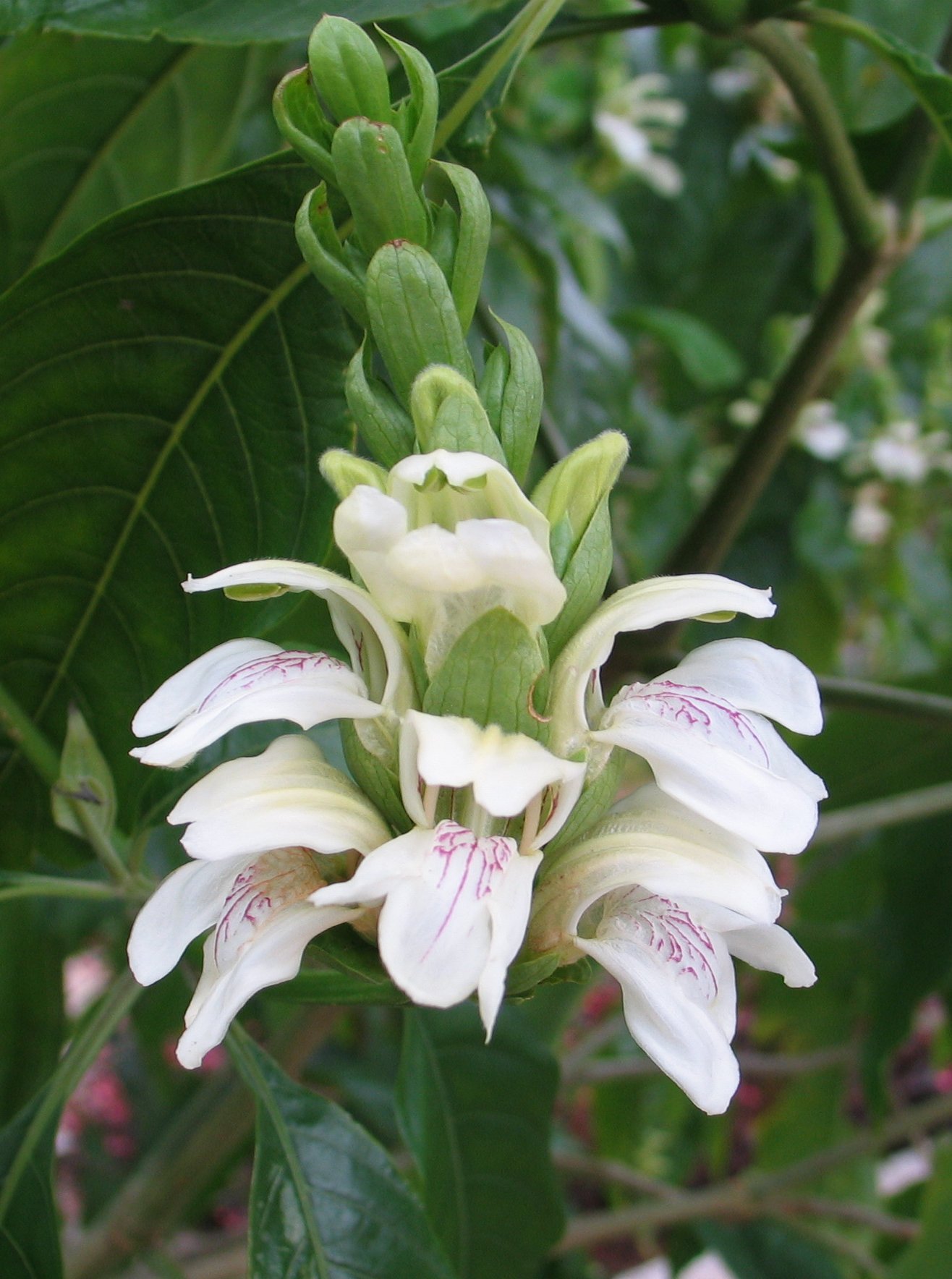
Vasaka, or Justicia adhatoda, is a prominent herb in traditional medicine, particularly Ayurveda, native to Asia. It's a perennial shrub characterized by its lance-shaped leaves and white flowers with purple veins. Historically, various parts of the plant, especially the leaves, have been utilized for their therapeutic properties.
Its use is widely documented for addressing respiratory ailments, reflecting its long-standing significance in herbal pharmacopoeias.
Other Names of Vasaka
- Malabar Nut
- Adulsa
- Bansa
- Vasa
Heading
<h3> Absolute Contraindications of Vasaka </h3> <h4> Pregnancy (risk of uterine stimulation / fetal risk)</h4> <ul> <li> 🤰 <li> Recommendation: Avoid Vasaka (leaf extracts, teas, syrups, concentrated preparations) during pregnancy. If you are pregnant, do not self-administer Vasaka preparations; consult an obstetrician before any herbal use. <li> Reasoning: Several experimental and toxicology reviews report oxytocic/uterotonic activity for vasicine and related alkaloids and note accumulation of vasicine in uterine tissue in animal models; therefore systemic use in pregnancy could risk uterine stimulation. <li> Scientific_Study_Title: Adhatoda vasica: a critical review of ethnopharmacological and toxicological data <li> Scientific_Study_Authors: U P Claeson, T Malmfors, G Wikman, J G Bruhn <li> Scientific_Study_Link: https://pubmed.ncbi.nlm.nih.gov/10967448/ <li> Scientific_Study_Excerpt: <p>This peer-reviewed critical review summarizes pharmacological and toxicological data for Adhatoda vasica, noting multiple scientific reports over the previous decades that describe oxytocic and abortifacient effects of vasicine and related alkaloids in experimental models. The authors evaluate historical and experimental studies and highlight the repeated observations that certain alkaloid fractions show uterine stimulant properties in animals. While the review emphasises gaps and variability in human data, it concludes that the documented oxytocic findings raise safety concerns for systemic use during pregnancy and recommend avoidance or clinical oversight where relevant.</p> <p>The review is widely cited in safety assessments and remains a core reference when clinicians advise against use of concentrated Adhatoda preparations during pregnancy because of the plausible risk of uterine stimulation.</p> </ul> <h4> Concurrent use with anticoagulant / antiplatelet drugs (e.g., warfarin, dabigatran, aspirin)</h4> <ul> <li> ⚠️🩸 <li> Recommendation: Do not take Vasaka leaf extracts or concentrated preparations at the same time as prescribed anticoagulant or antiplatelet medications without physician supervision; consider avoiding concurrent use. <li> Reasoning: Controlled experimental work shows Vasaka leaf extract can shorten bleeding time and increase platelet aggregation in vitro and in animal models - potentially opposing anticoagulant therapy and unpredictably altering bleeding/thrombosis risk. <li> Scientific_Study_Title: Effect Of Justicia Adhatoda (Malabar Nut) Leaf Extract On Drug-Induced Coagulopathy In Mice And In-Vitro Platelet Aggregation Of Human Blood <li> Scientific_Study_Authors: Sehrish Zaffar, Mahwash Malik, Abdul Mudabbir Rehan, Nazia Rashid, Sadia Chiragh, Kamran Zaman <li> Scientific_Study_Link: https://pubmed.ncbi.nlm.nih.gov/33774945/ <li> Scientific_Study_Excerpt: <p>In this experimental study the authors administered Justicia adhatoda leaf extract in models where bleeding was pharmacologically induced (warfarin, aspirin, dabigatran). The extract reduced bleeding time in treated mice compared with controls and increased platelet aggregation in human blood in vitro in a dose-dependent way. Platelet counts rose in some treated groups. The investigators conclude the extract had haemostatic activity, likely via increased platelet aggregation, and that this property reversed drug-induced bleeding in the animal model. These findings suggest Vasaka can materially alter haemostasis when combined with anticoagulant or antiplatelet drugs.</p> <p>The study underpins clinical caution: patients on prescription blood thinners should not add Vasaka extracts without medical oversight because the herb may reduce drug effectiveness or cause unpredictable changes in clotting.</p> </ul> <h4> Concurrent use with anti-diabetic agents (risk of additive glucose-lowering)</h4> <ul> <li> 🍬 <li> Recommendation: If you are on prescription diabetes medicines (especially agents that lower post-meal glucose or insulin/sulfonylureas), avoid using Vasaka extracts without supervision-monitor blood glucose closely if used under medical advice. <li> Reasoning: In vitro enzyme studies show Vasaka leaf compounds inhibit intestinal carbohydrate-digesting enzymes (α-glucosidase/sucrase and α-amylase), which can lower post-prandial glucose; combining with antidiabetic drugs may increase hypoglycemia risk or require dose adjustment. <li> Scientific_Study_Title: Inhibitory effect on α-glucosidase by Adhatoda vasica Nees <li> Scientific_Study_Authors: Hong Gao, Yi-Na Huang, Bo Gao, Peng Li, Chika Inagaki, Jun Kawabata <li> Scientific_Study_Link: https://pubmed.ncbi.nlm.nih.gov/26065759/ <li> Scientific_Study_Excerpt: <p>This experimental Food Chemistry study screened many plant extracts and isolated vasicine and vasicinol from Adhatoda vasica as active inhibitors of mammalian α-glucosidase (sucrase). Vasicine and vasicinol competitively inhibited sucrase with measurable Ki and IC50 values in enzyme assays, indicating potential to reduce post-meal glucose absorption. The authors propose a mechanistic basis for antidiabetic effects and suggest extracts or isolated compounds could alter glucose handling in vivo. While clinical human data are limited, the clear biochemical inhibition supports clinical caution when combining Vasaka with glucose-lowering drugs.</p> </ul> <h3> Relative Contraindications of Vasaka </h3> <h4> Breastfeeding (insufficient safety data)</h4> <ul> <li> 🤱 <li> Recommendation: Prefer to avoid systemic Vasaka extracts while breastfeeding unless supervised by a clinician; small amounts in culinary/herbal tea forms are less clear - discuss with your provider. <li> Reasoning: High-quality human data on Vasaka safety during lactation are limited. Because active alkaloids are absorbed systemically and appear in tissues, a conservative approach avoids concentrated preparations while breastfeeding. <li> Scientific_Study_Title: Adhatoda vasica: a critical review of ethnopharmacological and toxicological data <li> Scientific_Study_Authors: U P Claeson, T Malmfors, G Wikman, J G Bruhn <li> Scientific_Study_Link: https://pubmed.ncbi.nlm.nih.gov/10967448/ <li> Scientific_Study_Excerpt: <p>The review compiles traditional uses and experimental toxicology information, noting a paucity of robust human safety data for special populations (pregnancy, lactation). While many traditional remedies include Vasaka, the authors highlight data gaps and recommend caution in situations where exposure of a developing infant is possible because alkaloids are systemically active and human lactation transfer studies are not available.</p> </ul> <h4> Pre-existing prothrombotic disorders (e.g., history of DVT, PE)</h4> <ul> <li> ⚠️ <li> Recommendation: Use with caution or avoid systemic Vasaka if you have a history of thrombosis or are at high thrombotic risk; discuss with a hematologist or your prescribing clinician. <li> Reasoning: Because Vasaka extracts increase platelet aggregation and shorten bleeding time in experimental settings, they could theoretically raise clotting risk in susceptible people. <li> Scientific_Study_Title: Effect Of Justicia Adhatoda (Malabar Nut) Leaf Extract On Drug-Induced Coagulopathy In Mice And In-Vitro Platelet Aggregation Of Human Blood <li> Scientific_Study_Authors: Sehrish Zaffar, Mahwash Malik, Abdul Mudabbir Rehan, Nazia Rashid, Sadia Chiragh, Kamran Zaman <li> Scientific_Study_Link: https://pubmed.ncbi.nlm.nih.gov/33774945/ <li> Scientific_Study_Excerpt: <p>The study’s animal and in-vitro findings indicate leaf extract promotes platelet aggregation and reduces bleeding time in models of drug-induced coagulopathy. Given these haemostatic actions, individuals already prone to thrombosis may face increased clotting risk if exposed to concentrated Vasaka preparations-thus, clinical prudence is advised.</p> </ul>
Heading
<h4> Uterine cramps / risk of pregnancy complications</h4> <ul> <li> 🤰⚠️ <li> Side effect summary: Concentrated Vasaka (systemic extracts or strong preparations) can stimulate uterine muscle in experimental models and is therefore associated with a risk of contractions in pregnancy. <li> Recommendation: Stop Vasaka and seek medical advice if pregnant or if you suspect pregnancy; pregnant people should avoid Vasaka preparations. <li> Reasoning: Experimental and toxicology literature document oxytocic/uterotonic effects of the principal alkaloids; because of tissue accumulation and uterine activity in animal studies, systemic exposure is considered unsafe in pregnancy. <li> Severity Level: Severe <li> Scientific_Study_Available: Yes <li> Scientific_Study_Title: Adhatoda vasica: a critical review of ethnopharmacological and toxicological data <li> Scientific_Study_Authors: U P Claeson, T Malmfors, G Wikman, J G Bruhn <li> Scientific_Study_Link: https://pubmed.ncbi.nlm.nih.gov/10967448/ <li> Scientific_Study_Excerpt: <p>The review collates several experimental reports of oxytocic and abortifacient effects linked to vasicine and related alkaloids in animal studies. Authors discuss the strength and limits of those reports and highlight enough consistent experimental signal to raise safety concerns for systemic use during pregnancy. They advise avoidance or careful clinical oversight given the uterine activity documented across different experimental setups.</p> </ul> <h4> Increased platelet aggregation / potential clotting tendency</h4> <ul> <li> 🩸 <li> Side effect summary: In experimental models, Vasaka leaf extract reduced bleeding time and increased platelet aggregation - in humans this could translate into altered clotting balance. <li> Recommendation: If you have clotting disorders or are on anticoagulant/antiplatelet therapy, do not use Vasaka without physician approval and monitoring (INR/clinical status). <li> Reasoning: Experimental and in vitro human blood assays show dose-dependent platelet activation; this supports caution in people where lowering bleeding risk is not desired. <li> Severity Level: Moderate <li> Scientific_Study_Available: Yes <li> Scientific_Study_Title: Effect Of Justicia Adhatoda (Malabar Nut) Leaf Extract On Drug-Induced Coagulopathy In Mice And In-Vitro Platelet Aggregation Of Human Blood <li> Scientific_Study_Authors: Sehrish Zaffar, Mahwash Malik, Abdul Mudabbir Rehan, Nazia Rashid, Sadia Chiragh, Kamran Zaman <li> Scientific_Study_Link: https://pubmed.ncbi.nlm.nih.gov/33774945/ <li> Scientific_Study_Excerpt: <p>The authors report that Justicia adhatoda leaf extract shortened bleeding time in mice and increased platelet aggregation in human platelet aggregation assays. Results were dose-dependent and evident in models where bleeding was pharmacologically induced. The study concludes the extract demonstrates haemostatic properties plausibly via platelet activation - a mechanism that would counteract anticoagulant therapies and could be clinically significant.</p> </ul> <h4> Cellular / in vitro cytotoxicity at high concentrations (potential tissue toxicity in over-dosage or concentrated isolates)</h4> <ul> <li> ⚠️🔬 <li> Side effect summary: Isolated alkaloid derivatives (e.g., vasicine acetate) showed cytotoxicity towards some cell lines in vitro; this suggests concentrated purified compounds may have cell-toxic effects at higher exposures. <li> Recommendation: Avoid concentrated isolated alkaloid supplements and stick to clinically studied formulations/doses; seek medical attention with signs of toxicity (severe GI symptoms, abnormal labs). <li> Reasoning: Laboratory studies report cytotoxicity of some vasicine derivatives on cancer cell lines and show biologic activity that, while promising for drug discovery, also indicates potential toxicity at high concentrations or with purified compounds. <li> Severity Level: Mild <li> Scientific_Study_Available: Yes <li> Scientific_Study_Title: Antimicrobial, antioxidant, and cytotoxic properties of vasicine acetate synthesized from vasicine isolated from Adhatoda vasica L <li> Scientific_Study_Authors: V Duraipandiyan, N A Al-Dhabi, C Balachandran, S Ignacimuthu, C Sankar, K Balakrishna <li> Scientific_Study_Link: https://pubmed.ncbi.nlm.nih.gov/25632399/ <li> Scientific_Study_Excerpt: <p>Laboratory research synthesised vasicine acetate from vasicine and tested it for antimicrobial, antioxidant and cytotoxic properties. Vasicine acetate displayed antimicrobial zones of inhibition and significant free-radical scavenging. It also showed cytotoxic activity against the A549 lung adenocarcinoma cell line in vitro. While cytotoxicity in cell lines does not equate to human toxicity at therapeutic doses, these results indicate purified derivatives are biologically active at concentrations that may cause cellular damage in experimental systems - cautioning against unsupervised use of concentrated isolates.</p> </ul>
Heading
<h4> Anticoagulants / Antiplatelets (warfarin, dabigatran, aspirin)</h4> <ul> <li> Interaction_Details: Experimental data show Vasaka leaf extract reduces bleeding time and increases platelet aggregation in vitro and in animal models; this may reduce the bleeding effect of anticoagulant/antiplatelet drugs and unpredictably alter clotting risk. <li> Severity: Moderate <li> Recommendation: Avoid taking Vasaka extracts while on prescription anticoagulant/antiplatelet therapy unless supervised by your physician; if combined, frequent monitoring and dose review is required. <li> Scientific_Study_Available: Yes <li> Scientific_Study_Link: https://pubmed.ncbi.nlm.nih.gov/33774945/ <li> Scientific_Study_Title: Effect Of Justicia Adhatoda (Malabar Nut) Leaf Extract On Drug-Induced Coagulopathy In Mice And In-Vitro Platelet Aggregation Of Human Blood <li> Scientfic_Study_Authors: Sehrish Zaffar, Mahwash Malik, Abdul Mudabbir Rehan, Nazia Rashid, Sadia Chiragh, Kamran Zaman <li> Scientific_Study_Excerpt: <p>The J Ayub Med Coll Abbottabad study evaluated Justicia adhatoda leaf extract in animal models with drug-induced bleeding (warfarin, aspirin, dabigatran) and in human platelet aggregation assays. The extract shortened bleeding time in mice and promoted dose-dependent platelet aggregation in vitro. Authors suggest the haemostatic property is likely due to platelet activation and acknowledge that this could reverse or blunt the effect of anticoagulant/antiplatelet medications. The paper supports clinical caution and monitoring if co-administration is considered.</p> </ul> <h4> Oral antidiabetic agents / drugs affecting post-prandial glucose (α-glucosidase / α-amylase inhibitors, insulin, sulfonylureas)</h4> <ul> <li> Interaction_Details: Vasaka leaf constituents (vasicine, vasicinol, others) inhibit α-glucosidase and α-amylase enzymes in vitro, indicating the herb can reduce absorption of dietary carbohydrates and lower post-meal blood sugar - this may add to the effect of antidiabetic medications. <li> Severity: Mild <li> Recommendation: If you take blood-glucose-lowering medicines, consult your clinician before using Vasaka; monitor blood glucose more closely and be prepared to adjust medication dose under medical guidance. <li> Scientific_Study_Available: Yes <li> Scientific_Study_Link: https://pubmed.ncbi.nlm.nih.gov/26065759/ <li> Scientific_Study_Title: Inhibitory effect on α-glucosidase by Adhatoda vasica Nees <li> Scientfic_Study_Authors: Hong Gao, Yi-Na Huang, Bo Gao, Peng Li, Chika Inagaki, Jun Kawabata <li> Scientific_Study_Excerpt: <p>In enzyme screening tests the methanolic extract of Adhatoda vasica and two isolated compounds (vasicine, vasicinol) showed strong inhibition of rat intestinal α-glucosidase (sucrase) with quantified IC50/Ki values. The work demonstrates a biochemical mechanism by which Vasaka could reduce post-prandial glucose rise. Translationally, this supports potential additive glucose-lowering effects if combined with antidiabetic medications, necessitating clinical monitoring to prevent hypoglycemia.</p> </ul> <h4> Drugs metabolised by pulmonary / local CYP1A1-dependent pathways or where pulmonary CYP1A1 induction matters (theoretical / cautionary)</h4> <ul> <li> Interaction_Details: Vasaka tea/extract induced CYP1A1 mRNA in airway epithelial cells in vitro in mechanistic studies; induction of CYP1A1 could alter local metabolic processing of environmental toxins or inhaled xenobiotics and, theoretically, affect drugs where lung CYP1A1 metabolism is relevant. <li> Severity: Mild <li> Recommendation: This is mostly mechanistic/preclinical evidence - discuss with a clinician if you use specialised inhaled medications or are exposed to inhaled toxins; no routine drug-stopping advice is indicated but remain cautious. <li> Scientific_Study_Available: Yes <li> Scientific_Study_Link: https://pubmed.ncbi.nlm.nih.gov/37375837/ <li> Scientific_Study_Title: Inhibition of TRPA1, Endoplasmic Reticulum Stress, Human Airway Epithelial Cell Damage, and Ectopic MUC5AC Expression by Vasaka (Adhatoda vasica; Malabar Nut) Tea <li> Scientfic_Study_Authors: Tosifa A. Memon, Lili Sun, Marysol Almestica-Roberts, Cassandra E. Deering-Rice, Philip J. Moos, Christopher A. Reilly <li> Scientific_Study_Excerpt: <p>This in vitro study on human airway epithelial cells found Vasaka tea reduced mucin expression and ER stress and, importantly, induced CYP1A1 mRNA expression. The authors note CYP1A1 induction was associated with protective oxylipin production in stressed cells. While the data are mechanistic and from cell models, they raise the possibility that Vasaka components can change local cytochrome P450 expression, which is relevant to metabolism of inhaled chemicals and potentially to drug metabolism in the lung. Clinical relevance for oral systemic drugs is currently theoretical and requires further study.</p> </ul>