Papita (Papaya)
Carica papaya
Papita (Papaya), a tropical fruit, is recognized in Ayurveda for its supposed balancing effects on Vata and Pitta doshas while potentially increasing Kapha. It is prevalent for its claimed digestive benefits due to the enzyme papain. This sweet and succulent fruit is widely consumed and valued for its refreshing properties.
PLANT FAMILY
Caricaceae (Papaya)
PARTS USED
Fruit, Leaves, Root
AYURVEDIC ACTION
Vata ↓, Pitta ↓, Kapha ↑
ACTIVE COMPOUNDS
Papain (2-5%)
What is Papita (Papaya)?
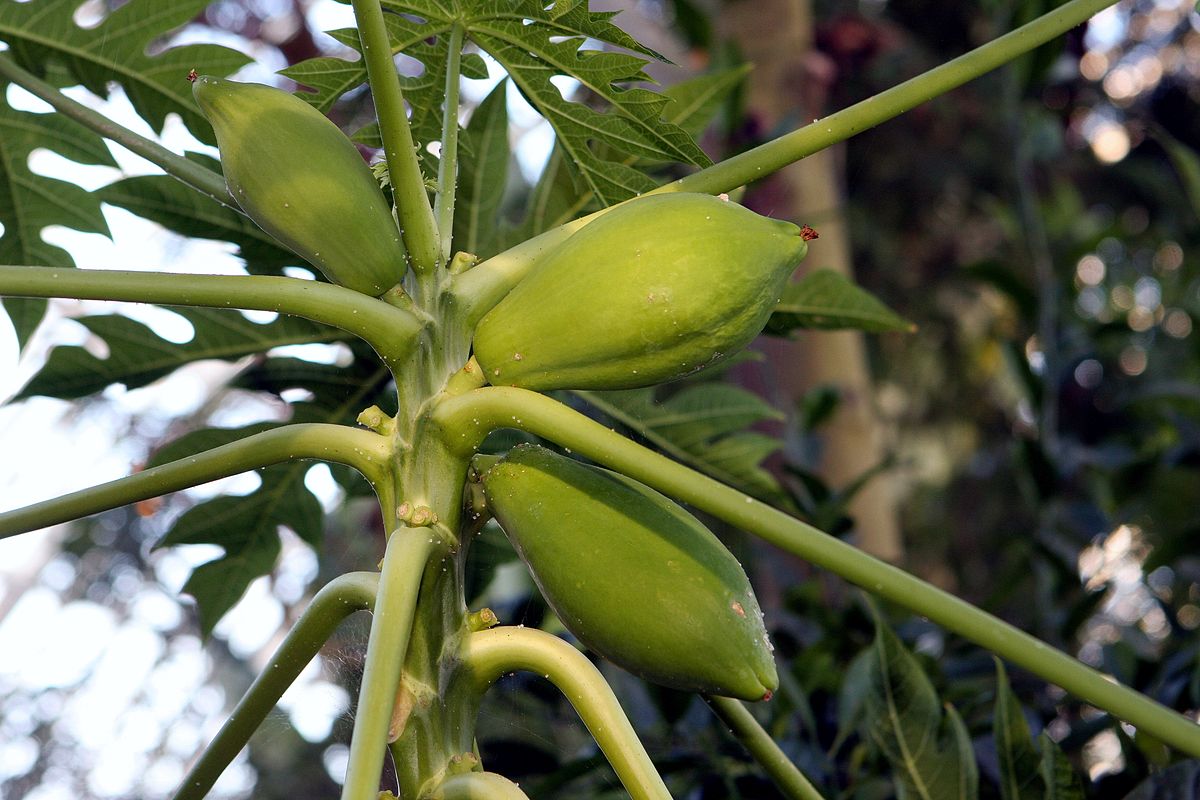
Papita, commonly known as Papaya (scientific name: Carica papaya), is a tropical fruit tree belonging to the Caricaceae family, native to Central America and Southern Mexico. It is widely cultivated for its large, sweet, and succulent fruit, which typically has a green skin that ripens to yellow or orange, and vibrant orange-red flesh containing numerous small black seeds.
Beyond its culinary popularity, the papaya plant is also recognized for the enzyme papain, found in its fruit, leaves, and roots, which has various traditional and commercial applications due to its proteolytic properties.
Other Names of Papita (Papaya)
- Papaya
- Pawpaw (in some regions)
- Melon Tree
- Carica papaya (scientific name)
Benefits of Papita (Papaya)
Heading
<h3> Absolute Contraindications of Papita (Papaya) </h3> <h4>Pregnancy - avoid unripe/semi-ripe papaya</h4> <ul> <li>🤰</li> <li>Recommendation: Do not consume unripe or semi-ripe papaya or papaya latex/sap during pregnancy; ripe, fully matured papaya in normal food amounts is generally regarded as safe but discuss with your clinician.</li> <li>Reasoning: Animal experiments demonstrate that papaya latex contains uterotonic components that cause strong uterine contractions in vitro and in pregnant animals; unripe fruit has higher latex and papain concentrations that can induce uterine spasm.</li> <li>Scientific_Study_Title: Papaya (Carica papaya) consumption is unsafe in pregnancy: fact or fable? Scientific evaluation of a common belief in some parts of Asia using a rat model</li> <li>Scientific_Study_Authors: Adebowale Adebiyi, P Ganesan Adaikan, R N V Prasad</li> <li>Scientific_Study_Link: https://pubmed.ncbi.nlm.nih.gov/12144723/</li> <li>Scientific_Study_Excerpt: <p>The authors gave ripe papaya preparations to pregnant rats and performed isolated uterine-smooth-muscle testing. Ripe papaya juice did not produce contractile effects on isolated uterine muscles, and no fetal or maternal toxicity was observed with normal consumption. In contrast, crude papaya latex produced strong spasmodic uterine contractions in vitro similar to oxytocin and prostaglandin F2α, and unripe papaya (high in latex) produced marked contractile responses. The investigators conclude that while ripe papaya appears safe in their models, unripe/semi-ripe papaya containing latex could be unsafe during pregnancy and warrants caution and further human study.</p> <p>This animal and in vitro evidence is the primary scientific basis for advising pregnant people to avoid unripe papaya and concentrated latex/extract preparations.</p> </li> </ul> <h4>Known natural rubber latex allergy or latex-fruit syndrome (severe food allergy to papaya)</h4> <ul> <li>⚠️</li> <li>Recommendation: If you have confirmed latex allergy or previous severe allergic reaction to papaya or related fruits, avoid papaya (fruit, seeds, leaf preparations) and carry emergency treatment (e.g., epinephrine) as advised by your allergist.</li> <li>Reasoning: Papaya contains allergenic proteins (class I chitinases, papain/chymopapain) that cross-react with latex allergens; people sensitized to latex frequently react to papaya and may experience anaphylaxis.</li> <li>Scientific_Study_Title: The latex-fruit syndrome</li> <li>Scientific_Study_Authors: S Wagner, H Breiteneder</li> <li>Scientific_Study_Link: https://pubmed.ncbi.nlm.nih.gov/12440950/</li> <li>Scientific_Study_Excerpt: <p>This review summarizes clinical and laboratory evidence that 30-50% of people allergic to natural rubber latex show associated hypersensitivity to certain fresh fruits, including papaya. Cross-reactive plant proteins-especially class I chitinases with a hevein-like domain and proteases such as papain/chymopapain-share epitopes with latex allergens, producing IgE-mediated cross-reactions. The paper explains that these cross-reactive proteins can produce immediate hypersensitivity (oral allergy, urticaria, and in some cases systemic anaphylaxis) when sensitized individuals ingest implicated fruits. Clinicians should test and counsel latex-allergic patients about likely cross-reactive foods including papaya.</p> <p>The review is the basis for advising strict avoidance of papaya in patients with documented latex-fruit syndrome due to risk of severe allergic reactions.</p> </li> </ul> <h4>History of anaphylaxis to papaya (prior severe reaction)</h4> <ul> <li>🚨</li> <li>Recommendation: Do not consume any papaya product (fruit, seeds, leaves, latex or supplements). Seek evaluation by an allergist for testing and management; carry emergency medication if prescribed.</li> <li>Reasoning: Clinical case series document patients with papaya-induced anaphylaxis; the allergenic proteins in papaya can trigger life-threatening reactions on re-exposure.</li> <li>Scientific_Study_Title: Latex-papaya syndrome: an infrequent association (case series)</li> <li>Scientific_Study_Authors: (Authors as listed) - see source</li> <li>Scientific_Study_Link: https://pubmed.ncbi.nlm.nih.gov/29723936/</li> <li>Scientific_Study_Excerpt: <p>This observational series described eleven patients with confirmed latex allergy who experienced papaya-induced anaphylaxis. The investigators identified papain, chymopapain, caricaine and class I chitinases as the most allergenic papaya proteins. Most patients displayed multiple allergic comorbidities and had severe immediate-type reactions on skin testing and clinical history. The report emphasizes education on avoidance and preparedness (adrenaline auto-injector) for at-risk patients due to the potential for fatal anaphylaxis following papaya exposure.</p> <p>These clinical data support absolute avoidance of papaya in anyone with a history of papaya anaphylaxis.</p> </li> </ul> <h4>Bleeding disorders or concurrent therapeutic anticoagulation (e.g., warfarin) - caution / avoid high-dose papain extracts</h4> <ul> <li>🩸</li> <li>Recommendation: Avoid concentrated papain/papaya latex supplements if you have a bleeding disorder or take anticoagulants (warfarin, DOACs); if accidental use occurs, monitor INR/bleeding closely and notify your clinician.</li> <li>Reasoning: Papain has demonstrable fibrin(ogen)-degrading and anticoagulant/fibrinolytic activity in vitro and in animal models, and case reports/reviews associate papaya extracts with increased anticoagulant effect - creating clinically meaningful bleeding risk when combined with anticoagulant drugs or coagulopathy.</li> <li>Scientific_Study_Title: Unveiling the Potent Fibrino(geno)lytic, Anticoagulant, and Antithrombotic Effects of Papain, a Cysteine Protease from Carica papaya Latex Using κ-Carrageenan Rat Tail Thrombosis Model</li> <li>Scientific_Study_Authors: H.R. Yang, M.N. Zahan, Y. Yoon, K. Kim, D.H. Hwang, W.H. Kim, I.R. Rho, E. Kim, C. Kang</li> <li>Scientific_Study_Link: https://pubmed.ncbi.nlm.nih.gov/38069092/</li> <li>Scientific_Study_Excerpt: <p>Experimental work on purified papain showed dose-dependent fibrin and fibrinogen cleavage, prolongation of coagulation times (PT and aPTT) and dose-related clot-lysis activity in vitro. In a rat thrombosis model, papain reduced thrombus formation and promoted clot lysis comparably to classic fibrinolytic agents at tested doses. Authors concluded papain exerts significant fibrino(geno)lytic and anticoagulant effects, explaining why concentrated papain or latex preparations could increase bleeding risk in susceptible humans or when combined with anticoagulant drugs.</p> <p>These mechanistic and animal data form a scientific basis for advising against concentrated papain supplements in patients on anticoagulation or with bleeding diatheses.</p> </li> </ul> <h3> Relative Contraindications of Papita (Papaya) </h3> <h4>Chronic liver disease or elevated liver enzymes</h4> <ul> <li>🧪</li> <li>Recommendation: Use papaya foods moderately; avoid high-dose leaf/seed extracts and consult your hepatology clinician before taking papaya leaf supplements if you have liver disease or abnormal liver tests.</li> <li>Reasoning: Systematic safety reviews and some animal studies report possible liver enzyme alterations and histological liver changes with long-term or high-dose papaya seed/leaf extracts in animals; clinical data in humans are limited but caution is warranted.</li> <li>Scientific_Study_Title: Carica papaya L. Leaf: A Systematic Scoping Review on Biological Safety and Herb-Drug Interactions</li> <li>Scientific_Study_Authors: (Authors listed in article - see source)</li> <li>Scientific_Study_Link: https://pubmed.ncbi.nlm.nih.gov/34040647/</li> <li>Scientific_Study_Excerpt: <p>This scoping review pooled clinical and preclinical safety data on Carica papaya leaf. Clinical trials generally showed short-term (≤5 days) leaf consumption was tolerated with mainly minor GI side effects. However, several animal studies with prolonged or high-dose exposure reported liver enzyme disturbances and histopathologic liver changes; two human case reports also suggested potential links to altered liver enzymes though confounding factors were present. The authors advise caution in people with pre-existing liver disease until more robust human safety data are available.</p> <p>This evidence supports a relative contraindication and close monitoring when papaya leaf products are considered for people with hepatic impairment.</p> </li> </ul> <h4>Diabetes treated with glucose-lowering drugs (risk of additive hypoglycaemia)</h4> <ul> <li>🍽️</li> <li>Recommendation: If you are taking insulin or oral hypoglycemic medications, discuss papaya leaf or concentrated extracts with your clinician; blood glucose should be monitored if papaya preparations are started or stopped.</li> <li>Reasoning: Papaya leaf and other plant parts show hypoglycemic effects in animal models and some human observations; when combined with antidiabetic drugs, additive glucose-lowering and unpredictable interactions are possible.</li> <li>Scientific_Study_Title: Nutraceutical Potential of Carica papaya in Metabolic Syndrome</li> <li>Scientific_Study_Authors: (Authors listed in article - see source)</li> <li>Scientific_Study_Link: https://pubmed.ncbi.nlm.nih.gov/31315213/</li> <li>Scientific_Study_Excerpt: <p>The review summarizes animal and human evidence that papaya leaf, fruit and seeds possess antioxidant, hypoglycemic and lipid-modulating properties. Preclinical studies show reductions in blood glucose and improvement in lipid profiles; some animal studies examined combinations with standard drugs (metformin, glimepiride) and observed additive glycemic effects. The authors highlight potential benefits for metabolic syndrome but advise caution because herb-drug interactions and dose-dependent effects may occur, especially when papaya extracts are taken with prescribed hypoglycemic agents.</p> <p>On this basis, papaya supplementation in treated diabetic patients should be coordinated with clinicians and glycemic monitoring.</p> </li> </ul> <h4>Active peptic ulcer disease or erosive gastrointestinal mucosal conditions</h4> <ul> <li>🔬</li> <li>Recommendation: Avoid concentrated papain supplements and strong papaya latex preparations if you have active peptic ulcers or erosive GI disease; if you consume ripe fruit in moderation it is usually better tolerated, but check with your clinician.</li> <li>Reasoning: Papain and papaya proteolytic preparations can affect mucosal integrity and have been used as enzymatic debriding agents; in vulnerable mucosa this could exacerbate bleeding or irritation.</li> <li>Scientific_Study_Title: Development of an in vitro fibrin clot model to evaluate fibrinolytic agents to assess enzymatic debriding agents (collagenase and papain-urea showed clot degradation)</li> <li>Scientific_Study_Authors: (Authors listed in article - see source)</li> <li>Scientific_Study_Link: https://pubmed.ncbi.nlm.nih.gov/24526082/</li> <li>Scientific_Study_Excerpt: <p>In vitro models used to evaluate enzymatic debriders showed that papain-containing topical preparations produced complete degradation of fibrin clots and increased D-dimer levels, demonstrating potent proteolytic and clot-modifying activity. While these data come from topical/wound models, they show papain’s capacity to disrupt protein-based matrices, suggesting that concentrated proteolytic extracts could irritate or affect damaged mucosa if used systemically or inappropriately, which justifies caution in people with active GI erosion or bleeding risk.</p> <p>For these reasons papain supplements are relatively contraindicated in active ulcers or severe mucosal disease without specialist supervision.</p> </li> </ul>
Heading
<h4>Allergic reactions - from mild oral allergy to anaphylaxis</h4> <ul> <li>🫠</li> <li>Side effect summary: Some people develop itching, swelling of the lips/mouth, hives or, rarely, severe anaphylaxis after eating papaya or exposure to papaya proteins - risk is higher in people with latex allergy.</li> <li>Recommendation: Stop papaya immediately if you experience allergic symptoms and seek medical care for breathing difficulties or severe reactions; consult an allergist for testing if you suspect latex-fruit cross-reactivity.</li> <li>Reasoning: Papaya proteins (class I chitinases, papain) cross-react with latex allergens and can cause IgE-mediated reactions; clinical series report anaphylaxis in sensitized individuals.</li> <li>Severity Level: Severe</li> <li>Scientific_Study_Available: Yes</li> <li>Scientific_Study_Title: The latex-fruit syndrome</li> <li>Scientific_Study_Authors: S Wagner, H Breiteneder</li> <li>Scientific_Study_Link: https://pubmed.ncbi.nlm.nih.gov/12440950/</li> <li>Scientific_Study_Excerpt: <p>The review documents that a substantial proportion of latex-allergic patients (approx. 30-50%) have concurrent IgE reactivity to certain fresh fruits including papaya. Cross-reactivity is mediated by plant defense proteins such as class I chitinases and proteases (papain), which share epitopes with latex allergens. Clinical manifestations range from oral allergy to systemic anaphylaxis in sensitized individuals; the authors recommend recognizing papaya among foods that pose risk to latex-sensitized patients and advising avoidance when appropriate.</p> </li> </ul> <h4>Gastrointestinal upset (nausea, vomiting, abdominal discomfort)</h4> <ul> <li>🤢</li> <li>Side effect summary: Oral papaya leaf extracts and some preparations have been associated with mild GI side effects such as nausea and vomiting in clinical trials.</li> <li>Recommendation: If mild GI symptoms occur, reduce dose or stop the supplement; if severe or persistent, consult a healthcare provider.</li> <li>Reasoning: Clinical trials of papaya leaf extract (eg. dengue studies) reported GI side effects as the most common adverse events, generally self-limited.</li> <li>Severity Level: Mild</li> <li>Scientific_Study_Available: Yes</li> <li>Scientific_Study_Title: A Multi-centric, Double-blind, Placebo-controlled, Randomized, Prospective Study to Evaluate the Efficacy and Safety of Carica papaya Leaf Extract, as Empirical Therapy for Thrombocytopenia associated with Dengue Fever</li> <li>Scientific_Study_Authors: Prabhu Nagnathappa Kasture, K H Nagabhushan, Arun Kumar</li> <li>Scientific_Study_Link: https://pubmed.ncbi.nlm.nih.gov/27739262/</li> <li>Scientific_Study_Excerpt: <p>In this randomized multicenter trial of papaya leaf extract in dengue patients, investigators reported significant platelet count increases in the treatment group. Safety data showed few adverse events; the most common were mild gastrointestinal disturbances (nausea, vomiting) that were similar between treated and control groups. No serious safety signals were reported in the short duration (5 days) of therapy, indicating GI upset is the principal, typically mild, side effect in clinical contexts.</p> </li> </ul> <h4>Liver enzyme changes and possible hepatotoxicity with long-term/high-dose use (mostly preclinical)</h4> <ul> <li>⚕️</li> <li>Side effect summary: Long-term or high-dose papaya seed/leaf extracts produced liver enzyme elevations and histopathological changes in some animal studies; human evidence is limited but case reports exist.</li> <li>Recommendation: Avoid long-term, high-dose papaya leaf/seed supplements if you have liver disease; monitor liver tests if a clinician advises short-term therapeutic use.</li> <li>Reasoning: Preclinical toxicity studies and systematic safety reviews identify potential hepatic effects in animals with prolonged dosing; clinical trials of short duration generally report no major liver toxicity but vigilance is advised.</li> <li>Severity Level: Moderate</li> <li>Scientific_Study_Available: Yes</li> <li>Scientific_Study_Title: Hepatotoxicity of the Methanol Extract of Carica papaya Seeds in Wistar Rats</li> <li>Scientific_Study_Authors: (Authors listed in article - see source)</li> <li>Scientific_Study_Link: https://pubmed.ncbi.nlm.nih.gov/28925838/</li> <li>Scientific_Study_Excerpt: <p>In this rat study, repeated administration of methanol extract of papaya seeds caused dose-related elevations in serum liver enzymes (ALT, AST, ALP) and histological changes in hepatocytes including metaplasia and Kupffer cell proliferation. The authors concluded that papaya seed extracts at the tested doses produced hepatic damage in rodents, suggesting potential hepatotoxicity with high-dose or prolonged exposure. Translating these findings to humans requires caution, but the preclinical signal supports monitoring and limiting long-term high-dose use.</p> </li> </ul>
Heading
<h4>Anticoagulants (Warfarin and other blood thinners)</h4> <ul> <li>Interaction_Details: Concentrated papain/papaya latex preparations have fibrinolytic and anticoagulant properties in experimental models; case reports and interaction resources describe raised INR and increased bleeding risk when papaya extracts were used with warfarin.</li> <li>Severity: Severe</li> <li>Recommendation: Avoid papain/papaya latex supplements while on anticoagulants (warfarin, heparin, DOACs). If accidental exposure occurs, monitor INR/bleeding and notify the prescribing clinician immediately.</li> <li>Scientific_Study_Available: Yes</li> <li>Scientific_Study_Link: https://pubmed.ncbi.nlm.nih.gov/38069092/</li> <li>Scientific_Study_Title: Unveiling the Potent Fibrino(geno)lytic, Anticoagulant, and Antithrombotic Effects of Papain, a Cysteine Protease from Carica papaya Latex Using κ-Carrageenan Rat Tail Thrombosis Model</li> <li>Scientfic_Study_Authors: H.R. Yang, M.N. Zahan, Y. Yoon, K. Kim, D.H. Hwang, W.H. Kim, I.R. Rho, E. Kim, C. Kang</li> <li>Scientific_Study_Excerpt: <p>Researchers characterized purified papain’s in vitro and in vivo effects on fibrin and fibrinogen, demonstrating papain-mediated degradation of fibrin(ogen), dose-dependent clot lysis, and prolongation of PT and aPTT. In a rat thrombosis model papain reduced thrombus formation and produced antithrombotic effects. The data show papain’s capacity to influence coagulation cascades and clot stability, providing a plausible mechanism for clinically observed increased bleeding risk when papain preparations are combined with anticoagulant drugs.</p> </li> </ul> <h4>Antidiabetic agents (metformin, glimepiride, insulin and others)</h4> <ul> <li>Interaction_Details: Papaya leaf and other extracts show hypoglycemic effects in animal models and some human observations; combined use with antidiabetic drugs can produce additive glucose-lowering, increasing hypoglycemia risk.</li> <li>Severity: Moderate</li> <li>Recommendation: If you take glucose-lowering medication, consult your prescribing clinician before starting papaya leaf or high-strength papaya supplements; monitor blood glucose closely if both are used.</li> <li>Scientific_Study_Available: Yes</li> <li>Scientific_Study_Link: https://pubmed.ncbi.nlm.nih.gov/31315213/</li> <li>Scientific_Study_Title: Nutraceutical Potential of Carica papaya in Metabolic Syndrome</li> <li>Scientfic_Study_Authors: (Authors listed in article - see source)</li> <li>Scientific_Study_Excerpt: <p>This review compiles preclinical and limited clinical evidence that papaya parts (leaf, fruit, seed) exert antihyperglycemic and lipid-modulating actions. Animal studies showed significant reductions in blood glucose and evidence of pancreatic protection; some experimental combinations of papaya extracts with metformin or glimepiride demonstrated additive antihyperglycemic effects. The authors highlight potential metabolic benefits but advise caution because herb-drug interactions and dose effects may alter drug efficacy and safety - recommending clinician coordination and glucose monitoring when combined with antidiabetic drugs.</p> </li> </ul> <h4>Drugs with narrow therapeutic indices / examples cited (digoxin, ciprofloxacin, artemisinin) - potential herb-drug interactions reported</h4> <ul> <li>Interaction_Details: Systematic safety reviews and scoping studies report possible herb-drug interactions between papaya leaf products and several drugs (eg. digoxin, ciprofloxacin, artemisinin), mostly based on in vitro, animal data or limited case reports; mechanisms vary (metabolic modulation, pharmacodynamic additive/antagonistic effects).</li> <li>Severity: Mild</li> <li>Recommendation: For drugs with narrow therapeutic windows, consult your clinician before using papaya leaf supplements; where possible avoid unsupervised use and monitor drug levels or clinical response as advised.</li> <li>Scientific_Study_Available: Yes</li> <li>Scientific_Study_Link: https://pubmed.ncbi.nlm.nih.gov/34040647/</li> <li>Scientific_Study_Title: Carica papaya L. Leaf: A Systematic Scoping Review on Biological Safety and Herb-Drug Interactions</li> <li>Scientfic_Study_Authors: (Authors listed in article - see source)</li> <li>Scientific_Study_Excerpt: <p>The scoping review examined clinical, preclinical and case-report literature for papaya leaf safety and herb-drug interactions. Authors summarized reports of potential pharmacokinetic and pharmacodynamic interactions with drugs like metformin, glimepiride, digoxin, ciprofloxacin and artemisinin derivatives, citing a mix of animal studies, in vitro data and limited human observations. While evidence strength varied and many signals remain preliminary, the review recommends caution and clinician supervision when papaya leaf products are used alongside medications with narrow therapeutic indices or established interaction risk.</p> </li> </ul>