Khas
Chrysopogon zizanioides
Khas (Vetiver) is an aromatic perennial grass in Ayurveda, highly valued for its roots. It is claimed to balance Vata and Pitta doshas. Widely prevalent in tropical and subtropical regions, particularly India, Khas is supposedly beneficial for its cooling and grounding properties, often used in essential oils and traditional remedies for its distinct fragrance and purported therapeutic effects.
PLANT FAMILY
Poaceae (Grass)
PARTS USED
Root, Essential oil
AYURVEDIC ACTION
Vata ↓, Pitta ↓, Kapha ↑
ACTIVE COMPOUNDS
Vetivone (20-30%)
What is Khas?
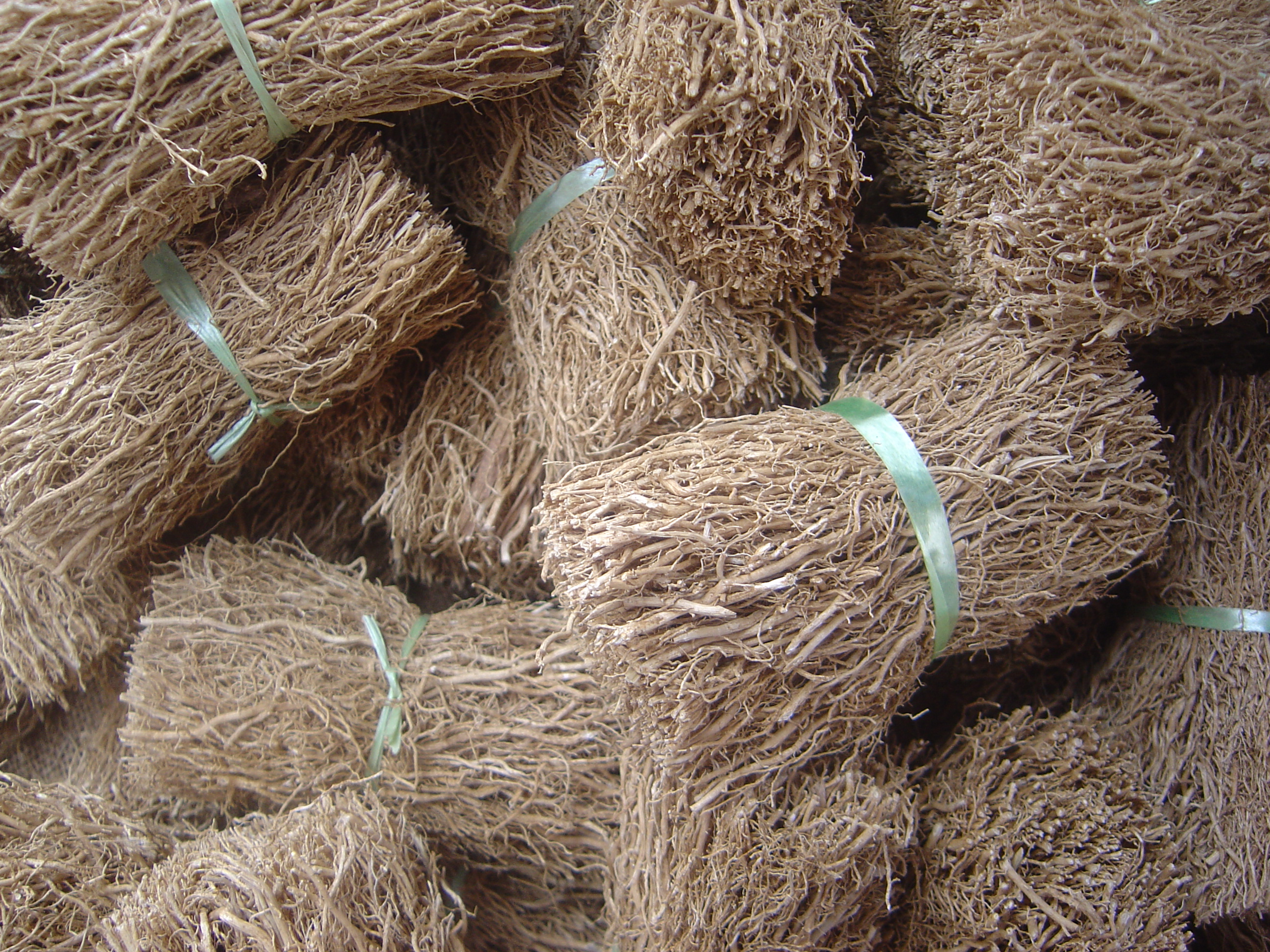
Khas, scientifically identified as Chrysopogon zizanioides, is a perennial grass belonging to the Poaceae family. This aromatic plant is native to tropical and subtropical regions, notably India, and is distinguished by its fibrous root system that can extend deep into the soil, allowing it to thrive in diverse environments. The roots are highly valued for their distinctive fragrance.
Beyond its ecological role in soil conservation, Khas is cultivated primarily for its essential oil, known as vetiver oil, which is extracted from its roots. This oil is a complex mixture of sesquiterpenes, including vetivone, and is extensively utilized in perfumery, cosmetics, and traditional medicine for its earthy, woody aroma and purported therapeutic properties.
Other Names of Khas
- Vetiver
- Khus Khus
- Andropogon muricatus
- Chrysopogon zizanioides
Heading
<h3> Absolute Contraindications of Khas (Vetiver/Ushira) </h3> <h4> Pregnancy and Breastfeeding (avoid use)</h4> <ul> <li> 🤰</li> <li> Recommendation: Pregnant or breastfeeding people should avoid internal use of vetiver essential oil or high-dose extracts; topical or aromatic use should be discussed with a qualified practitioner. </li> <li> Reasoning: Some essential-oil constituents (including sesquiterpenoids present in various oils) can be anti-angiogenic or fetotoxic in animal models and essential oil components cross placenta and milk; until safety is proven in humans, avoidance is advised. </li> <li> Scientific_Study_Title: Maternal Reproductive Toxicity of Some Essential Oils and Their Constituents. </li> <li> Scientific_Study_Authors: Noura S. Dosoky, William N. Setzer.</li> <li> Scientific_Study_Link: https://pmc.ncbi.nlm.nih.gov/articles/PMC7956842/</li> <li> Scientific_Study_Excerpt: <p>This comprehensive review examines experimental and animal evidence that certain essential-oil constituents can cause maternal toxicity, embryo-fetotoxicity, teratogenicity or interfere with angiogenesis - processes critical for normal fetal development. The authors summarize data showing that low-molecular lipophilic oil constituents readily cross the placenta and that some classes (e.g., β-eudesmol and other sesquiterpenoids present in various oils) possess anti-angiogenic or embryo-toxic actions in animal experiments. The review recommends avoiding or restricting use of essential oils with potentially hazardous constituents during pregnancy and lactation due to the uncertainty and ethical limits on human testing.</p> <p>Although the paper does not single out vetiver as a commonly reported human teratogen, it lists β-eudesmol (a component that can be present in vetiver chemotypes) among constituents with theoretical reproductive risk, supporting a precautionary prohibition of high-dose or internal vetiver oil use in pregnancy and breastfeeding.</p> </li> </ul> <h4>Consumption of Roots/Oil from Contaminated Sources (heavy-metal/pesticide exposure risk)</h4> <ul> <li> ⚠️</li> <li> Recommendation: Do not ingest or use root powders or extracts if the plant source is unknown, grown near industrial/contaminated land, or not batch-tested - only use products certified free of heavy metals and agrochemical residues. </li> <li> Reasoning: Vetiver is widely used for phytoremediation and is known to concentrate heavy metals and environmental toxins in its root system; using roots from contaminated soils can transfer metals and toxins into preparations, creating safety hazards.</li> <li> Scientific_Study_Title: Vetiver grass, Vetiveria zizanioides: a choice plant for phytoremediation of heavy metals and organic wastes.</li> <li> Scientific_Study_Authors: Luu Thai Danh, Paul Truong, Raffaella Mammucari, Tam Tran, Neil Foster.</li> <li> Scientific_Study_Link: https://pubmed.ncbi.nlm.nih.gov/19810597/</li> <li> Scientific_Study_Excerpt: <p>The review surveys greenhouse and field studies showing vetiver’s exceptional tolerance to harsh soils and ability to accumulate a wide range of heavy metals (As, Cd, Cr, Cu, Hg, Ni, Pb, Se, Zn) and organic pollutants. Root tissues especially retain higher metal concentrations relative to shoots. The authors highlight vetiver’s use in phytostabilization and phytoextraction precisely because of its root accumulation profile, noting root lead and zinc accumulation percentages recorded in multiple studies.</p> <p>Practical implication: roots harvested from contaminated sites can carry concentrated heavy metals - a direct safety concern when roots are used as food, powders, or extracts. The paper supports caution and source-certification for any vetiver product intended for ingestion or broad topical use.</p> </li> </ul> <h4>Known or Suspected Fragrance/Skin Sensitivity (contact allergy risk)</h4> <ul> <li> 🧴</li> <li> Recommendation: If you have a history of fragrance or essential-oil allergies, atopic dermatitis, or sensitive skin, avoid undiluted vetiver oil and perform patch testing before topical or aromatic use; discontinue if rash or respiratory irritation occurs. </li> <li> Reasoning: Essential oils can cause allergic contact dermatitis and vetiver (vetiveria extract/oil) has been identified in fragrance safety literature as a possible contact allergen; aromatherapy case reports show dermatitis is the commonest essential-oil adverse effect.</li> <li> Scientific_Study_Title: Adverse effects of aromatherapy: a systematic review of case reports and case series. </li> <li> Scientific_Study_Authors: T. L. Posadzki, E. Alotaibi, E. Ernst. </li> <li> Scientific_Study_Link: https://pubmed.ncbi.nlm.nih.gov/22936057/</li> <li> Scientific_Study_Excerpt: <p>This systematic review collated 42 reports (case reports/series) of adverse events attributed to aromatherapy; 71 patients were included overall. The most frequently documented adverse reaction was dermatitis (skin reactions), with occasional reports of more severe effects. The authors concluded that aromatherapy can cause harms including contact dermatitis, respiratory and systemic effects, and that the true frequency is unknown because adverse events are under-reported. The review underlines that essential oils are not inherently risk-free and that vulnerable individuals can experience significant reactions.</p> <p>Although the review addresses aromatherapy broadly, separate fragrance/allergen monographs identify vetiver extract/oil as a possible fragrance contact allergen; together these sources justify advising avoidance in people with known fragrance sensitivity.</p> </li> </ul> <h3> Relative Contraindications of Khas (Vetiver) </h3> <h4>Concurrent use with Anticoagulant or Antiplatelet Therapy</h4> <ul> <li> 🩸</li> <li> Recommendation: Consult your prescriber before using vetiver extracts or root oil if you are taking warfarin, DOACs, aspirin, clopidogrel or other blood-thinning drugs; monitor bleeding parameters where relevant. </li> <li> Reasoning: Certain vetiver constituents (e.g., nootkatone and related sesquiterpenoids found in vetiver oil and other plants) have shown effects on platelet aggregation and thrombogenicity in preclinical models, implying potential additive effects with anticoagulants or antiplatelet agents.</li> <li> Scientific_Study_Title: Thrombosis and systemic and cardiac oxidative stress and DNA damage induced by pulmonary exposure to diesel exhaust particles and the effect of nootkatone thereon.</li> <li> Scientific_Study_Authors: Abderrahim Nemmar, Suhail Al-Salam, Sumaya Beegam, Priya Yuvaraju, Badreldin H. Ali.</li> <li> Scientific_Study_Link: https://pubmed.ncbi.nlm.nih.gov/29351455/</li> <li> Scientific_Study_Excerpt: <p>In mice and in vitro whole-blood assays, nootkatone (a sesquiterpenoid present in several plant oils including components found in vetiver chemistries) inhibited particle-induced thrombogenic responses and reduced platelet aggregation. The compound also attenuated increases in fibrinogen and related pro-thrombotic markers. While this is preclinical, it demonstrates that sesquiterpenoid constituents can alter haemostatic pathways and therefore could interact with anticoagulant medications or bleeding disorders.</p> <p>Clinical translation is not established, but the study supports a precautionary approach: discuss vetiver use with clinicians when on blood-thinning therapy.</p> </li> </ul> <h4>Use in Severe Asthma or Reactive Airway Disease (caution with inhalation)</h4> <ul> <li> 🌬️</li> <li> Recommendation: People with severe asthma, COPD or a history of essential-oil induced bronchospasm should avoid direct inhalation of concentrated vetiver oil and only use diluted, limited exposures under supervision. </li> <li> Reasoning: Aromatherapy reports include episodes of respiratory irritation and asthma exacerbation; although vetiver volatiles at low doses may influence attention or mood, concentrated inhalation or sprays can provoke airway symptoms in susceptible individuals. </li> <li> Scientific_Study_Title: Adverse effects of aromatherapy: a systematic review of case reports and case series. </li> <li> Scientific_Study_Authors: T. L. Posadzki, E. Alotaibi, E. Ernst.</li> <li> Scientific_Study_Link: https://pubmed.ncbi.nlm.nih.gov/22936057/</li> <li> Scientific_Study_Excerpt: <p>The systematic review of aromatherapy adverse events documents respiratory reactions among reported harms, including cases where inhalation or topical exposure precipitated bronchospasm or airway symptoms in susceptible people. The authors emphasize that essential oils can cause respiratory and allergic reactions, and that vulnerable populations (children, asthmatics) are more likely to experience clinically significant reactions. This supports a relative contraindication and the need for caution with inhaled vetiver preparations in reactive airway disease.</p> </li> </ul> <h4>Concomitant Use with Antidiabetic Medication (monitoring suggested)</h4> <ul> <li> 🩺</li> <li> Recommendation: If you are taking insulin or oral hypoglycemics, mention vetiver use to your clinician - monitor blood glucose closely if starting vetiver extracts, and adjust medications only under medical supervision. </li> <li> Reasoning: Preclinical and review literature indicates vetiver extracts can show antihyperglycemic effects in animal models; while human evidence is limited, theoretical additive glucose-lowering could raise hypoglycaemia risk when combined with antidiabetic drugs.</li> <li> Scientific_Study_Title: Pharmacological and Therapeutic Potential of Chrysopogon zizanioides (Vetiver): A Comprehensive Review of Its Medicinal Applications and Future Prospects.</li> <li> Scientific_Study_Authors: (Review authors as listed on PubMed entry - see linked review).</li> <li> Scientific_Study_Link: https://pubmed.ncbi.nlm.nih.gov/41008619/</li> <li> Scientific_Study_Excerpt: <p>Recent comprehensive reviews summarize preclinical findings where vetiver extracts produced antihyperglycemic effects in animal models, likely via antioxidant and metabolic modulation. The reviews emphasize promising laboratory data but note limited human clinical evidence. Because these preclinical findings show biological plausibility for glucose lowering, concurrent use with antidiabetic medication warrants monitoring to avoid unexpected hypoglycemia until robust human data are available.</p> </li> </ul>
Heading
<h4> Skin irritation / allergic dermatitis </h4> <ul> <li> 🧴</li> <li> Side effect summary: Vetiver oil or concentrated root preparations can cause skin redness, itching, or allergic contact dermatitis in sensitive people - risk increases with undiluted or oxidised oils. </li> <li> Recommendation: Do a patch test on a small area before wider topical use; use appropriate dilutions (≤1-2% for sensitive skin) and stop use if irritation develops; seek dermatology care for persistent or severe reactions. </li> <li> Reasoning: Systematic case reports of aromatherapy-related adverse events show dermatitis is the most frequent problem; vetiver and other fragrance extracts have been reported in fragrance safety literature as possible contact allergens. </li> <li> Severity Level: Mild</li> <li> Scientific_Study_Available: Yes</li> <li> Scientific_Study_Title: Adverse effects of aromatherapy: a systematic review of case reports and case series.</li> <li> Scientific_Study_Authors: T. L. Posadzki, E. Alotaibi, E. Ernst.</li> <li> Scientific_Study_Link: https://pubmed.ncbi.nlm.nih.gov/22936057/</li> <li> Scientific_Study_Excerpt: <p>The systematic review compiled case reports where aromatherapy produced adverse events; dermatitis was the most commonly reported harm among the 71 patients collated. The authors describe contacts and exposures via massage oils, inhalation, and topical application leading to localized and generalized skin reactions in susceptible individuals. They conclude that while aromatherapy is often perceived as benign, essential oils can and do cause clinically significant skin reactions, and reported events underline the need for patch testing and dilution precautions.</p> </li> </ul> <h4> Cytotoxicity / genotoxicity at high concentrations (in vitro findings)</h4> <ul> <li> ⚗️</li> <li> Side effect summary: In laboratory cell models, vetiver and some essential oils show cytotoxic and genotoxic effects at high, concentrated exposures - not typical of diluted aromatherapy but relevant to undiluted ingestion or high topical doses. </li> <li> Recommendation: Avoid ingestion of undiluted oil, do not apply neat (undiluted) to skin, and avoid high-concentration exposures; seek medical help for accidental ingestion. </li> <li> Reasoning: In vitro lymphocyte assays demonstrate oxidative stress and DNA damage markers at higher concentrations of several essential oils including vetiver, implying a dose-dependent toxicity threshold. </li> <li> Severity Level: Moderate</li> <li> Scientific_Study_Available: Yes</li> <li> Scientific_Study_Title: Evaluation of toxicity of essential oils palmarosa, citronella, lemongrass and vetiver in human lymphocytes.</li> <li> Scientific_Study_Authors: (as listed on PubMed entry for the study; see link)</li> <li> Scientific_Study_Link: https://pubmed.ncbi.nlm.nih.gov/24650756/</li> <li> Scientific_Study_Excerpt: <p>In human lymphocyte cultures, investigators found dose-dependent cytotoxicity and genotoxic markers for several essential oils, including vetiver oil, at higher concentrations. Measures included reduced cell viability, increased DNA strand-break markers and oxidative stress signals; apoptosis was confirmed at the upper exposure ranges. The authors concluded that while low-concentration use is generally safe, high concentrations in vitro produce measurable cellular damage, supporting safety recommendations against undiluted topical or internal use in humans.</p> </li> </ul> <h4> Heavy-metal or environmental-toxin exposure from contaminated roots </h4> <ul> <li> 🧪</li> <li> Side effect summary: Consuming or using roots harvested from polluted soils can expose users to concentrated heavy metals and organic contaminants retained by vetiver roots. </li> <li> Recommendation: Use only products with third-party testing for heavy metals and pesticide residues; avoid home-harvested roots from industrial or unknown lands. </li> <li> Reasoning: Vetiver is employed worldwide for phytoremediation because its roots accumulate metals and pollutants; root-derived consumer products from contaminated sources can therefore concentrate environmental toxins. </li> <li> Severity Level: Severe</li> <li> Scientific_Study_Available: Yes</li> <li> Scientific_Study_Title: Vetiver grass, Vetiveria zizanioides: a choice plant for phytoremediation of heavy metals and organic wastes.</li> <li> Scientific_Study_Authors: Luu Thai Danh, Paul Truong, Raffaella Mammucari, Tam Tran, Neil Foster.</li> <li> Scientific_Study_Link: https://pubmed.ncbi.nlm.nih.gov/19810597/</li> <li> Scientific_Study_Excerpt: <p>The review documents vetiver’s capacity to tolerate and accumulate a wide spectrum of heavy metals and organic pollutants, with roots concentrating metals such as lead and zinc. The authors summarize studies showing significant retention of contaminants in roots used for phytoremediation and caution that plant material from contaminated sites carries elevated levels of these toxins. For consumers, this represents a real risk if root material is used in foods, herbal preparations or topical products without proper sourcing and testing.</p> </li> </ul>
Heading
<h4>Anticoagulants / Antiplatelet agents (e.g., warfarin, aspirin, clopidogrel)</h4> <ul> <li> Interaction_Details: Preclinical data on sesquiterpenoid constituents related to vetiver (e.g., nootkatone) show inhibition of platelet aggregation and reduced thrombogenic responses in vitro and in animal models, indicating a theoretical additive bleeding risk if combined with anticoagulant or antiplatelet drugs. </li> <li> Severity: Moderate</li> <li> Recommendation: Consult your prescribing clinician before starting vetiver extracts or essential oil products; if used, monitor for bleeding signs and, where relevant, check coagulation/INR as advised by your clinician. </li> <li> Scientific_Study_Available: Yes</li> <li> Scientific_Study_Link: https://pubmed.ncbi.nlm.nih.gov/29351455/</li> <li> Scientific_Study_Title: Thrombosis and systemic and cardiac oxidative stress and DNA damage induced by pulmonary exposure to diesel exhaust particles and the effect of nootkatone thereon.</li> <li> Scientfic_Study_Authors: Abderrahim Nemmar, Suhail Al-Salam, Sumaya Beegam, Priya Yuvaraju, Badreldin H. Ali.</li> <li> Scientific_Study_Excerpt: <p>In mouse models and in vitro whole-blood experiments, nootkatone reduced platelet aggregation and mitigated DEP-induced prothrombotic changes. Nootkatone inhibited increases in fibrinogen and other prothrombotic markers, and protected against DNA damage and oxidative stress. The authors conclude that nootkatone has antithrombotic and antiplatelet effects in these preclinical settings, which creates a biologically plausible interaction pathway with anticoagulant or antiplatelet drugs in humans, although direct clinical interaction studies are lacking.</p> </li> </ul> <h4>Antidiabetic drugs (insulin, sulfonylureas, metformin) - potential additive glucose-lowering</h4> <ul> <li> Interaction_Details: Animal and preclinical evidence suggests vetiver extracts may exert antihyperglycemic effects; combined use with prescription glucose-lowering drugs could, in theory, increase hypoglycaemia risk. </li> <li> Severity: Mild</li> <li> Recommendation: If taking antidiabetic medication, inform your diabetes clinician before using vetiver extracts; monitor blood glucose closely and adjust medication only under medical supervision. </li> <li> Scientific_Study_Available: Yes (review of preclinical evidence)</li> <li> Scientific_Study_Link: https://pubmed.ncbi.nlm.nih.gov/41008619/</li> <li> Scientific_Study_Title: Pharmacological and Therapeutic Potential of Chrysopogon zizanioides (Vetiver): A Comprehensive Review of Its Medicinal Applications and Future Prospects.</li> <li> Scientfic_Study_Authors: (authors listed on the PubMed review entry - see linked review)</li> <li> Scientific_Study_Excerpt: <p>The review compiles in vitro and animal studies reporting antihyperglycemic or metabolic benefits of vetiver extracts in preclinical models, often attributed to antioxidant and metabolic-modulating phytochemicals. While human clinical trial evidence remains scarce, the preclinical profile provides a mechanistic basis for a possible additive glucose-lowering effect when vetiver is used with antidiabetic medications - hence clinical caution and glucose monitoring are reasonable precautions.</p> </li> </ul> <h4>Central nervous system depressants / sedatives (theoretical)</h4> <ul> <li> Interaction_Details: Vetiver has demonstrated neuroactive properties (calming, attention modulation, anticonvulsant in animal models). Although direct drug-interaction studies with sedatives are not available, theoretical additive CNS effects (sedation) could occur when combined with benzodiazepines, opioids or sedative antihistamines. </li> <li> Severity: Mild</li> <li> Recommendation: Use caution combining vetiver aromatherapy or extracts with prescription sedatives; start with low exposures and check for excessive drowsiness or impaired coordination. Consult your clinician. </li> <li> Scientific_Study_Available: NA</li> <li> Scientific_Study_Link: NA</li> <li> Scientific_Study_Title: NA</li> <li> Scientfic_Study_Authors: NA</li> <li> Scientific_Study_Excerpt: <p>Direct clinical interaction studies are not available for vetiver plus prescription sedatives. Evidence for vetiver’s CNS effects comes from preclinical anticonvulsant experiments and small human inhalation studies on attention and autonomic markers. Because these data indicate biological CNS activity, a theoretical interaction with other CNS depressants exists, but clinical proof is lacking; therefore the field is best described as cautionary rather than evidence-proven.</p> </li> </ul>