Karanja

Pongamia pinnata
Karanja (Pongamia pinnata), also known as Indian Beech (Honge), is a medium-sized leguminous tree prevalent in tropical Asia. In Ayurveda, its seeds and bark are used for their supposed balancing effects on Vata, Pitta, and Kapha doshas. Traditionally, it's claimed to aid various health aspects, often valued for its resilience and diverse applications.
PLANT FAMILY
Fabaceae (Legume)
PARTS USED
Seed, Bark, Leaves
AYURVEDIC ACTION
Vata ↓, Pitta ↓, Kapha ↓
ACTIVE COMPOUNDS
Karanjin (0.1-0.3%)

What is Karanja?

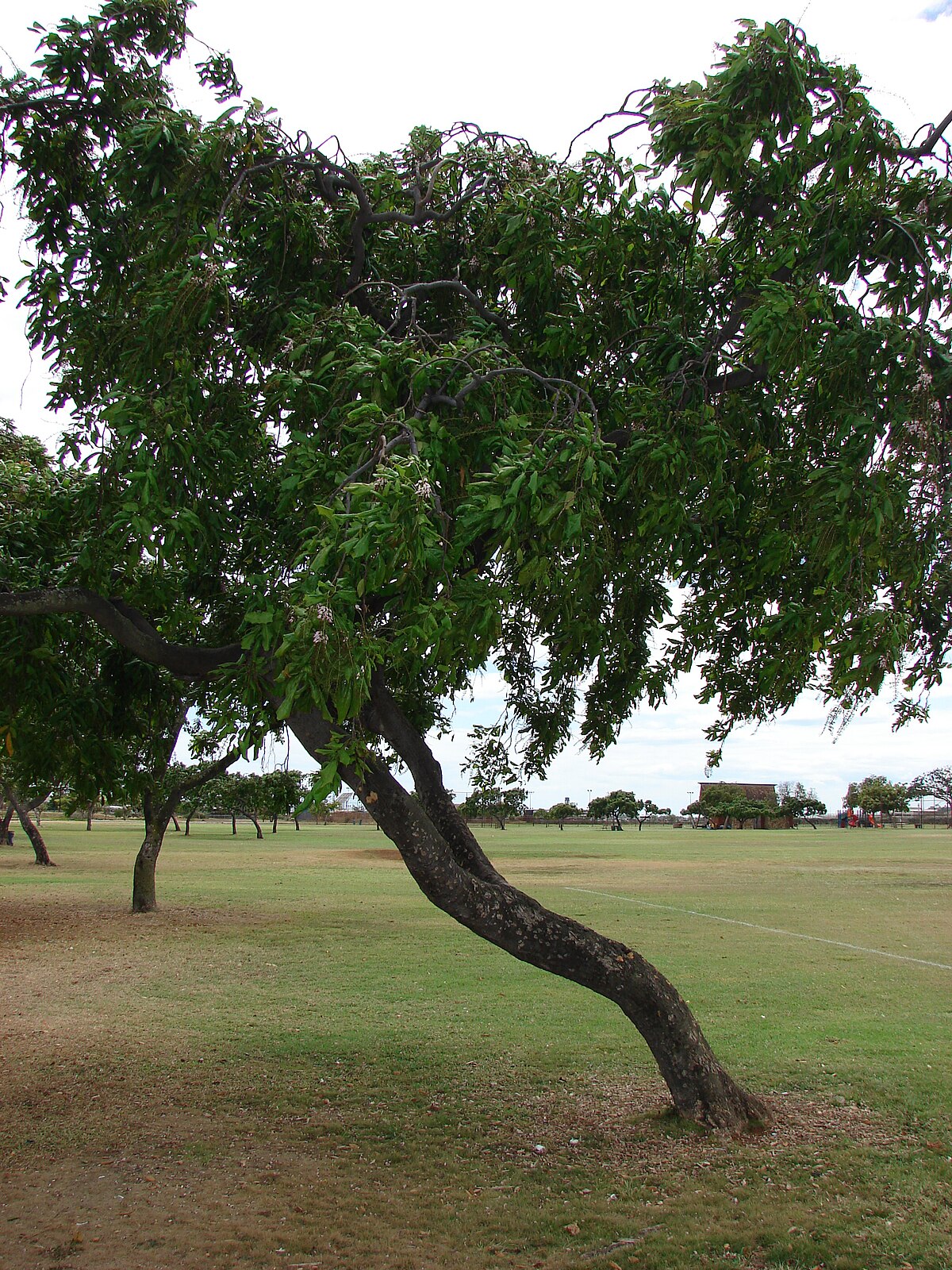
Karanja, scientifically known as Pongamia pinnata, is a medium-sized leguminous tree native to tropical and temperate regions of Asia, including India, Australia, and parts of Africa. It is characterized by its dense canopy, fragrant white or pink flowers, and distinctive flat, woody pods that contain one or two seeds. The tree thrives in various soil types and is often found along coastlines and riverbanks due to its resilience.

Valued for its adaptability and diverse applications, Karanja is particularly recognized for its seeds, which yield a bitter, non-edible oil used in traditional medicine, agriculture, and biofuel production. Its various parts have historical significance in traditional practices across different cultures.

Other Names of Karanja

  • Indian Beech
  • Pongam Tree
  • Honge
  • Kanuga
  • Naktamala
Starr 080530-4642 Milletia pinnata

Benefits of Karanja

Heading

<h3> Absolute Contraindications of Karanja (Pongamia pinnata) </h3> <h4>1) Known allergy to Pongamia / plant oils / topical botanical allergy [Skin allergy]</h4> <ul> <li>🧴</li> <li>Recommendation: Do not apply Karanja oil or extracts to the skin if you have a history of allergic reactions to plant oils or previous contact dermatitis; perform a patch test on a small skin area first.</li> <li>Reasoning: Topical botanical products (including concentrated plant extracts and essential-type oils) can provoke irritant or allergic contact dermatitis in sensitized individuals; formulations containing concentrated karanjin are actively tested for skin effects and may cause local irritation or sensitisation in susceptible persons.</li> <li>Scientific_Study_Title: Optimisation and in-vivo evaluation of extracted Karanjin loaded liposomal topical formulation for treatment of psoriasis in tape-stripped mouse model</li> <li>Scientific_Study_Authors: (authors as listed in PubMed entry)</li> <li>Scientific_Study_Link: https://pubmed.ncbi.nlm.nih.gov/38780157/</li> <li>Scientific_Study_Excerpt: <p>The study formulates and tests a karanjin-loaded topical preparation and explicitly evaluates skin permeation, retention and in-vivo anti-psoriatic activity. As part of formulation evaluation, skin irritation and tolerance tests were carried out in animal models to determine local effects and tolerability. The paper reports outcomes for skin absorption and local responses, noting that topical formulations must be optimised to balance efficacy versus irritation risk; the authors therefore evaluate irritation parameters as an integral safety endpoint of topical karanjin use. (Paraphrased summary of study findings.)</p> </li> </ul> <h4>2) Concurrent use with glucose-lowering (antidiabetic) medicines [Risk of low blood sugar]</h4> <ul> <li>💉</li> <li>Recommendation: If you are taking prescribed antidiabetic drugs (insulin, sulfonylureas, metformin or others), consult your prescribing clinician before using Karanja internally or in high doses; blood glucose should be monitored closely if used.</li> <li>Reasoning: Multiple Pongamia extracts and isolated constituents (karanjin, pongamol) produce measurable blood-glucose lowering in diabetic animal models. When combined with prescription hypoglycemic drugs, there is a plausible risk of additive glucose reduction and symptomatic hypoglycemia.</li> <li>Scientific_Study_Title: Antidiabetic activity of Pongamia pinnata leaf extracts in alloxan-induced diabetic rats</li> <li>Scientific_Study_Authors: (authors as listed in PubMed entry)</li> <li>Scientific_Study_Link: https://pubmed.ncbi.nlm.nih.gov/21455444/</li> <li>Scientific_Study_Excerpt: <p>In an alloxan-induced diabetic rat model the ethanolic and aqueous extracts of P. pinnata significantly lowered blood glucose compared with diabetic controls and performed comparably to the reference drug glibenclamide in the test timeframe. The authors recorded glucose values and oral glucose tolerance testing, and concluded that extracts had a clear antihyperglycemic effect in experimental diabetes, supporting traditional antidiabetic uses and indicating a need for caution when combining with conventional hypoglycemic therapies. (Paraphrased summary of study findings.)</p> </li> </ul> <h4>3) Pregnancy - internal use [Pregnancy / lack of safety data]</h4> <ul> <li>🤰</li> <li>Recommendation: Avoid internal or high-dose use of Karanja during pregnancy because human safety has not been established; seek obstetric advice before any herbal therapy.</li> <li>Reasoning: Although several experimental studies report therapeutic effects and low acute toxicity in animals, authoritative reviews note that data on reproductive and developmental safety are insufficient; standard precautionary principle in medical herbalism is to avoid non-essential herbal medicines in pregnancy when safety is unproven.</li> <li>Scientific_Study_Title: Medicinal uses, phytochemistry and pharmacology of Pongamia pinnata (L.) Pierre: a review</li> <li>Scientific_Study_Authors: (authors as listed in PubMed entry)</li> <li>Scientific_Study_Link: https://pubmed.ncbi.nlm.nih.gov/24016802/</li> <li>Scientific_Study_Excerpt: <p>The review summarises pharmacological evidence for Pongamia pinnata across many activity domains and notes that while many studies report low acute toxicity in animal tests, there is a clear need for further investigation on chemical constituents and their full pharmacological and toxicological profiles. The authors explicitly call for additional studies on safety, including reproductive and longer-term toxicity, indicating that current evidence is insufficient to conclude safety in sensitive populations such as pregnant women. (Paraphrased summary of study findings.)</p> </li> </ul> <h3> Relative Contraindications of Karanja (Pongamia pinnata) </h3> <h4>1) Chronic liver disease / patients on hepatically-metabolised polypharmacy</h4> <ul> <li>⚠️</li> <li>Recommendation: Discuss use with your hepatologist or primary clinician before taking internal Karanja preparations; start at very low dose only with supervision if considered necessary.</li> <li>Reasoning: Although some studies report hepatoprotective or non-toxic findings in animals, clinical human safety data are limited and Karanja constituents can modulate drug-metabolizing enzymes; caution is prudent where liver function is already compromised or where many drugs are metabolised by hepatic pathways.</li> <li>Scientific_Study_Title: Medicinal uses, phytochemistry and pharmacology of Pongamia pinnata (L.) Pierre: a review</li> <li>Scientific_Study_Authors: (authors as listed in PubMed entry)</li> <li>Scientific_Study_Link: https://pubmed.ncbi.nlm.nih.gov/24016802/</li> <li>Scientific_Study_Excerpt: <p>The review highlights a broad pharmacological profile with generally low reported acute toxicity in animal models but emphasises gaps in safety data and calls for more targeted toxicological evaluation of isolated constituents and long-term effects-advice that supports cautious use in populations with altered hepatic clearance. (Paraphrased summary of study findings.)</p> </li> </ul> <h4>2) Known or suspected sensitivity to legumes (Fabaceae) or previous severe plant-derived allergic reactions</h4> <ul> <li>🌿</li> <li>Recommendation: Avoid internal or topical Karanja if you have severe legume allergy history; consider allergy testing prior to use.</li> <li>Reasoning: Pongamia belongs to the legume family (Fabaceae); while specific Pongamia allergy reports are uncommon, cross-sensitisation within plant families is known and botanical topical products can provoke allergic responses.</li> <li>Scientific_Study_Title: Topical botanically derived products: use, skin reactions, and usefulness of patch tests. A multicentre Italian study</li> <li>Scientific_Study_Authors: (authors as listed in PubMed entry)</li> <li>Scientific_Study_Link: https://pubmed.ncbi.nlm.nih.gov/23909860/</li> <li>Scientific_Study_Excerpt: <p>A large multicentre study recorded adverse cutaneous reactions to topical botanical products in clinical practice and underscored that plant-derived ingredients can produce contact allergy; patch testing was useful to identify causative botanical allergens. The paper’s conclusions support the clinical approach of avoiding topical botanicals in people with known severe plant allergies or performing supervised patch testing first. (Paraphrased summary of study findings.)</p> </li> </ul>

Heading

<h4>Skin irritation / contact dermatitis</h4> <ul> <li>🧷</li> <li>Side effect summary: Some people may develop local redness, itching, or delayed allergic contact dermatitis after topical application of Karanja oil/extracts.</li> <li>Recommendation: Stop topical use immediately if redness, itching, blistering or spreading rash occurs; consult a dermatologist for patch testing for persistent or severe reactions.</li> <li>Reasoning: Topical botanicals, especially concentrated oils or unformulated extracts, can be irritant or sensitising; formulations and individual susceptibility determine risk.</li> <li>Severity Level: Moderate</li> <li>Scientific_Study_Available: Yes</li> <li>Scientific_Study_Title: Optimisation and in-vivo evaluation of extracted Karanjin loaded liposomal topical formulation for treatment of psoriasis in tape-stripped mouse model</li> <li>Scientific_Study_Authors: (authors as listed in PubMed entry)</li> <li>Scientific_Study_Link: https://pubmed.ncbi.nlm.nih.gov/38780157/</li> <li>Scientific_Study_Excerpt: <p>The investigation of a karanjin topical formulation included evaluation of skin permeation, retention and in-vivo anti-psoriatic activity together with tolerance assessments. The authors report that topical delivery requires optimisation to maximise local drug activity while minimising irritation, and they assessed irritation endpoints as part of safety profiling-showing that local tolerability is a key practical consideration for karanjin topical use. (Paraphrased summary of study findings.)</p> </li> </ul> <h4>Possibility of low blood sugar (when taken internally) - feeling faint, dizzy, sweaty</h4> <ul> <li>🩺</li> <li>Side effect summary: Internal use of Pongamia extracts may lower blood sugar in susceptible people or in combination with antidiabetic drugs, producing hypoglycemia symptoms.</li> <li>Recommendation: Monitor blood glucose closely; if symptoms of low blood sugar occur stop the herb and seek medical advice. People on insulin or sulfonylureas should consult their clinician prior to use.</li> <li>Reasoning: Animal studies repeatedly show antihyperglycemic effects of Karanja extracts and isolated constituents, which can add to prescription glucose-lowering medicines.</li> <li>Severity Level: Moderate</li> <li>Scientific_Study_Available: Yes</li> <li>Scientific_Study_Title: Antidiabetic activity of Pongamia pinnata leaf extracts in alloxan-induced diabetic rats</li> <li>Scientific_Study_Authors: (authors as listed in PubMed entry)</li> <li>Scientific_Study_Link: https://pubmed.ncbi.nlm.nih.gov/21455444/</li> <li>Scientific_Study_Excerpt: <p>In diabetic rats, aqueous and ethanolic leaf extracts produced statistically significant reductions in blood glucose and improved glucose tolerance. The study compared extracts to a standard antidiabetic agent and recorded clear antihyperglycemic activity, supporting the biologic plausibility of herb-induced lowering of blood sugar in humans when combined with other hypoglycemic agents. (Paraphrased summary of study findings.)</p> </li> </ul> <h4>Gastrointestinal upset (nausea, mild abdominal discomfort) - limited human reports</h4> <ul> <li>🤢</li> <li>Side effect summary: Mild GI discomfort has been reported anecdotally with many concentrated plant extracts; clinical trial data specifically for Pongamia GI adverse events are sparse.</li> <li>Recommendation: If GI symptoms occur, stop the product and consult a clinician; severe or persistent symptoms warrant medical review.</li> <li>Reasoning: Animal toxicity studies generally report low acute toxicity at tested doses but human tolerability data are limited-therefore GI effects are possible though not well documented in controlled studies.</li> <li>Severity Level: Mild</li> <li>Scientific_Study_Available: NA</li> <li>Scientific_Study_Title: NA</li> <li>Scientific_Study_Authors: NA</li> <li>Scientific_Study_Link: NA</li> <li>Scientific_Study_Excerpt: NA</li> </ul>

Heading

<h4>Antidiabetic drugs (insulin, sulfonylureas, metformin and others)</h4> <ul> <li>Interaction_Details: Pongamia extracts and isolated compounds (karanjin, pongamol) lower blood glucose in animal studies - combining them with prescription glucose-lowering drugs can increase the chance of low blood sugar.</li> <li>Severity: Moderate</li> <li>Recommendation: Consult your prescribing clinician before using Karanja internally; if allowed, monitor blood glucose closely and be prepared to adjust drug dose under medical supervision.</li> <li>Scientific_Study_Available: Yes</li> <li>Scientific_Study_Link: https://pubmed.ncbi.nlm.nih.gov/21455444/</li> <li>Scientific_Study_Title: Antidiabetic activity of Pongamia pinnata leaf extracts in alloxan-induced diabetic rats</li> <li>Scientfic_Study_Authors: (authors as listed in PubMed entry)</li> <li>Scientific_Study_Excerpt: <p>The authors administered different extracts of P. pinnata to alloxan-induced diabetic rats and measured fasting glucose and glucose tolerance. Certain extracts produced significant reductions in blood glucose comparable to the reference antidiabetic agent, indicating that Pongamia preparations possess biologically meaningful antihyperglycemic activity and therefore may potentiate conventional hypoglycemic drugs if co-administered. (Paraphrased summary.)</p> </li> </ul> <h4>Drugs primarily metabolised by CYP1 family enzymes (CYP1A1/CYP1A2 substrates)</h4> <ul> <li>Interaction_Details: Karanjin selectively inhibits CYP1 family enzymes in cellular assays; drugs that rely on CYP1A2 for clearance (examples include theophylline, some antidepressants, and drugs metabolised by CYP1A variants) could have altered levels if co-exposed to high-dose karanjin preparations.</li> <li>Severity: Mild</li> <li>Recommendation: If you take drugs known to be CYP1A2 substrates, discuss with your clinician or pharmacist before starting internal Karanja products; consider monitoring drug levels or clinical effects where feasible.</li> <li>Scientific_Study_Available: Yes</li> <li>Scientific_Study_Link: https://pubmed.ncbi.nlm.nih.gov/29719607/</li> <li>Scientific_Study_Title: Identification of karanjin isolated from the Indian beech tree as a potent CYP1 enzyme inhibitor with cellular efficacy via screening of a natural product repository</li> <li>Scientfic_Study_Authors: (authors as listed in PubMed entry)</li> <li>Scientific_Study_Excerpt: <p>Screening of a natural-product library identified karanjin as a potent inhibitor of CYP1A1 (and showing activity against CYP1A2/CYP1B1 in some assays), with IC50 values in the low micromolar range in cell-based systems. The experiments showed selective inhibition of CYP1 family enzymes while sparing major CYP2 and CYP3 family isoforms, demonstrating a potential for modulating metabolism of drugs that are CYP1 substrates. (Paraphrased summary of study findings.)</p> </li> </ul> <h4>Topical co-use with other potentially irritating topical agents (retinoids, acids, strong exfoliants)</h4> <ul> <li>Interaction_Details: Concurrent use of Karanja oil/extract-based topicals with other strong topical actives can increase risk of local irritation or dermatitis due to additive barrier disruption or local inflammatory effects.</li> <li>Severity: Mild</li> <li>Recommendation: Avoid combining with aggressive topical actives on the same area, perform patch testing and introduce one product at a time; seek dermatology advice for combination regimens.</li> <li>Scientific_Study_Available: Yes (topical formulation safety assessed)</li> <li>Scientific_Study_Link: https://pubmed.ncbi.nlm.nih.gov/38780157/</li> <li>Scientific_Study_Title: Optimisation and in-vivo evaluation of extracted Karanjin loaded liposomal topical formulation for treatment of psoriasis in tape-stripped mouse model</li> <li>Scientfic_Study_Authors: (authors as listed in PubMed entry)</li> <li>Scientific_Study_Excerpt: <p>The topical development study included assessments of skin permeation, retention and in-vivo activity along with tolerability endpoints; it underscores that topical karanjin preparations must be formulated to reduce irritation and that combining them with other irritant topicals should be done cautiously and under supervision because of potential additive barrier injury or local sensitisation. (Paraphrased summary of study findings.)</p> </li> </ul>