Kalonji

Nigella sativa
Kalonji (Nigella sativa), also known as black cumin (black jeera), is a revered Ayurvedic seed known for its pungent taste. Traditionally, it's claimed to balance Vata and Pitta doshas. Widely prevalent in Indian and Middle Eastern cuisines, it's often used for its supposed digestive and overall wellness benefits.
PLANT FAMILY
Ranunculaceae (Buttercup)
PARTS USED
Seed, Fruit
AYURVEDIC ACTION
Vata ↓, Pitta ↓, Kapha ↑
ACTIVE COMPOUNDS
Thymoquinone (0.3-0.9%)

What is Kalonji?

Kalonji, scientifically known as Nigella sativa, is a flowering plant belonging to the Ranunculaceae (buttercup) family. It is widely cultivated for its small, black, nigella seeds, often referred to as black cumin, although botanically distinct from true cumin. These tiny, teardrop-shaped seeds are characterized by a pungent, bitter taste and a distinctive aroma, evolving into a nutty and slightly peppery flavor when toasted.

Native to South and Southwest Asia, Kalonji seeds have a long history of use in culinary practices, particularly in Indian, Middle Eastern, and North African cuisines, where they are valued as a spice and a seasoning agent.
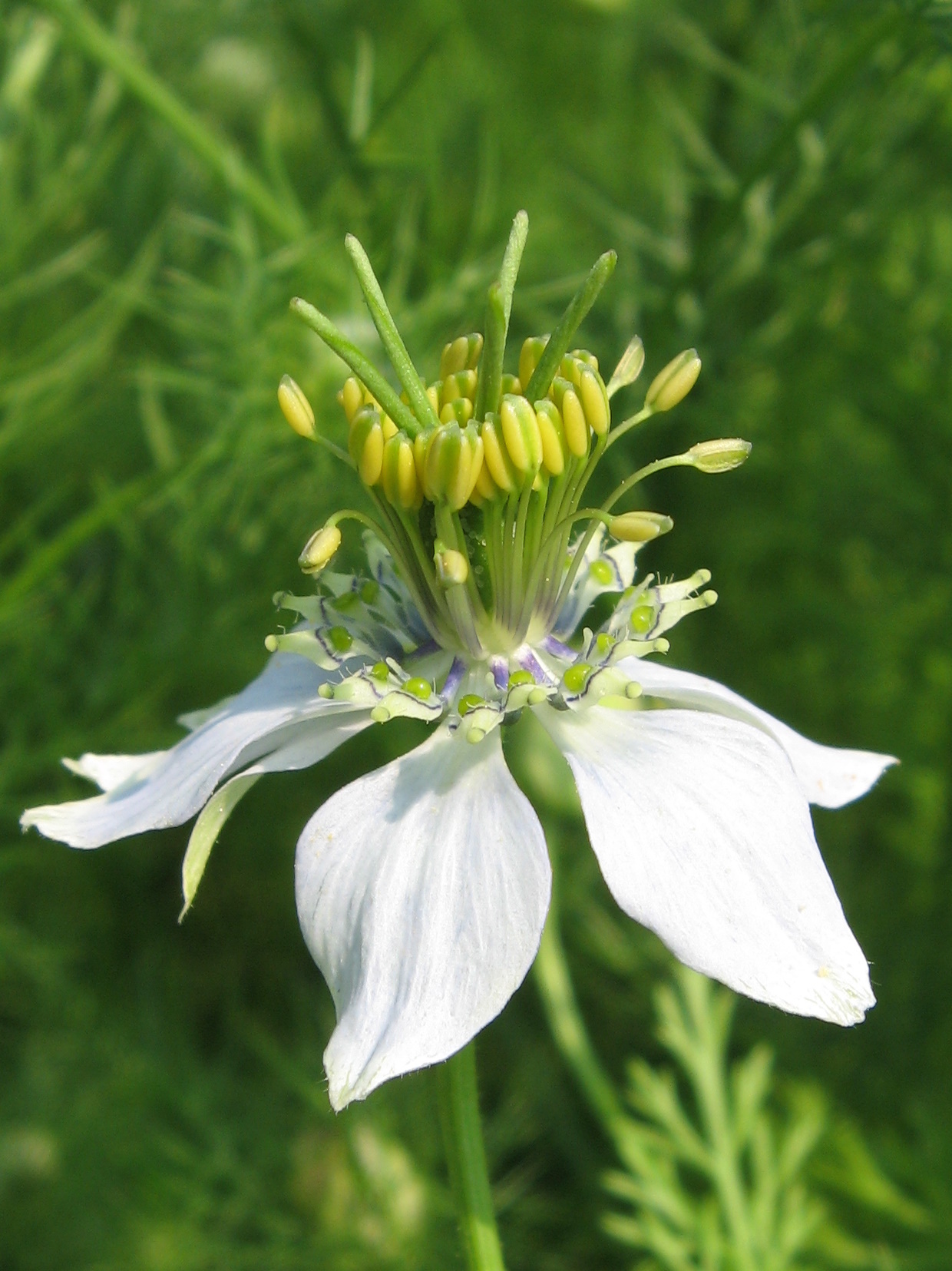

Other Names of Kalonji

  • Black Cumin
  • Nigella Seed
  • Black Seed
  • Fennel Flower
  • Roman Coriander
Nsativa001Wien

Benefits of Kalonji

Heading

<h3> Absolute Contraindications of Kalonji </h3> <h4> Pregnancy - (may affect pregnancy or fertility)</h4> <ul> <li>🤰</li> <li>Recommendation: Avoid concentrated Kalonji oil or high-dose supplements during pregnancy; discuss with your obstetrician before use.</li> <li>Reasoning: Animal and some human studies show Kalonji extracts can influence uterine activity and reproductive hormones; animal contraceptive/antifertility effects and uterine-targeted actions suggest caution in pregnancy.</li> <li>Scientific_Study_Title: Post-coital contraceptive efficacy of the seeds of Nigella sativa in rats.</li> <li>Scientific_Study_Authors: M Hattori, et al.</li> <li>Scientific_Study_Link: https://pubmed.ncbi.nlm.nih.gov/7705872/</li> <li>Scientific_Study_Excerpt: <p>The referenced animal study tested hexane extracts of Nigella sativa seeds given orally to rats in the immediate post-coital period and observed prevention of pregnancy at the doses used. The authors reported antifertility and contraceptive effects in the treated animals, with activity localized to specific extract fractions. Although performed in rodents and not directly transferable to humans, these findings demonstrate biological effects on reproduction that justify avoiding high doses during human pregnancy.</p> <p>Separately, in vitro and animal experiments show volatile oils from Kalonji alter uterine smooth muscle responses, indicating that concentrated preparations can influence uterine contractility.</p> </li> </ul> <h4>Concurrent use with Warfarin or narrow-therapeutic anticoagulants</h4> <ul> <li>🩸</li> <li>Recommendation: Do NOT take Kalonji supplements concurrently with warfarin (or similar anticoagulants) without strict medical supervision and frequent INR monitoring; avoid self-adjusting doses.</li> <li>Reasoning: Laboratory data indicate thymoquinone inhibits CYP2C9 - an enzyme that metabolizes warfarin - and can alter warfarin clearance; this raises the risk of unpredictable anticoagulant levels and bleeding.</li> <li>Scientific_Study_Title: Potential food-drug interaction risk of thymoquinone with warfarin.</li> <li>Scientific_Study_Authors: Zhen Wang, Zhe Wang, Xiaoyu Wang, Xin Lv, Hang Yin, Lili Jiang, Yangliu Xia, Wei Li, Wenli Li, Yong Liu.</li> <li>Scientific_Study_Link: https://pubmed.ncbi.nlm.nih.gov/35921950/</li> <li>Scientific_Study_Excerpt: <p>In this in-vitro kinetics study the authors measured inhibition of warfarin 7-hydroxylation by thymoquinone and found competitive inhibition with an IC50 in the low micromolar range. Using the kinetic data, they modelled food-drug interaction risk and concluded that thymoquinone at sufficiently high intakes (and corresponding Nigella sativa supplement doses) could alter warfarin metabolism and thus warfarin blood levels. The study recommends caution when co-administering significant amounts of thymoquinone or concentrated Kalonji products with warfarin because of possible clinically meaningful interactions.</p> </li> </ul> <h4>Known allergy to Nigella sativa / seed oils - (contact or systemic allergy)</h4> <ul> <li>⚠️</li> <li>Recommendation: If you have a history of allergic skin reactions to seeds/oils or have developed a rash with Kalonji products, do not use it; seek allergy evaluation if reactions occur.</li> <li>Reasoning: Clinical reports and reviews document contact dermatitis and allergic reactions to topical and oral Kalonji preparations; allergy is a direct contraindication.</li> <li>Scientific_Study_Title: Black Seed (review) - safety and topical reactions discussed.</li> <li>Scientific_Study_Authors: Adam R. et al. (PubMed entry summarizing clinical findings)</li> <li>Scientific_Study_Link: https://pubmed.ncbi.nlm.nih.gov/30000936/</li> <li>Scientific_Study_Excerpt: <p>Clinical summaries and reviews note that topical and sometimes oral use of Nigella sativa products can cause allergic contact dermatitis in susceptible people. The review highlights that while most uses are well tolerated, case reports and patch-test positive reactions exist, and that no comprehensive human breastfeeding safety data are available. The review therefore recommends caution in those with skin or seed allergies.</p> <p>Because allergic reactions can be immediate and severe in predisposed individuals, prior documented allergy is an absolute contraindication to further exposure.</p> </li> </ul> <h4>Active bleeding disorder or thrombocytopenia (tendency to bleed)</h4> <ul> <li>🩹</li> <li>Recommendation: Avoid concentrated Kalonji supplements if you have an active bleeding disorder, very low platelets, or are preparing for surgery - discuss with your hematologist first.</li> <li>Reasoning: Preclinical studies show that Kalonji components can inhibit platelet aggregation and affect coagulation tests; in settings of bleeding risk this could worsen bleeding tendency.</li> <li>Scientific_Study_Title: Hematological studies on black cumin oil from the seeds of Nigella sativa L.</li> <li>Scientific_Study_Authors: M. Fukuda, K. et al.</li> <li>Scientific_Study_Link: https://pubmed.ncbi.nlm.nih.gov/11256491/</li> <li>Scientific_Study_Excerpt: <p>In animal and in-vitro assays the methanol-soluble fraction of black cumin oil inhibited arachidonic acid-induced platelet aggregation and altered coagulation parameters in dose-dependent ways. Specific isolated phenolic compounds from the oil showed potent antiplatelet activity, in some cases greater than standard comparators in the laboratory assay. These observations support clinical caution for patients with bleeding disorders or those on anticoagulant therapy when using concentrated Kalonji preparations.</p> </li> </ul> <h3> Relative Contraindications of Kalonji </h3> <h4> Diabetes with medications (risk of additive glucose-lowering)</h4> <ul> <li>📉</li> <li>Recommendation: If you are on insulin or other glucose-lowering medicines, use Kalonji only under medical supervision and monitor blood glucose frequently to avoid hypoglycemia.</li> <li>Reasoning: Multiple clinical trials and meta-analyses show Kalonji lowers fasting glucose and HbA1c; when combined with antidiabetic drugs it may increase the glucose-lowering effect.</li> <li>Scientific_Study_Title: Effect of Nigella sativa (black seed) supplementation on glycemic control: A systematic review and meta-analysis of clinical trials.</li> <li>Scientific_Study_Authors: S. Heshmati et al.</li> <li>Scientific_Study_Link: https://pubmed.ncbi.nlm.nih.gov/30873688/</li> <li>Scientific_Study_Excerpt: <p>This meta-analysis pooled randomized clinical trials and found statistically significant reductions in fasting plasma glucose, postprandial glucose and HbA1c in participants using Nigella sativa preparations versus controls. The authors note that N. sativa oil forms and thymoquinone-rich products were among the effective formulations, and caution that when used alongside conventional antidiabetic drugs the additive effects require dose monitoring to prevent hypoglycemia.</p> </li> </ul> <h4>Concurrent use with antihypertensive drugs (blood pressure lowering)</h4> <ul> <li>🫀</li> <li>Recommendation: If you take blood pressure medication, discuss Kalonji use with your prescriber and monitor blood pressure regularly - doses may require adjustment.</li> <li>Reasoning: Clinical trials report measurable reductions in systolic and diastolic blood pressure with Kalonji oil or seeds; combining it with antihypertensives could cause symptomatic hypotension in some people.</li> <li>Scientific_Study_Title: A randomized, double-blind, placebo-controlled clinical trial to evaluate the benefits of Nigella sativa seeds oil in reducing cardiovascular risks in hypertensive patients.</li> <li>Scientific_Study_Authors: H. Kaatabi, et al.</li> <li>Scientific_Study_Link: https://pubmed.ncbi.nlm.nih.gov/33957004/</li> <li>Scientific_Study_Excerpt: <p>In this randomized clinical trial hypertensive patients given Nigella sativa seed oil experienced significant reductions in systolic and diastolic blood pressure and improvements in lipid markers compared with placebo. Investigators observed measurable antihypertensive effects within weeks, supporting the need for blood pressure monitoring when Kalonji is used together with prescribed antihypertensives to avoid excessive lowering.</p> </li> </ul> <h4>Breastfeeding (insufficient human data; topical allergy risk)</h4> <ul> <li>🍼</li> <li>Recommendation: Avoid topical application to nipple/areola and avoid high-dose oral supplements while nursing unless advised by your healthcare provider; prefer food-level culinary use.</li> <li>Reasoning: There is limited human data on Kalonji excretion into breastmilk and case reports of topical allergic reactions; cautious avoidance of concentrated preparations is advised.</li> <li>Scientific_Study_Title: Black Seed - review of uses and safety (including breastfeeding notes).</li> <li>Scientific_Study_Authors: Adam R., et al.</li> <li>Scientific_Study_Link: https://pubmed.ncbi.nlm.nih.gov/30000936/</li> <li>Scientific_Study_Excerpt: <p>The review summarizes traditional uses and available safety data and explicitly notes there are no robust human studies on excretion of Nigella sativa components into breast milk. It also records topical allergic reactions and cautions that safety during breastfeeding is not established; therefore, concentrated oral or topical use near the breast should be avoided until more data are available.</p> </li> </ul>

Heading

<h4>Mild gastrointestinal upset (nausea, bloating, diarrhea)</h4> <ul> <li>🤢</li> <li>Side effect summary: Some people report mild stomach discomfort, gas, bloating or loose stools when starting Kalonji supplements or oils; usually transient.</li> <li>Recommendation: If mild GI upset occurs, reduce dose or take with food; stop and consult a clinician if symptoms are severe or persistent.</li> <li>Reasoning: Clinical trials report gastrointestinal adverse events as the commonest mild side effects, usually resolving without intervention.</li> <li>Severity Level: Mild</li> <li>Scientific_Study_Available: Yes</li> <li>Scientific_Study_Title: Efficacy and safety of honey based formulation of Nigella sativa seed oil in functional dyspepsia: A double blind randomized controlled clinical trial.</li> <li>Scientific_Study_Authors: H. Bamosa, et al.</li> <li>Scientific_Study_Link: https://pubmed.ncbi.nlm.nih.gov/26386381/</li> <li>Scientific_Study_Excerpt: <p>In this randomized, double-blind trial of a Nigella sativa oil-honey formulation for dyspepsia, participants receiving the active product reported improvement in symptoms; adverse events were mainly limited to mild gastrointestinal complaints and no serious adverse events were reported. The trial supports that mild GI effects can occur but are generally well tolerated.</p> </li> </ul> <h4>Allergic skin reactions (contact dermatitis)</h4> <ul> <li>🤧</li> <li>Side effect summary: Topical use may cause local redness, itching, rash or allergic contact dermatitis in sensitive individuals.</li> <li>Recommendation: Do a small patch test before topical use; stop immediately and seek medical care for spreading or severe reactions.</li> <li>Reasoning: Case reports and reviews document contact dermatitis and rare severe skin reactions after topical application of Kalonji products.</li> <li>Severity Level: Moderate</li> <li>Scientific_Study_Available: Yes</li> <li>Scientific_Study_Title: Black Seed (review) - safety and topical reactions discussed.</li> <li>Scientific_Study_Authors: Adam R. et al.</li> <li>Scientific_Study_Link: https://pubmed.ncbi.nlm.nih.gov/30000936/</li> <li>Scientific_Study_Excerpt: <p>The clinical review highlights reports of allergic contact dermatitis following topical application of Nigella sativa products; while most reactions are localized and resolve after discontinuation, severe cutaneous reactions have been reported rarely. The authors therefore recommend caution in those with sensitive skin or known seed allergies.</p> </li> </ul> <h4>Hypoglycemia when combined with glucose-lowering drugs</h4> <ul> <li>⚖️</li> <li>Side effect summary: If combined with antidiabetic medicines, Kalonji may contribute to lower than expected blood glucose readings.</li> <li>Recommendation: Monitor blood glucose closely; adjust antidiabetic medication only with clinician guidance.</li> <li>Reasoning: Clinical trials and meta-analyses show measurable glucose reductions with Kalonji; additive effects with prescribed antidiabetic agents are plausible and documented in combined therapy trials.</li> <li>Severity Level: Moderate</li> <li>Scientific_Study_Available: Yes</li> <li>Scientific_Study_Title: Effect of Nigella sativa supplementation on glycemic control: A systematic review and meta-analysis of clinical trials.</li> <li>Scientific_Study_Authors: S. Heshmati et al.</li> <li>Scientific_Study_Link: https://pubmed.ncbi.nlm.nih.gov/30873688/</li> <li>Scientific_Study_Excerpt: <p>The meta-analysis pooled 17 randomized trials and found consistent reductions in fasting plasma glucose, postprandial glucose and HbA1c among participants taking Nigella sativa products. The authors emphasize that, because of demonstrable glucose-lowering effects, use with conventional hypoglycemic medicines should be supervised to reduce the risk of hypoglycemia.</p> </li> </ul>

Heading

<h4>Warfarin and other CYP2C9 substrates (anticoagulants)</h4> <ul> <li>Interaction_Details: Laboratory studies show thymoquinone can competitively inhibit CYP2C9-mediated metabolism of warfarin’s 7-hydroxylation; this can change warfarin clearance and INR unpredictably.</li> <li>Severity: Severe</li> <li>Recommendation: Avoid concurrent use of concentrated Kalonji supplements with warfarin unless under close medical supervision with frequent INR checks; if used, monitor INR and adjust warfarin dose as guided by a clinician.</li> <li>Scientific_Study_Available: Yes</li> <li>Scientific_Study_Link: https://pubmed.ncbi.nlm.nih.gov/35921950/</li> <li>Scientific_Study_Title: Potential food-drug interaction risk of thymoquinone with warfarin.</li> <li>Scientfic_Study_Authors: Zhen Wang, Zhe Wang, Xiaoyu Wang, Xin Lv, Hang Yin, Lili Jiang, Yangliu Xia, Wei Li, Wenli Li, Yong Liu.</li> <li>Scientific_Study_Excerpt: <p>In vitro kinetic experiments demonstrated that thymoquinone inhibits warfarin 7-hydroxylase activity with an IC50 of ~11 μM and competitive inhibition kinetics (K i ~3.5 μM). Risk modelling indicated that thymoquinone intake above certain thresholds (modelled as >18 mg/day or corresponding high doses of Nigella sativa supplements) could alter warfarin pharmacokinetics, potentially leading to clinically meaningful food-drug interactions. The authors conclude that coadministration requires caution and monitoring.</p> </li> </ul> <h4>Metformin and other oral antidiabetic drugs</h4> <ul> <li>Interaction_Details: Kalonji (and isolated thymoquinone) has additive glucose-lowering effects when combined with metformin, producing greater reductions in FBG and HbA1c than metformin alone in clinical trials.</li> <li>Severity: Moderate</li> <li>Recommendation: Use under clinician supervision with regular glucose monitoring; dose adjustments of antidiabetic drugs may be required to avoid hypoglycemia.</li> <li>Scientific_Study_Available: Yes</li> <li>Scientific_Study_Link: https://pubmed.ncbi.nlm.nih.gov/33684953/</li> <li>Scientific_Study_Title: Thymoquinone with Metformin Decreases Fasting, Post Prandial Glucose, and HbA1c in Type 2 Diabetic Patients.</li> <li>Scientfic_Study_Authors: (as listed on PubMed entry)</li> <li>Scientific_Study_Excerpt: <p>A 90-day randomized study compared metformin alone to metformin plus thymoquinone (50 or 100 mg/day). Both combination arms showed greater reductions in fasting blood glucose, postprandial glucose and HbA1c versus metformin alone. The trial demonstrates clinically relevant additive antihyperglycemic effects and supports the need to monitor glycemia and consider medication adjustment when Kalonji products are added to antidiabetic regimens.</p> </li> </ul> <h4>Antihypertensive medications (ACE inhibitors, ARBs, calcium-channel blockers, beta blockers)</h4> <ul> <li>Interaction_Details: Kalonji supplementation has independently lowered systolic and diastolic blood pressure in trials; when combined with prescription antihypertensives there is potential for additive blood-pressure lowering and symptomatic hypotension.</li> <li>Severity: Moderate</li> <li>Recommendation: Monitor blood pressure regularly; consult the prescribing clinician before adding Kalonji supplements and adjust antihypertensive dose if needed.</li> <li>Scientific_Study_Available: Yes</li> <li>Scientific_Study_Link: https://pubmed.ncbi.nlm.nih.gov/33957004/</li> <li>Scientific_Study_Title: A randomized, double-blind, placebo-controlled clinical trial to evaluate the benefits of Nigella sativa seeds oil in reducing cardiovascular risks in hypertensive patients.</li> <li>Scientfic_Study_Authors: H. Kaatabi, et al.</li> <li>Scientific_Study_Excerpt: <p>In this randomized, double-blind trial hypertensive patients receiving Nigella sativa oil showed statistically significant reductions in systolic and diastolic blood pressure compared with placebo, along with improved lipid and oxidative stress markers. These measurable antihypertensive effects support clinical caution when Kalonji is combined with prescribed blood-pressure medications due to the risk of additive hypotensive responses.</p> </li> </ul> <h4>Drugs with platelet or coagulation effects (antiplatelets, other anticoagulants)</h4> <ul> <li>Interaction_Details: Kalonji components have demonstrated antiplatelet activity and influence on coagulation parameters in preclinical studies; combining with antiplatelet agents or anticoagulants could increase bleeding risk.</li> <li>Severity: Moderate to Severe (depending on drug and clinical context)</li> <li>Recommendation: Avoid combining concentrated Kalonji supplements with antiplatelet/anticoagulant therapy without specialist oversight; if combined, perform bleeding risk assessment and monitoring.</li> <li>Scientific_Study_Available: Yes</li> <li>Scientific_Study_Link: https://pubmed.ncbi.nlm.nih.gov/11256491/</li> <li>Scientific_Study_Title: Hematological studies on black cumin oil from the seeds of Nigella sativa L.</li> <li>Scientfic_Study_Authors: M. Fukuda, et al.</li> <li>Scientific_Study_Excerpt: <p>Laboratory assays showed that the methanol-soluble fraction of Nigella sativa oil inhibited arachidonic acid-induced platelet aggregation and produced dose-dependent alterations in coagulation test values in animal models. The presence of isolated phenolic compounds with strong antiplatelet activity supports the biological plausibility of increased bleeding risk when Kalonji is combined with drugs that affect hemostasis.</p> </li> </ul>