Guggulu
Commiphora wightii
Guggulu, derived from the Commiphora wightii tree's resin, is a prominent Ayurvedic substance. It's supposedly beneficial for balancing Vata, Pitta, and Kapha doshas. Traditionally used for its claimed effects on metabolic health and detoxification, this aromatic resin is widely prevalent in formulations supporting overall well-being.
PLANT FAMILY
Burseraceae (Bursera)
PARTS USED
Resin, Bark, Gum
AYURVEDIC ACTION
Vata ↓, Pitta ↑, Kapha ↓
ACTIVE COMPOUNDS
Guggulsterones (2-5%)
What is Guggulu?
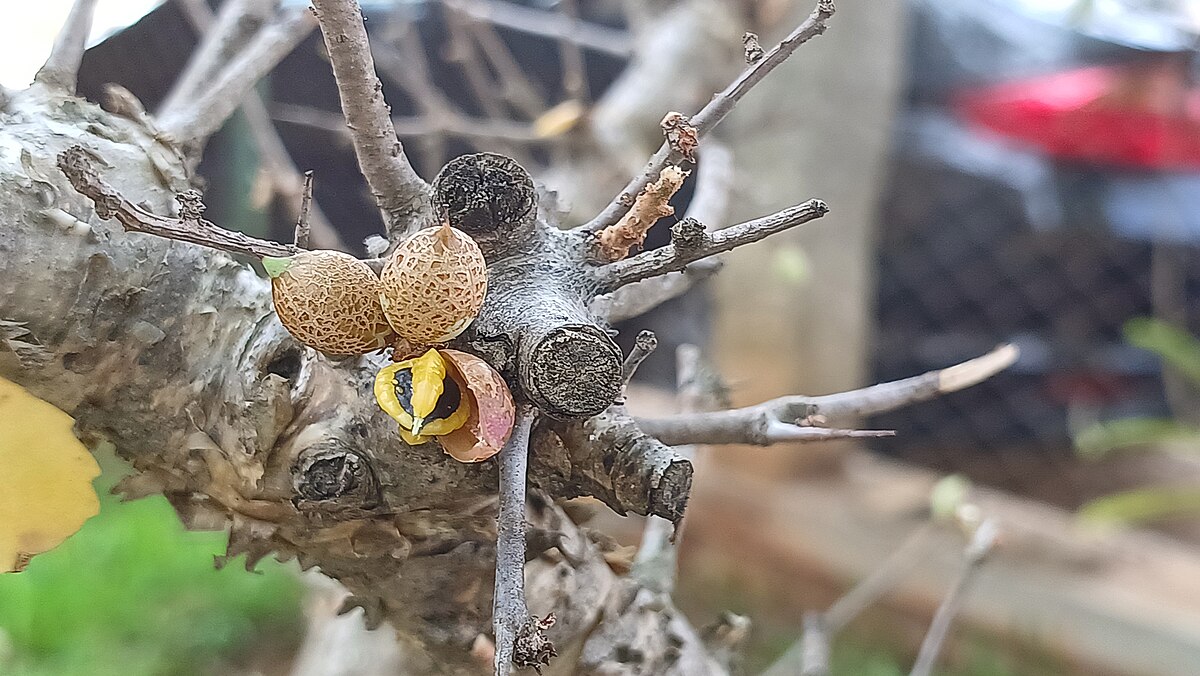
Guggulu, derived from the resin of the Commiphora wightii tree, is a prominent substance in traditional medicinal systems. This deciduous shrub, native to arid regions, is characterized by its thorny branches and small leaves. The resin, harvested from incisions in the bark, solidifies into a gummy exudate.
Known for its distinctive aromatic properties, Guggulu is primarily recognized for its active compounds, guggulsterones, which are present in concentrations of 2-5%.
Other Names of Guggulu
- Guggul
- Indian Bdellium
- Gugulipid
Heading
<h3> Absolute Contraindications of Guggulu </h3> <h4> Pregnancy (may endanger pregnancy / act as an emmenagogue)</h4> <ul> <li> 🤰</li> <li> Recommendation: Do not take guggulu during pregnancy; avoid if trying to conceive unless supervised by a specialist. </li> <li> Reasoning: Animal and toxicology reviews report effects on reproductive tissues and advise against use in pregnancy because of possible uterine stimulation and antifertility signals. </li> <li> Scientific_Study_Title: NTP Technical Report on the Toxicity Studies of a Gum Guggul Extract Formulation Administered by Gavage to Sprague Dawley Rats and B6C3F1/N Mice.</li> <li> Scientific_Study_Authors: National Toxicology Program (NTP), NIEHS.</li> <li> Scientific_Study_Link: https://www.ncbi.nlm.nih.gov/books/NBK561197/</li> <li> Scientific_Study_Excerpt: <p>The NTP technical review summarizes animal reproductive and developmental data for a standardized gum guggul extract. Short-term dosing in female rats showed reductions in uterus, ovary and cervix weights after treatment with gum guggul preparations, along with biochemical changes in reproductive tissues that the authors interpreted as indicative of antifertility activity. The report also notes limited developmental/reproductive studies overall and highlights that human safety during pregnancy is unestablished; global guidance (including WHO-style recommendations) therefore advises avoiding guggul during pregnancy and lactation because of these experimental findings.</p> <p>The NTP review emphasizes that while robust human pregnancy data are lacking, the animal signals plus traditional emmenagogue use make continued exposure during pregnancy inadvisable.</p> </li> </ul> <h4> Breastfeeding / Lactation (safety not established)</h4> <ul> <li> 🍼</li> <li> Recommendation: Avoid guggulu while breastfeeding due to lack of safety data; consult a clinician before use. </li> <li> Reasoning: There are no reliable human studies showing safety in lactation; authoritative reviews recommend against use because effects on infant or milk are unknown. </li> <li> Scientific_Study_Title: Guggul for hyperlipidemia: a review by the Natural Standard Research Collaboration.</li> <li> Scientific_Study_Authors: Ulbricht C, Basch E, Szapary P, Hammerness P, Axentsev S, Boon H, Kroll D, Garraway L, Vora M, Woods J; Natural Standard Research Collaboration.</li> <li> Scientific_Study_Link: https://pubmed.ncbi.nlm.nih.gov/16338199/</li> <li> Scientific_Study_Excerpt: <p>The Natural Standard review compiles clinical and preclinical data on guggul and explicitly concludes that safety in pregnancy and lactation is not established; consequently, the review recommends avoidance during pregnancy and breastfeeding. The authors summarize reported adverse events (e.g., dermatologic reactions, gastrointestinal upset) and flag reproductive and hormonal effects reported in animal models as reasons for caution. Because the evidence base for lactation is absent, the review places guggul in the "avoid during breastfeeding" category until human milk exposure studies are available.</p> </li> </ul> <h4> Bleeding disorders or use of anticoagulants / antiplatelet drugs</h4> <ul> <li> 🩸</li> <li> Recommendation: Do not take guggulu if you have a bleeding disorder or are on blood thinners (warfarin, DOACs, aspirin, clopidogrel) without close medical supervision - it can increase bleeding risk. </li> <li> Reasoning: Experimental and clinical data show guggul fractions can inhibit platelet aggregation and increase fibrinolytic activity - effects that may amplify anticoagulant or antiplatelet therapy and raise bleeding risk. </li> <li> Scientific_Study_Title: Pharmacology and Phytochemistry of Oleo-Gum Resin of Commiphora wightii (Guggulu) - review article.</li> <li> Scientific_Study_Authors: Prerna Sarup, Suman Bala, Sunil Kamboj.</li> <li> Scientific_Study_Link: https://pubmed.ncbi.nlm.nih.gov/26587309/ (free PMC: https://www.ncbi.nlm.nih.gov/pmc/articles/PMC4637499/)</li> <li> Scientific_Study_Excerpt: <p>This comprehensive review summarizes pharmacology studies showing that purified steroidal fractions of guggulu markedly inhibit ADP-, adrenaline- and serotonin-induced platelet aggregation in vitro and that clinical/experimental work reported increased serum fibrinolytic activity and reduced platelet adhesiveness after guggulu administration. The review cites human trials in which a guggulu fraction produced measurable increases in fibrinolytic activity within 24 hours and larger changes after one month - findings that could potentiate bleeding in patients taking anticoagulants or with inherent coagulopathy.</p> <p>Because of these effects, the authors advise caution or avoidance of guggul in persons at risk of bleeding or on antithrombotic medications unless monitored by a clinician.</p> </li> </ul> <h4> Known thyroid disease or taking thyroid hormone replacement / antithyroid drugs</h4> <ul> <li> 🧠⚖️</li> <li> Recommendation: Avoid unsupervised use if you have hyperthyroidism or hypothyroidism being treated with drugs; monitor thyroid tests closely if guggul is used under medical supervision. </li> <li> Reasoning: Preclinical and experimental studies show guggul/guggulsterones can stimulate thyroid activity and alter T3/T4 dynamics, which can change dosing needs of thyroid medications or precipitate thyrotoxic symptoms. </li> <li> Scientific_Study_Title: In vitro studies on thyrogenic effect of Commiphora mukul (guggulu).</li> <li> Scientific_Study_Authors: Tripathi YB, Tripathi P, Malhotra OP, Tripathi SN. (Planta Medica study)</li> <li> Scientific_Study_Link: https://pubmed.ncbi.nlm.nih.gov/22556948/</li> <li> Scientific_Study_Excerpt: <p>In controlled in vitro experiments, extracts of Commiphora mukul increased iodine uptake by cultivated thyroid tissue and raised markers consistent with enhanced thyroid hormone activity (increased T3 resin uptake, protein bound iodine, and free thyroxine index). Parallel animal studies have shown increased serum T3 levels and changes in hepatic deiodinase activity after guggul exposure. These experimental data indicate that guggul can influence thyroid physiology and therefore may interfere with both replacement therapy and antithyroid treatments in patients.</p> </li> </ul> <h3> Relative Contraindications of Guggulu </h3> <h4> Drugs metabolized by CYP3A enzymes (many common drugs including some statins, oral contraceptives, immunosuppressants)</h4> <ul> <li> ⚠️</li> <li> Interaction_Details: Guggul constituents can activate pregnane X receptor (PXR) and induce CYP3A transcription - this can increase metabolism of drugs broken down by CYP3A, reducing their blood levels and effectiveness. </li> <li> Severity: Moderate</li> <li> Recommendation: Consult your prescribing clinician or pharmacist before combining guggul with CYP3A substrates; therapeutic drug monitoring or dose adjustments may be needed. </li> <li> Scientific_Study_Available: Yes</li> <li> Scientific_Study_Title: Guggulsterone activates multiple nuclear receptors and induces CYP3A gene expression through the pregnane X receptor.</li> <li> Scientific_Study_Authors: Brobst DE, Ding X, Creech KL, et al.</li> <li> Scientific_Study_Link: https://pubmed.ncbi.nlm.nih.gov/15075359/</li> <li> Scientific_Study_Excerpt: <p>This experimental pharmacology study demonstrates that guggulsterones interact with several nuclear receptors, including agonist activity at the pregnane X receptor (PXR). Activation of PXR by guggulsterone led to induction of CYP3A gene expression in rodent and human hepatocytes in the study, which is a mechanistic pathway by which herbal constituents can alter the metabolism of many prescription drugs. The authors conclude that guggul therapy should be used cautiously in patients taking medications metabolized by CYP3A enzymes.</p> </li> </ul> <h4> Diabetes medications (possible additive glucose-lowering effects)</h4> <ul> <li> 🍬</li> <li> Interaction_Details: Preclinical and early experimental data suggest Commiphora extracts may have antidiabetic activity (e.g., DPP-4 inhibition and glucose-lowering effects) and could potentiate blood glucose lowering when combined with antidiabetic drugs. </li> <li> Severity: Mild</li> <li> Recommendation: Monitor blood glucose more closely and consult your clinician before using guggul with oral hypoglycemics or insulin. </li> <li> Scientific_Study_Available: Yes</li> <li> Scientific_Study_Title: Antidiabetic activity of Commiphora mukul and Phyllanthus emblica and computational analysis for the identification of active principles with dipeptidyl peptidase IV inhibitory activity.</li> <li> Scientific_Study_Authors: (authors list) - see PubMed record.</li> <li> Scientific_Study_Link: https://pubmed.ncbi.nlm.nih.gov/34854407/</li> <li> Scientific_Study_Excerpt: <p>Recent experimental work reports that Commiphora mukul extracts inhibit DPP-4 activity in vitro and produce antidiabetic effects in animal models of type 2 diabetes. These findings suggest a pharmacologic potential to lower blood glucose and indicate that, when used with standard antihyperglycemic drugs, guggul could cause additive glucose reduction; clinical data are limited, so the interaction is considered plausible and warrants monitoring.</p> </li> </ul> <h4> Planned surgery (bleeding risk / peri-operative management)</h4> <ul> <li> 🏥</li> <li> Interaction_Details: Because guggulu can reduce platelet aggregation and increase fibrinolytic activity, it may increase perioperative bleeding. </li> <li> Severity: Moderate</li> <li> Recommendation: Stop guggul at least 2 weeks before planned surgery (or follow surgeon/anesthesiologist advice) to reduce bleeding risk. </li> <li> Scientific_Study_Available: Yes</li> <li> Scientific_Study_Title: Inhibition of Platelet Aggregation by 'Guggulu' Steroids (Planta Medica, 1979 abstract).</li> <li> Scientific_Study_Authors: L. Mester, M. Mester, Swarn Nityanand.</li> <li> Scientific_Study_Link: https://www.thieme-connect.com/products/ejournals/abstract/10.1055/s-0028-1097351</li> <li> Scientific_Study_Excerpt: <p>Early experimental studies reported that purified steroidal fractions of guggulu markedly inhibited platelet aggregation induced by ADP, adrenaline and serotonin, with an effect similar to certain lipid-lowering agents. Other clinical reports and small trials described increased fibrinolytic activity in subjects taking guggul fractions. These pharmacodynamic actions provide a plausible mechanism for increased bleeding risk in the perioperative period, supporting the recommendation to discontinue guggul in advance of surgery.</p> </li> </ul>
Heading
<h4> Skin allergic reactions / rash</h4> <ul> <li> 🌿➡️🧴</li> <li> Side effect summary: Some people develop an allergic rash or contact dermatitis after oral or topical exposure to guggulu extracts. </li> <li> Recommendation: Stop guggul if a rash appears; seek medical care if severe or spreading. For topical products, discontinue immediately and consult dermatology for testing if needed. </li> <li> Reasoning: Clinical trials and case reports document hypersensitivity reactions to guggul-containing products; standardized extracts appear less likely than crude resin, but reactions still occur. </li> <li> Severity Level: Mild</li> <li> Scientific_Study_Available: Yes</li> <li> Scientific_Study_Title: Guggulipid for the treatment of hypercholesterolemia: a randomized controlled trial (JAMA 2003) - adverse dermatologic events reported.</li> <li> Scientific_Study_Authors: Gopal K, Saran RK, Nityanand S, et al. (trial referenced within JAMA report).</li> <li> Scientific_Study_Link: https://jamanetwork.com/journals/jama/fullarticle/197077</li> <li> Scientific_Study_Excerpt: <p>In a randomized controlled trial of standardized guggul extract, a subset of participants developed dermatologic hypersensitivity reactions while receiving guggulipid; these events were not seen in the placebo group. The authors reported that several participants experienced a generalized rash that resolved when the product was discontinued. The trial highlights that although many tolerate guggul, hypersensitivity is a recognized adverse effect in clinical use and should prompt discontinuation and evaluation.</p> </li> </ul> <h4> Liver enzyme elevation / hepatotoxicity (rare but reported)</h4> <ul> <li> 🟠⚠️</li> <li> Side effect summary: Rare cases of clinically significant liver injury (including acute liver failure in multi-ingredient supplements containing guggul extracts) have been reported. </li> <li> Recommendation: If you have liver disease or develop jaundice/fatigue/dark urine while taking guggul, stop immediately and seek medical care. Avoid guggul if you have severe liver disease. </li> <li> Reasoning: Case reports link multi-ingredient supplements containing guggul to serious liver injury; causation can be complex, but guggul is a suspected contributor in some cases. </li> <li> Severity Level: Severe</li> <li> Scientific_Study_Available: Yes</li> <li> Scientific_Study_Title: Acute liver failure caused by ‘fat burners’ and dietary supplements: a case report and literature review.</li> <li> Scientific_Study_Authors: Yellapu RK, Mittal V, Grewal P, Fiel M, Schiano T.</li> <li> Scientific_Study_Link: https://www.ncbi.nlm.nih.gov/pmc/articles/PMC3076034/</li> <li> Scientific_Study_Excerpt: <p>This case report describes a young, previously healthy woman who developed fulminant hepatic failure after taking a multi-ingredient “fat burner” containing usnic acid, green tea, and guggul tree extracts; investigation could not identify another proximate cause, and the supplement complex was implicated. The paper reviews similar cases linking herbal weight-loss products (often multi-ingredient) to severe hepatotoxicity. Although frank liver failure attributable to guggul alone is uncommon, the report underscores a real safety signal and the need for caution-especially with multiherbal weight-loss supplements and in people with underlying liver vulnerability.</p> </li> </ul> <h4> Gastrointestinal upset (nausea, diarrhea, belching)</h4> <ul> <li> 🤢</li> <li> Side effect summary: Mild GI symptoms such as nausea, abdominal discomfort, belching, or diarrhea are commonly reported with oral guggul preparations. </li> <li> Recommendation: Take guggul with food, reduce dose, or stop if symptoms persist; consult a clinician if severe. </li> <li> Reasoning: Clinical trials and patient reports often list GI disturbances as the most frequent adverse events; these are generally self-limited but can affect tolerability. </li> <li> Severity Level: Mild</li> <li> Scientific_Study_Available: Yes</li> <li> Scientific_Study_Title: Effect of guggul (Commiphora mukul) on serum lipids in obese, hypercholesterolemic and hyperlipemic cases (older clinical trial report).</li> <li> Scientific_Study_Authors: Arora RB, Das D, Kapoor SC, Sharma RC.</li> <li> Scientific_Study_Link: https://pubmed.ncbi.nlm.nih.gov/730716/</li> <li> Scientific_Study_Excerpt: <p>Early clinical evaluations of guggul preparations recorded mild gastrointestinal side effects in some treated subjects, including dyspepsia, belching and loose stools. These findings are echoed in larger modern reviews and randomized trials where GI complaints are among the common adverse events reported. Symptoms are typically dose-related and often improve with dose reduction or administration with food.</p> </li> </ul>
Heading
<h4> Anticoagulants / Antiplatelet agents (e.g., Warfarin, aspirin)</h4> <ul> <li> Interaction_Details: Guggulu extracts/fractions have been shown to inhibit platelet aggregation and increase fibrinolytic activity; combined use with anticoagulants or antiplatelet drugs may raise bleeding risk or potentiate anticoagulation. </li> <li> Severity: Moderate</li> <li> Recommendation: Avoid combined use unless monitored by a clinician; if combined, monitor for bleeding and check coagulation parameters frequently. </li> <li> Scientific_Study_Available: Yes</li> <li> Scientific_Study_Link: https://pubmed.ncbi.nlm.nih.gov/26587309/ (review; PMC https://www.ncbi.nlm.nih.gov/pmc/articles/PMC4637499/)</li> <li> Scientific_Study_Title: Pharmacology and Phytochemistry of Oleo-Gum Resin of Commiphora wightii (Guggulu).</li> <li> Scientfic_Study_Authors: Prerna Sarup, Suman Bala, Sunil Kamboj.</li> <li> Scientific_Study_Excerpt: <p>This review collates pharmacology studies reporting that guggulu fractions inhibit platelet aggregation and that oral guggul administration increased fibrinolytic activity in clinical and experimental settings. The review highlights human reports of altered coagulation indices and decreased platelet adhesiveness, providing a mechanistic rationale for interactions with anticoagulant and antiplatelet therapies. Clinicians should be aware of the potential for enhanced bleeding when guggul is combined with these agents.</p> </li> </ul> <h4> Drugs metabolized by CYP3A (e.g., certain statins, oral contraceptives, some immunosuppressants)</h4> <ul> <li> Interaction_Details: Guggulsterones can activate pregnane X receptor (PXR), leading to induction of CYP3A (and related drug-metabolizing enzymes). This may lower plasma concentrations of drugs that are CYP3A substrates and reduce efficacy. </li> <li> Severity: Moderate</li> <li> Recommendation: If taking drugs primarily metabolized by CYP3A, consult your prescriber - therapeutic drug monitoring, alternative medications, or dose adjustments may be needed. </li> <li> Scientific_Study_Available: Yes</li> <li> Scientific_Study_Link: https://pubmed.ncbi.nlm.nih.gov/15075359/</li> <li> Scientific_Study_Title: Guggulsterone activates multiple nuclear receptors and induces CYP3A gene expression through the pregnane X receptor.</li> <li> Scientfic_Study_Authors: Brobst DE, Ding X, Creech KL, et al.</li> <li> Scientific_Study_Excerpt: <p>In vitro and hepatocyte studies found that guggulsterones act as ligands for several nuclear receptors, including PXR, and can induce CYP3A expression. The induction of CYP3A by guggulsterone resulted in increased expression of CYP3A genes in both rodent and human hepatocytes - a mechanism known to reduce effective blood levels of many commonly prescribed drugs. The authors note this as a plausible basis for clinically relevant herb-drug interactions and advise caution when combining guggul with drugs metabolized by CYP3A.</p> </li> </ul> <h4> Thyroid hormones or antithyroid drugs</h4> <ul> <li> Interaction_Details: Because guggul can stimulate thyroid activity (increase iodine uptake and T3 indices in experimental models), it may alter the required dose of thyroid replacement or affect control in hyperthyroid patients. </li> <li> Severity: Moderate</li> <li> Recommendation: Do not combine without endocrinology oversight; if used, monitor thyroid function tests and adjust medications accordingly. </li> <li> Scientific_Study_Available: Yes</li> <li> Scientific_Study_Link: https://pubmed.ncbi.nlm.nih.gov/22556948/</li> <li> Scientific_Study_Title: In vitro studies on thyrogenic effect of Commiphora mukul (guggulu).</li> <li> Scientfic_Study_Authors: Tripathi YB, Tripathi P, Malhotra OP, Tripathi SN.</li> <li> Scientific_Study_Excerpt: <p>Experimental tissue culture studies and supporting animal data indicate that Commiphora mukul extracts can increase thyroid iodine uptake and parameters consistent with stimulated thyroid hormone activity. These physiologic effects mean guggul may change circulating thyroid hormone levels or the response to replacement/antithyroid drugs. The study recommends monitoring and exercising caution when herbal use overlaps with thyroid pharmacotherapy.</p> </li> </ul>