Guduchi
Tinospora cordifolia
Guduchi (Tinospora cordifolia), also known as Giloy or Amrita (the root of immortality), is a revered Ayurvedic herb. It is widely prevalent in India and valued for its claimed adaptogenic and immunomodulatory properties. Traditionally, it's supposed to balance Vata and Pitta doshas. Its extensive therapeutic applications make it a cornerstone in holistic health practices.
PLANT FAMILY
Menispermaceae (Moonseed)
PARTS USED
Stem, Root, Leaves
AYURVEDIC ACTION
Vata ↓, Pitta ↓, Kapha ↑
ACTIVE COMPOUNDS
Berberine (0.05-0.1%)
What is Guduchi?
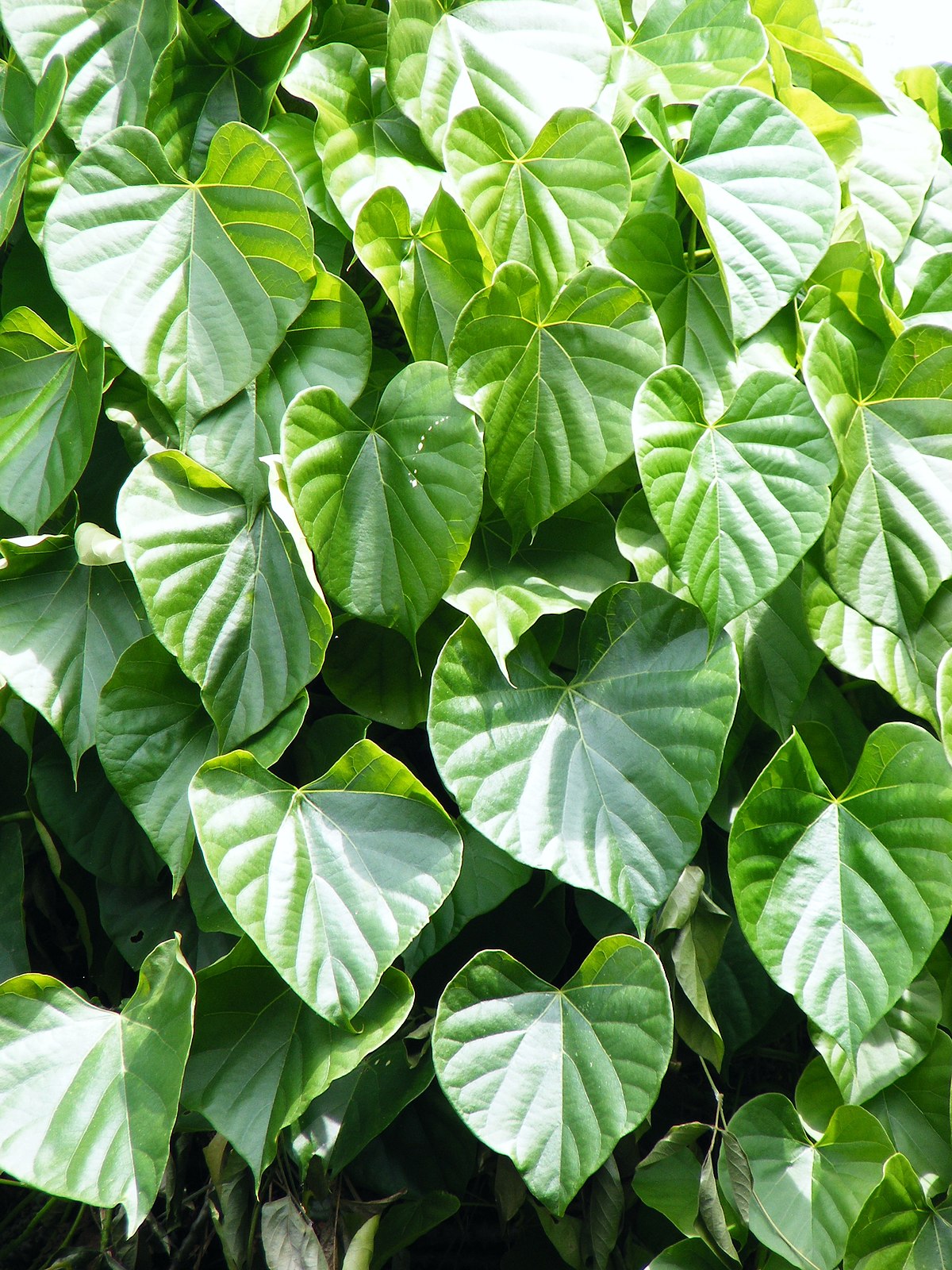
Guduchi, scientifically known as Tinospora cordifolia, is a widely recognized herbaceous vine belonging to the Menispermaceae family. Native to tropical regions of India, it thrives in diverse environments, often seen climbing on trees. This plant is characterized by its heart-shaped leaves, succulent stem, and yellowish flowers that develop into bright red berries.
Revered in traditional Ayurvedic medicine for centuries, Guduchi is often referred to as "Amrita," meaning "the root of immortality," due to its extensive therapeutic applications. It is particularly valued for its adaptogenic and immunomodulatory properties, making it a cornerstone in holistic health practices.
Other Names of Guduchi
- Giloy
- Amrita
- Guduchi satva
- Indian Tinospora
- Heart-leaved Moonseed
Heading
<h3> Absolute Contraindications of Guduchi </h3> <h4>Autoimmune disease or known autoimmune hepatitis [If you have an autoimmune condition]</h4> <ul> <li>🛑</li> <li>Recommendation: Avoid using Guduchi if you have active autoimmune disease without specialist advice; consult your rheumatologist or hepatologist first.</li> <li>Reasoning: Guduchi can stimulate immune pathways and modulate T-cell differentiation; in susceptible people this immune stimulation may worsen autoimmune activity or unmask autoimmune-like liver inflammation.</li> <li>Scientific_Study_Title: Herbal Immune Booster-Induced Liver Injury in the COVID-19 Pandemic - A Case Series.</li> <li>Scientific_Study_Authors: Kulkarni, Mukherjee, et al.</li> <li>Scientific_Study_Link: https://pubmed.ncbi.nlm.nih.gov/34230786/</li> <li>Scientific_Study_Excerpt: <p>Paraphrase: This case series reports patients who developed autoimmune-like hepatitis temporally associated with consumption of immune-boosting herbal products containing Tinospora cordifolia. Several patients had markers suggesting autoimmune liver disease and needed immunosuppression; some had underlying silent chronic autoimmune conditions that appeared to be unmasked after herb use. The authors conclude that immune stimulation by such herbs may trigger or reveal autoimmune hepatic pathology in predisposed individuals, and recommend caution in people with autoimmune disorders.</p> </li> </ul> <h4>Active liver disease or prior herb-related liver injury [If you have current liver disease]</h4> <ul> <li>🩺</li> <li>Recommendation: Do not take Guduchi if you have ongoing liver inflammation, unexplained liver enzyme elevation, or previous herb-associated liver injury unless cleared by a liver specialist.</li> <li>Reasoning: Although many preclinical studies report hepatoprotective effects, clinical case reports document rare instances of acute hepatitis temporally linked to Guduchi, indicating a potential idiosyncratic or immune-mediated risk in some users.</li> <li>Scientific_Study_Title: A Case Report of Acute Hepatitis Involving the Medicinal Herb Tinospora cordifolia Along with Other Variables.</li> <li>Scientific_Study_Authors: Brinker, et al.</li> <li>Scientific_Study_Link: https://pubmed.ncbi.nlm.nih.gov/36930784/</li> <li>Scientific_Study_Excerpt: <p>Paraphrase: The report describes an adult who developed acute hepatitis after months of taking herbal products that included Tinospora cordifolia. Liver enzymes rose markedly and normalized after stopping the herbs without specific therapy. The authors discuss the herb as a possible trigger of hepatotoxicity in this instance and recommend that clinicians ask about herbal use when evaluating acute hepatitis.</p> </li> </ul> <h4>Pregnancy and breastfeeding [If you are pregnant or nursing]</h4> <ul> <li>🤰</li> <li>Recommendation: Avoid Guduchi during pregnancy and breastfeeding because human safety data are insufficient; consult your obstetrician if considering use.</li> <li>Reasoning: Animal studies show Guduchi influences maternal/fetal metabolic parameters (insulin, placental changes). Human safety has not been established, so prudent avoidance is recommended until robust clinical data exist.</li> <li>Scientific_Study_Title: Effect of Tinospora cordifolia on gestational diabetes mellitus and its complications (animal study).</li> <li>Scientific_Study_Authors: (as listed on PubMed) - Arefian, et al.</li> <li>Scientific_Study_Link: https://pubmed.ncbi.nlm.nih.gov/37080903/</li> <li>Scientific_Study_Excerpt: <p>Paraphrase: In pregnant mouse models of gestational diabetes, Guduchi preparations altered insulin/glucose indices, increased pancreatic beta-cell activity and changed placental weight and litter size compared with controls. Authors suggested potential metabolic effects on pregnancy outcomes and recommended further testing before clinical use-supporting caution in pregnancy until human safety is proven.</p> </li> </ul> <h4>Concurrent organ transplant or potent immunosuppression [If you are on immunosuppressants]</h4> <ul> <li>⚠️</li> <li>Recommendation: Avoid Guduchi while taking immunosuppressant medications for organ transplant or autoimmune suppression, unless a transplant physician agrees and monitors closely.</li> <li>Reasoning: Guduchi exerts measurable effects on T cells and cytokine pathways; such immune stimulation can decrease the intended suppression and risk organ rejection or reduced control of immune suppression-dependent therapies.</li> <li>Scientific_Study_Title: Deciphering the mechanism of Tinospora cordifolia extract on Th17 cells through in-depth transcriptomic profiling and in silico analysis.</li> <li>Scientific_Study_Authors: Nandan, Sharma, Banerjee, Sadasivam, Venkatesan, Prasher.</li> <li>Scientific_Study_Link: https://pubmed.ncbi.nlm.nih.gov/36699055/</li> <li>Scientific_Study_Excerpt: <p>Paraphrase: This in-vitro transcriptomic study showed Guduchi extract inhibits Th17 differentiation and alters cytokine-receptor and JAK-STAT signaling, producing broad immunomodulatory changes in CD4+ T cells. Such immune modulation is biologically significant and implies potential to interact with clinical immunosuppression-supporting avoidance in transplant or heavy immunosuppression settings without specialist oversight.</p> </li> </ul> <h3> Relative Contraindications of Guduchi </h3> <h4>Diabetes or concurrent antidiabetic medication [If you take medicines for blood sugar]</h4> <ul> <li>📉</li> <li>Recommendation: Use caution and monitor blood glucose closely if you take Guduchi together with antidiabetic drugs; dose adjustments of medications may be needed under physician supervision.</li> <li>Reasoning: Preclinical and pharmacokinetic studies show Guduchi can lower blood glucose and can alter the pharmacokinetics of glibenclamide, increasing hypoglycemia risk when combined with oral hypoglycemics.</li> <li>Scientific_Study_Title: Effect of Tinospora cordifolia aqua-alcoholic extract on pharmacokinetic of Glibenclamide in rat: An herb-drug interaction study.</li> <li>Scientific_Study_Authors: Raut, et al.</li> <li>Scientific_Study_Link: https://pubmed.ncbi.nlm.nih.gov/29413979/</li> <li>Scientific_Study_Excerpt: <p>Paraphrase: In rats pretreated with Tinospora cordifolia extract, the pharmacokinetic profile of glibenclamide changed (enzyme activity alterations were observed), indicating potential for altered blood levels of the oral hypoglycemic drug. The study recommends monitoring and caution when co-administering Guduchi with sulfonylureas and similar agents.</p> </li> </ul> <h4>Anticoagulant or antiplatelet therapy [If you are on blood thinners]</h4> <ul> <li>🩸</li> <li>Recommendation: Discuss with your clinician before taking Guduchi along with anticoagulant or antiplatelet medicines; monitoring and dose adjustment may be necessary.</li> <li>Reasoning: In vitro and ex vivo work shows Guduchi extracts can inhibit thrombin activity and reduce platelet adhesion/activation, suggesting additive bleeding risk when combined with blood thinning drugs.</li> <li>Scientific_Study_Title: Evaluation of Antithrombotic Activities of Solanum xanthocarpum and Tinospora cordifolia.</li> <li>Scientific_Study_Authors: Sharma, et al.</li> <li>Scientific_Study_Link: https://pubmed.ncbi.nlm.nih.gov/29568195/</li> <li>Scientific_Study_Excerpt: <p>Paraphrase: The methanolic leaf extract of Tinospora cordifolia inhibited thrombin activity and thrombin generation and decreased platelet adhesion/activation in laboratory assays at defined concentrations, supporting a biologic antithrombotic effect that could interact with therapeutic anticoagulation.</p> </li> </ul> <h4>Drugs metabolized by CYP enzymes (CYP2C9, CYP3A4, CYP2D6) [If you take many prescription drugs]</h4> <ul> <li>💊</li> <li>Recommendation: If you take medicines primarily cleared by CYP2C9, CYP3A4 or CYP2D6 (for example some antidepressants, statins, anticoagulants), consult your clinician before starting Guduchi; monitoring or dose changes may be needed.</li> <li>Reasoning: In vitro liver microsome studies show concentration-dependent inhibition of major CYP isoenzymes by standardized Guduchi extracts and constituents, suggesting potential to change drug metabolism and blood levels of co-medications.</li> <li>Scientific_Study_Title: Metabolism-mediated interaction potential of standardized extract of Tinospora cordifolia through rat and human liver microsomes.</li> <li>Scientific_Study_Authors: Suresh, et al.</li> <li>Scientific_Study_Link: https://pubmed.ncbi.nlm.nih.gov/27721546/ (also available at PMC: https://www.ncbi.nlm.nih.gov/pmc/articles/PMC5051254/)</li> <li>Scientific_Study_Excerpt: <p>Paraphrase: Standardized Tinospora cordifolia extract and the marker tinosporaside showed concentration-dependent inhibition of human recombinant CYP1A2, CYP2C9, CYP2D6 and CYP3A4 in vitro; reported IC50s were higher than strong classical inhibitors but nonetheless indicate possible interaction potential at sufficiently high exposures or with sensitive drugs.</p> </li> </ul> <h4>Surgery (scheduled procedures) [If you have surgery planned soon]</h4> <ul> <li>🕒</li> <li>Recommendation: Stop Guduchi at least 1-2 weeks before elective surgery to avoid perioperative blood sugar instability or unforeseen interactions unless your surgeon advises otherwise.</li> <li>Reasoning: Guduchi may lower blood glucose or affect coagulation and liver function; perioperative control of glucose and bleeding risk are important and predictable drug responses are preferred around surgery.</li> <li>Scientific_Study_Title: Hypoglycemic activity of alkaloidal fraction of Tinospora cordifolia.</li> <li>Scientific_Study_Authors: Shanmugasundaram, et al.</li> <li>Scientific_Study_Link: https://pubmed.ncbi.nlm.nih.gov/21665451/</li> <li>Scientific_Study_Excerpt: <p>Paraphrase: Alkaloid-rich fractions and isolated alkaloids from Tinospora cordifolia showed insulin-mimetic and insulin-releasing effects in cellular and animal models, lowering blood glucose and demonstrating potential for additive hypoglycemia when combined with other glucose-lowering influences-supporting caution around procedures where glycemic stability is required.</p> </li> </ul>
Heading
<h4>Side Effect 1: Liver inflammation / hepatitis</h4> <ul> <li>🧾</li> <li>Side effect summary: Rare but documented cases of acute or autoimmune-like hepatitis have been reported after use of Guduchi-containing herbal products.</li> <li>Recommendation: Stop the herb and seek medical evaluation if you develop fatigue, jaundice, dark urine, abdominal pain or unexplained nausea; consult a clinician promptly.</li> <li>Reasoning: Case reports and series link temporal Guduchi exposure to liver enzyme elevations and autoimmune-pattern hepatitis in certain patients, suggesting idiosyncratic or immune-mediated injury in susceptible individuals.</li> <li>Severity Level: Severe</li> <li>Scientific_Study_Available: Yes</li> <li>Scientific_Study_Title: Herbal Immune Booster-Induced Liver Injury in the COVID-19 Pandemic - A Case Series.</li> <li>Scientific_Study_Authors: Kulkarni, Mukherjee, et al.</li> <li>Scientific_Study_Link: https://pubmed.ncbi.nlm.nih.gov/34230786/</li> <li>Scientific_Study_Excerpt: <p>Paraphrase: The case series describes several patients who developed acute hepatitis with autoimmune features following consumption of immune-boosting herbal formulations containing Tinospora cordifolia. Symptoms and biochemical liver injury improved in many on withdrawal and/or steroids. The authors advise caution with use-especially in those with underlying autoimmune predisposition-and recommend eliciting herbal history in liver injury workups.</p> </li> </ul> <h4>Side Effect 2: Hypoglycemia (low blood sugar)</h4> <ul> <li>📉</li> <li>Side effect summary: Guduchi extracts and isolated fractions can lower blood glucose; when combined with antidiabetic drugs this may cause hypoglycemia.</li> <li>Recommendation: If you have diabetes and take glucose-lowering medications, monitor blood glucose more often and consult your clinician before starting Guduchi; seek urgent care for severe hypoglycemia symptoms.</li> <li>Reasoning: Multiple preclinical studies show insulin-like activity, stimulation of insulin release, improved GLUT4 expression and reduced gluconeogenesis-mechanisms that raise risk of additive glucose lowering.</li> <li>Severity Level: Moderate</li> <li>Scientific_Study_Available: Yes</li> <li>Scientific_Study_Title: Hypoglycemic activity of alkaloidal fraction of Tinospora cordifolia.</li> <li>Scientific_Study_Authors: Grover, Rathi, et al. (as per PubMed record)</li> <li>Scientific_Study_Link: https://pubmed.ncbi.nlm.nih.gov/21665451/</li> <li>Scientific_Study_Excerpt: <p>Paraphrase: The study found that alkaloid-rich fractions and certain alkaloids from Tinospora cordifolia stimulated insulin secretion in beta-cell lines, decreased gluconeogenesis in hepatocytes and reduced fasting blood glucose in animal models-supporting a plausible and reproducible hypoglycemic effect in preclinical systems.</p> </li> </ul> <h4>Side Effect 3: Potential increase in bleeding tendency (haemostasis alteration)</h4> <ul> <li>🩹</li> <li>Side effect summary: At certain extract concentrations Guduchi can inhibit thrombin and reduce platelet adhesion or activation in laboratory assays-suggesting possible bleeding risk when combined with blood thinners.</li> <li>Recommendation: If you use anticoagulants or antiplatelet drugs, discuss with your clinician and consider close INR or clinical monitoring; avoid unsupervised combined use.</li> <li>Reasoning: In vitro thrombin inhibition and decreased platelet activation were demonstrated, indicating that additive antithrombotic effects are biologically plausible.</li> <li>Severity Level: Moderate</li> <li>Scientific_Study_Available: Yes</li> <li>Scientific_Study_Title: Evaluation of Antithrombotic Activities of Solanum xanthocarpum and Tinospora cordifolia.</li> <li>Scientific_Study_Authors: Sharma, et al.</li> <li>Scientific_Study_Link: https://pubmed.ncbi.nlm.nih.gov/29568195/</li> <li>Scientific_Study_Excerpt: <p>Paraphrase: Laboratory assays showed that Tinospora cordifolia methanolic extracts inhibited thrombin activity and thrombin generation and reduced platelet adhesion and activation at tested concentrations, supporting an antithrombotic effect that could be relevant when combined with anticoagulant/antiplatelet therapies.</p> </li> </ul>
Heading
<h4>Sulfonylureas / Oral hypoglycemics (e.g., glibenclamide)</h4> <ul> <li>Interaction_Details: Guduchi can lower blood sugar and may change the pharmacokinetics of sulfonylureas, increasing risk of hypoglycemia.</li> <li>Severity: Moderate</li> <li>Recommendation: Avoid unsupervised combination; if co-used, monitor blood glucose closely and adjust diabetic medication under physician guidance.</li> <li>Scientific_Study_Available: Yes</li> <li>Scientific_Study_Link: https://pubmed.ncbi.nlm.nih.gov/29413979/</li> <li>Scientific_Study_Title: Effect of Tinospora cordifolia aqua-alcoholic extract on pharmacokinetic of Glibenclamide in rat: An herb-drug interaction study.</li> <li>Scientfic_Study_Authors: Raut, U., et al.</li> <li>Scientific_Study_Excerpt: <p>Paraphrase: In rat studies, pretreatment with Tinospora cordifolia extract altered the metabolism and pharmacokinetic parameters of glibenclamide and showed inhibition of several CYP isoenzymes; these changes suggest potential for altered drug exposure and increased hypoglycemic effect when the herb and drug are combined. The authors recommend caution and monitoring in co-administration scenarios.</p> </li> </ul> <h4>Anticoagulants / Antiplatelet agents (e.g., warfarin, aspirin)</h4> <ul> <li>Interaction_Details: Guduchi extracts showed antithrombotic and platelet-inhibiting activity in vitro, which may potentiate bleeding risk when combined with blood thinners.</li> <li>Severity: Moderate</li> <li>Recommendation: Consult the prescribing clinician before combining; monitor bleeding parameters and clinical signs closely.</li> <li>Scientific_Study_Available: Yes</li> <li>Scientific_Study_Link: https://pubmed.ncbi.nlm.nih.gov/29568195/</li> <li>Scientific_Study_Title: Evaluation of Antithrombotic Activities of Solanum xanthocarpum and Tinospora cordifolia.</li> <li>Scientfic_Study_Authors: Sharma, S., et al.</li> <li>Scientific_Study_Excerpt: <p>Paraphrase: The in-vitro study found Tinospora cordifolia methanolic extracts inhibited thrombin activity and thrombin generation and decreased platelet adhesion/activation at tested concentrations. While these are laboratory findings, they provide a biological basis for possible additive anticoagulant/antiplatelet effects in patients taking clinical blood-thinning medications.</p> </li> </ul> <h4>Immunosuppressants (e.g., calcineurin inhibitors, azathioprine)</h4> <ul> <li>Interaction_Details: Guduchi’s immunomodulatory actions on T-cells and cytokine signalling could oppose the intended effects of immunosuppressants or unpredictably alter immune control.</li> <li>Severity: Severe</li> <li>Recommendation: Avoid concurrent use with critical immunosuppression (e.g., post-transplant) unless under specialist supervision; do not self-prescribe.</li> <li>Scientific_Study_Available: Yes</li> <li>Scientific_Study_Link: https://pubmed.ncbi.nlm.nih.gov/36699055/</li> <li>Scientific_Study_Title: Deciphering the mechanism of Tinospora cordifolia extract on Th17 cells through in-depth transcriptomic profiling and in silico analysis.</li> <li>Scientfic_Study_Authors: Nandan, Sharma, Banerjee, Sadasivam, Venkatesan, Prasher.</li> <li>Scientific_Study_Excerpt: <p>Paraphrase: The study demonstrates that Guduchi extract significantly modulates differentiation and cytokine production of CD4+ T cells (notably Th17), by inhibiting JAK-STAT and cytokine-receptor signalling pathways-biological effects that could interfere with or counteract clinical immunosuppression in sensitive patients.</p> </li> </ul> <h4>Drugs metabolized by CYP450 enzymes (e.g., drugs cleared by CYP2C9, CYP2D6, CYP3A4)</h4> <ul> <li>Interaction_Details: Guduchi extracts and constituents show concentration-dependent inhibition of major CYP isoenzymes in vitro; this may modify metabolism and plasma levels of co-administered drugs.</li> <li>Severity: Moderate</li> <li>Recommendation: For drugs with narrow therapeutic windows, consult a clinician or pharmacist before starting Guduchi; consider monitoring drug levels or clinical effects.</li> <li>Scientific_Study_Available: Yes</li> <li>Scientific_Study_Link: https://pubmed.ncbi.nlm.nih.gov/27721546/ (PMC: https://www.ncbi.nlm.nih.gov/pmc/articles/PMC5051254/)</li> <li>Scientific_Study_Title: Metabolism-mediated interaction potential of standardized extract of Tinospora cordifolia through rat and human liver microsomes.</li> <li>Scientfic_Study_Authors: Suresh, D., et al.</li> <li>Scientific_Study_Excerpt: <p>Paraphrase: In vitro assays with human recombinant CYP enzymes showed Tinospora cordifolia extract inhibited CYP3A4, CYP2D6, CYP2C9 and CYP1A2 with IC50s higher than potent clinical inhibitors but still demonstrable. The authors interpret a relatively low risk at typical exposures, but advise that interactions are possible-particularly with sensitive drugs or high/standardized extract doses.</p> </li> </ul>