Dugdha Kantaka
Sonchus asper
Dugdha Kantaka (Sonchus asper) is a widely prevalent herbaceous plant in Ayurveda, known for its supposed balancing effects on Vata and Pitta doshas. Traditionally, its whole plant, leaves, and roots are claimed to aid in various health aspects, often found in disturbed areas. This "Prickly Sowthistle" has a long history of traditional use.
PLANT FAMILY
Asteraceae (Daisy)
PARTS USED
Whole plant, leaves, roots
AYURVEDIC ACTION
Vata ↓, Pitta ↓, Kapha ↑
ACTIVE COMPOUNDS
Taraxasterol (0.1-0.3%)
What is Dugdha Kantaka?
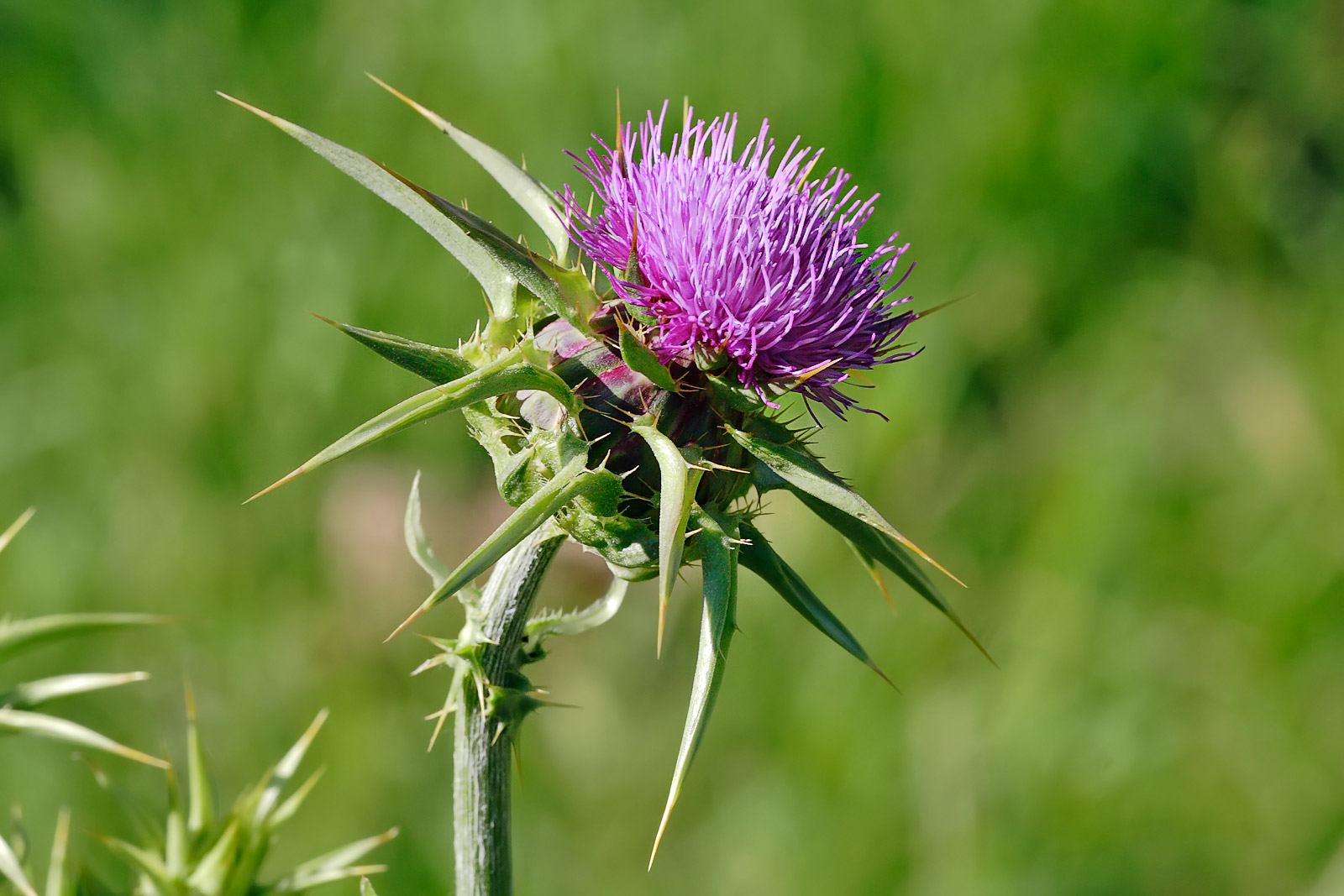
Dugdha Kantaka, scientifically known as Sonchus asper, is a widespread annual or biennial herbaceous plant belonging to the Asteraceae (Daisy) family. Characterized by its prickly leaves and yellow, dandelion-like flowers, it is commonly found in disturbed areas, fields, and gardens across temperate regions. This plant is recognizable by the milky sap (latex) that exudes from its stems and leaves when broken, a distinctive feature reflected in its common name.
While often considered a weed in many agricultural contexts, various parts of the plant, including its whole plant, leaves, and roots, have historical uses in traditional herbal practices globally.
Other Names of Dugdha Kantaka
- Prickly Sowthistle
- Spiny Sowthistle
- Rough Milk Thistle
Benefits of Dugdha Kantaka
Heading
<h3> Absolute Contraindications of Dugdha Kantaka </h3> <h4> Eye or ocular exposure (you have sap in/near your eyes)</h4> <ul> <li>🧴👁️</li> <li>Recommendation: Immediately avoid any application near the eyes; if sap contacts the eye, irrigate copiously with water and seek urgent ophthalmology care.</li> <li>Reasoning: The milky latex is a potent mucosal irritant and chemical-toxicant; ocular inoculation causes severe burning, keratitis, corneal epithelial loss, anterior uveitis, and transient to sometimes permanent vision loss if not treated promptly.</li> <li>Scientific_Study_Title: Keratouveitis caused by Euphorbia plant sap.</li> <li>Scientific_Study_Authors: Basak S.K., Bakshi P., Basu S., Basak S.</li> <li>Scientific_Study_Link: https://pubmed.ncbi.nlm.nih.gov/19574703/</li> <li>Scientific_Study_Excerpt: <p>Authors reported multiple patients who developed immediate severe burning, reduced vision, and clinical findings ranging from keratoconjunctivitis to stromal corneal edema and anterior uveitis after accidental inoculation with Euphorbia latex. Symptoms often began quickly after exposure and progressed over hours; with timely supportive therapy (irrigation, topical antibiotics and steroids, cycloplegics) most cases resolved over 10-14 days. The report emphasises that even small amounts of sap can cause significant inflammation and that protective eyewear is important when handling these plants.</p> </li> </ul> <h4> Pregnancy (internal use during pregnancy)</h4> <ul> <li>🚫🤰</li> <li>Recommendation: Do not take Dugdha Kantaka internally if you are pregnant or trying to conceive; avoid any unprescribed uterotonic herbal preparations derived from Euphorbia species.</li> <li>Reasoning: Several Euphorbia species contain compounds that stimulate uterine smooth muscle and in animal studies caused increased uterine contractions and fetal loss; therefore internal use risks miscarriage/early labour and is unsafe in pregnancy.</li> <li>Scientific_Study_Title: Uterine Contractile Activity and Abortifacient Effect of the Aqueous Extract of Euphorbia heterophylla L. Leaves in Albino Rats.</li> <li>Scientific_Study_Authors: Elemo O.O., Akinyede A.A., Oreagba I.A., Nicholas-Okpara V.A., Unuofin J.O.</li> <li>Scientific_Study_Link: https://phatoxnatmed.org/index.php/phatoxnatmed/article/view/14</li> <li>Scientific_Study_Excerpt: <p>In laboratory experiments, the aqueous leaf extract increased isolated uterine contractility in a concentration-dependent manner and produced abortifacient effects when given orally to pregnant rats (abortion rates rose substantially at higher doses). The extract’s contractile effects were influenced by calcium availability and were attenuated by bronchodilator and anti-inflammatory pre-treatments in vitro, suggesting active phytochemicals can directly stimulate uterine smooth muscle and induce fetal loss in animal models. Authors conclude traditional oxytocic use may be pharmacologically active and risky in pregnancy.</p> </li> </ul> <h4> Known hypersensitivity / severe contact-allergy to plant latex (you've had strong skin reactions to Euphorbia or similar latex before)</h4> <ul> <li>⚠️🖐️</li> <li>Recommendation: Avoid any contact (topical or handling without gloves) and do not use preparations containing raw latex; if exposed and a severe skin reaction appears, stop exposure and seek medical advice.</li> <li>Reasoning: Several Euphorbia species’ latex provokes irritant and allergic contact dermatitis; exposure can produce bullae, vesiculation, blistering and prolonged desquamation in sensitized individuals.</li> <li>Scientific_Study_Title: Irritant contact dermatitis from an ornamental Euphorbia.</li> <li>Scientific_Study_Authors: Webster GL; (study authors as indexed in PubMed record).</li> <li>Scientific_Study_Link: https://pubmed.ncbi.nlm.nih.gov/7249622/</li> <li>Scientific_Study_Excerpt: <p>Open and closed patch testing with undiluted latex from a Euphorbia species produced marked irritant responses including follicular dermatitis, bullae and vesiculation in volunteers; the dermatologic effects lasted more than a week in some subjects. The report documents that undiluted plant latex can be strongly irritant and produce significant skin injury, supporting caution when using raw latex topically, and recommending protective handling and avoidance in sensitized persons.</p> </li> </ul> <h3> Relative Contraindications of Dugdha Kantaka </h3> <h4> Application over broken, ulcerated or highly inflamed skin (topical use on open wounds)</h4> <ul> <li>🩹⚠️</li> <li>Recommendation: Avoid applying raw latex or unstandardized extracts to open wounds or large ulcerated areas; if a practitioner uses processed, standardized formulations, it should be under supervision only.</li> <li>Reasoning: While some experimental reports show wound-modulating activity for specific extracts, the raw latex is caustic and can irritate or chemically burn vulnerable tissue-so risks and benefits depend on species, preparation, and dose.</li> <li>Scientific_Study_Title: Ethnobotanical uses, phytochemistry and biological activities of Euphorbia neriifolia - review (section on toxicology and wound effects).</li> <li>Scientific_Study_Authors: S. Paul et al. (review article, PMC available).</li> <li>Scientific_Study_Link: https://www.ncbi.nlm.nih.gov/pmc/articles/PMC9319654/</li> <li>Scientific_Study_Excerpt: <p>The comprehensive review notes the latex as the most toxic plant part: contact can induce blisters and severe skin/eye problems, although isolated experimental studies report wound-healing activity with certain processed extracts. The review stresses species variation, dose dependence and the need for careful processing-raw latex may cause harmful inflammation on broken skin even where some laboratory models suggest healing properties.</p> </li> </ul> <h4> Young children or accidental ingestion risk (household/ornamental exposure)</h4> <ul> <li>👶🍽️</li> <li>Recommendation: Keep plants and preparations containing Dugdha Kantaka out of reach of children; do not give internally to children. If ingestion is suspected, contact Poison Control/seek medical care promptly.</li> <li>Reasoning: Accidental exposures are common with garden/household Euphorbia species; ingestion often causes oral and gastrointestinal irritation, and exposures reported to poison centers show symptoms ranging from mild GI upset to more severe systemic illness in some cases.</li> <li>Scientific_Study_Title: Euphorbia tirucalli Toxicity (StatPearls overview and poison centre data).</li> <li>Scientific_Study_Authors: Binckley S., et al. (StatPearls/NCBI Bookshelf).</li> <li>Scientific_Study_Link: https://www.ncbi.nlm.nih.gov/books/NBK574526/</li> <li>Scientific_Study_Excerpt: <p>StatPearls summarises that latex exposure generally causes irritant dermatitis and ocular emergencies; ingestion is less common but leads to oral/gastrointestinal irritation. Texas poison center data cited many exposures over years. The chapter emphasises regional differences by species, advises supportive care, and highlights that ocular exposures can require urgent ophthalmic management while ingestion typically causes vomiting/diarrhea but can occasionally be more severe.</p> </li> </ul> <h4> Pre-existing severe ocular surface disease or contact lens users (use near eyes)</h4> <ul> <li>👁️🗨️🔍</li> <li>Recommendation: Do not use preparations near the eyes if you have baseline corneal disease or wear contact lenses; avoid any topical use around the periocular area and use protective eyewear when handling the plant.</li> <li>Reasoning: Even small sap exposures can provoke corneal endothelial dysfunction, severe corneal edema and anterior uveitis; patients with compromised ocular surface or lenses may experience exaggerated injury.</li> <li>Scientific_Study_Title: Corneal Edema with Anterior Uveitis after Exposure to the Sap of Euphorbia trigona: A Case Report.</li> <li>Scientific_Study_Authors: (authors as listed in PubMed abstract).</li> <li>Scientific_Study_Link: https://pubmed.ncbi.nlm.nih.gov/34594207/</li> <li>Scientific_Study_Excerpt: <p>A published case showed severe corneal edema and anterior uveitis two days after sap exposure; the patient required topical antibiotics and steroids and recovered over weeks. The case highlights that certain Euphorbia sap exposures produce not only surface epithelial injury but also endothelial dysfunction and inflammation, posing greater risk in eyes with pre-existing disease.</p> </li> </ul>
Heading
<h4> Eye injury and vision disturbance (if sap gets into the eye)</h4> <ul> <li>😣👁️</li> <li>Side effect summary: Immediate burning, pain, tearing, blurred vision, and in some cases corneal epithelial loss, stromal edema, anterior uveitis; possible temporary or, rarely, permanent vision impairment if untreated.</li> <li>Recommendation: Irrigate eyes immediately with copious water and seek urgent ophthalmic care; do not self-treat with unknown topical agents-professional assessment is required.</li> <li>Reasoning: Clinical case series and reports show rapid onset and a spectrum from mild conjunctivitis to severe keratouveitis after contact with Euphorbia sap; early irrigation and medical care markedly improve outcomes.</li> <li>Severity Level: Severe</li> <li>Scientific_Study_Available: Yes</li> <li>Scientific_Study_Title: The Spectrum of Ocular Inflammation Caused by Euphorbia Plant Sap (JAMA Ophthalmology report).</li> <li>Scientific_Study_Authors: Samar K. Basak, Partho Bakshi, Sabitabrata Basu, Soham Basak.</li> <li>Scientific_Study_Link: https://jamanetwork.com/journals/jamaophthalmology/fullarticle/412728</li> <li>Scientific_Study_Excerpt: <p>Seven patients with ocular sap exposure presented with pain, redness and reduced visual acuity; findings ranged from mild keratoconjunctivitis to severe keratitis with epithelial sloughing and anterior uveitis. Treatment with irrigation, topical antibiotics and supportive care led to resolution over 1-2 weeks in most cases. The report underscores that the severity depends on species and amount of exposure and that delayed care can result in complications.</p> </li> </ul> <h4> Skin irritation / blistering (topical raw latex exposure)</h4> <ul> <li>🩺🔥</li> <li>Side effect summary: Local burning, erythema, vesicles/bullae and prolonged desquamation following contact with undiluted latex; may be irritant or allergic in nature.</li> <li>Recommendation: Wash area thoroughly, avoid further contact; for large or severe reactions seek dermatological care. Use gloves when handling plants.</li> <li>Reasoning: Patch testing and case reports demonstrate that concentrated latex is strongly irritant and can cause prolonged skin injury in sensitive people or with closed exposure.</li> <li>Severity Level: Moderate</li> <li>Scientific_Study_Available: Yes</li> <li>Scientific_Study_Title: Irritant contact dermatitis from an ornamental Euphorbia.</li> <li>Scientific_Study_Authors: Lin L.J., Marshall G.T., Kinghorn A.D. (as indexed).</li> <li>Scientific_Study_Link: https://pubmed.ncbi.nlm.nih.gov/7249622/</li> <li>Scientific_Study_Excerpt: <p>Human patch testing with undiluted latex produced follicular dermatitis and, in closed tests, bullae and vesiculation with residual desquamation and hyperpigmentation; signs persisted >1 week. The study documents the strong irritant potential of the latex and supports guidance to wear protective gloves and avoid direct skin application of raw sap.</p> </li> </ul> <h4> Gastrointestinal upset after ingestion (nausea, vomiting, diarrhea)</h4> <ul> <li>🤢🚫</li> <li>Side effect summary: Ingesting plant parts or latex can cause burning of the mouth and throat, nausea, vomiting and diarrhea; severe systemic effects are uncommon but possible in large ingestions.</li> <li>Recommendation: Do not ingest raw plant or latex; if ingestion occurs, call Poison Control or seek medical evaluation-supportive care is typical.</li> <li>Reasoning: Toxicology summaries and case reports indicate gastrointestinal mucosal irritation is a frequent manifestation of ingestion across Euphorbiaceae species; outcomes depend on species and amount.</li> <li>Severity Level: Mild</li> <li>Scientific_Study_Available: Yes</li> <li>Scientific_Study_Title: Plants - Euphorbiaceae (toxicology summary; clinical effects of exposures).</li> <li>Scientific_Study_Authors: (Handbook / toxicology compendium authors as indexed; see the reference source).</li> <li>Scientific_Study_Link: https://www.jodrugs.com/toxicologies/3596-plants-euphorbiaceae.aspx</li> <li>Scientific_Study_Excerpt: <p>Toxicology entries summarise that diterpene esters and other latex constituents may irritate mucous membranes and that ingestion commonly leads to oral burning, vomiting and diarrhea. Case series and poison-center data report variable symptoms depending on species, with most cases managed supportively and serious systemic toxicity being less common but documented for certain family members.</p> </li> </ul>
Heading
<h4> Immunosuppressants / immunomodulatory therapies (e.g., biologics, systemic immunosuppressants)</h4> <ul> <li>Interaction_Details: Euphorbia extracts contain diterpenoids that modulate macrophage signaling (NF-κB, MAPKs) and cytokine production in laboratory studies; this immunomodulation could theoretically alter the effect of immunosuppressive drugs or biologics (additive, antagonistic, or unpredictable), though clinical interaction studies are lacking.</li> <li>Severity: Moderate</li> <li>Recommendation: Consult your prescribing clinician before using Dugdha Kantaka if you are on immunosuppressants or immune-modifying biologics; avoid unsupervised use.</li> <li>Scientific_Study_Available: Yes</li> <li>Scientific_Study_Link: https://pubmed.ncbi.nlm.nih.gov/34234502/</li> <li>Scientific_Study_Title: PKCδ/MAPKs and NF-κB Pathways are Involved in the Regulation of Ingenane-Type Diterpenoids from Euphorbia neriifolia on Macrophage Function.</li> <li>Scientfic_Study_Authors: Jiang J., et al.</li> <li>Scientific_Study_Excerpt: <p>In vitro work isolated ingenane-type diterpenoids that significantly inhibited pro-inflammatory mediators (NO, IL-1β, IL-6) and modulated iNOS/COX-2 expression via PKCδ and MAPK/NF-κB pathways in LPS-stimulated macrophages. The compounds had multidirectional regulation of cytokines and immune function, indicating a capacity to influence immune signalling-biologically plausible for interaction with systemic immune-modulating drugs, although clinical interaction data are not provided.</p> </li> </ul> <h4> Anticancer chemotherapy (theoretical, adjuvant or antagonistic interactions)</h4> <ul> <li>Interaction_Details: Certain Euphorbia latex constituents show cytotoxic and pro-apoptotic effects in vitro; while this raises interest in anticancer research, it also creates the possibility of pharmacodynamic interactions with chemotherapeutic agents (unpredictable potentiation or additive toxicity) in the absence of controlled clinical data.</li> <li>Severity: Moderate</li> <li>Recommendation: If you are receiving chemotherapy, do not take Dugdha Kantaka preparations without oncologist clearance; avoid self-medicating with plant extracts during cancer therapy.</li> <li>Scientific_Study_Available: Yes</li> <li>Scientific_Study_Link: https://pubmed.ncbi.nlm.nih.gov/22044063/</li> <li>Scientific_Study_Title: Latex of Euphorbia antiquorum induces apoptosis in human cervical cancer cells via c-jun n-terminal kinase activation and reactive oxygen species production.</li> <li>Scientfic_Study_Authors: (authors as listed in PubMed record).</li> <li>Scientific_Study_Excerpt: <p>Laboratory experiments with Euphorbia antiquorum latex on HeLa cells showed induction of apoptosis via caspase activation, mitochondrial dysfunction (ΔΨm loss), increased ROS, and activation of stress kinases (JNK/p38). These data demonstrate direct cytotoxic pathways in cancer cells in vitro-mechanistic evidence that plant compounds can affect cell survival pathways and therefore could theoretically interact with systemic anticancer therapies, though no clinical drug-drug interaction trials exist.</p> </li> </ul> <h4> Topical corticosteroids or wound dressings (local treatments)</h4> <ul> <li>Interaction_Details: Raw latex is an irritant/caustic; combining unstandardized latex applications with topical steroid therapy could mask evolving chemical injury or complicate wound healing. No controlled clinical interaction studies exist, but case evidence cautions careful, supervised use.</li> <li>Severity: Mild</li> <li>Recommendation: Avoid using raw latex alongside topical wound treatments; if a practitioner prescribes a processed/standardized product, follow medical guidance closely.</li> <li>Scientific_Study_Available: NA (no direct clinical interaction study found)</li> <li>Scientific_Study_Link: NA</li> <li>Scientific_Study_Title: NA</li> <li>Scientfic_Study_Authors: NA</li> <li>Scientific_Study_Excerpt: <p>NA</p> </li> </ul>