Bhringaraj
Eclipta prostrata
Bhringaraj (Eclipta prostrata), a prevalent Ayurvedic herb, is traditionally known for its claimed benefits in hair and liver health. This herbaceous plant is widely distributed in moist tropical and subtropical regions. Its purported effects on balancing Vata and Pitta doshas make it a staple in various Ayurvedic formulations for overall well-being.
PLANT FAMILY
Asteraceae (Daisy)
PARTS USED
Whole plant, leaves, roots
AYURVEDIC ACTION
Vata ↓, Pitta ↓, Kapha ↑
ACTIVE COMPOUNDS
Eclalbasaponins (0.1-0.5%)
What is Bhringaraj?
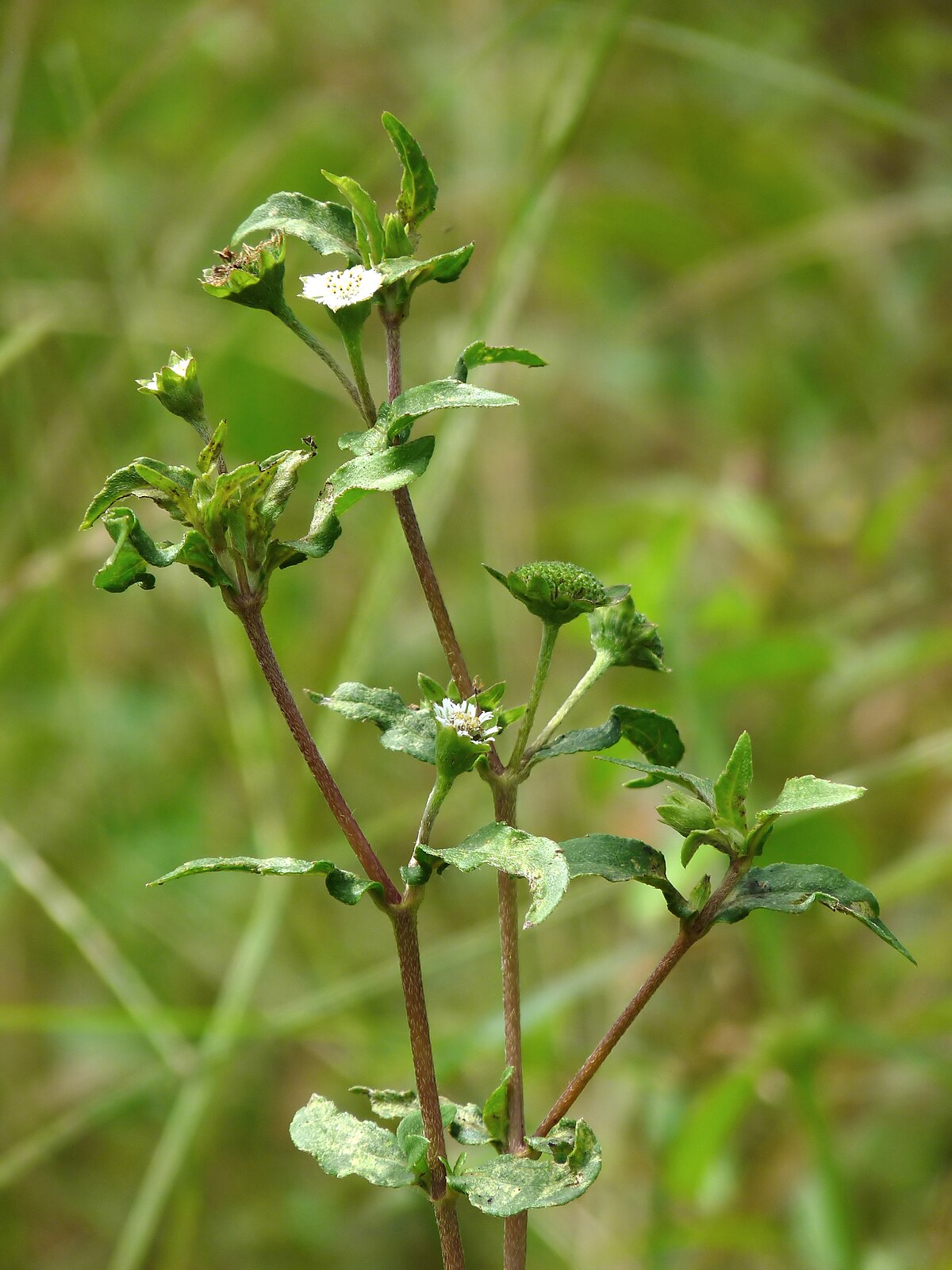
Bhringaraj, known scientifically as Eclipta prostrata, is a herbaceous plant belonging to the Asteraceae (daisy) family, often found in moist tropical and subtropical regions. It's characterized by its small white flowers and dark green leaves.
Historically, Bhringaraj has been widely recognized in traditional systems of medicine, particularly Ayurveda, for its extensive use. It's frequently cultivated for its medicinal properties, primarily utilizing the whole plant, leaves, and roots.
Other Names of Bhringaraj
- False Daisy
- Maka
- Karisalankanni
- Keshraja
- Bhringaraj (Hindi)
Heading
<h3> Absolute Contraindications of Bhringaraj </h3> <h4> 1. If you are taking prescription antidiabetic drugs (risk of low blood sugar)</h4> <ul> <li>🔻</li> <li>Recommendation: Do not self-add high-dose Bhringaraj extracts if you are on insulin or oral hypoglycaemics; discuss with your clinician and check blood glucose closely if used. </li> <li>Reasoning: Constituents such as wedelolactone inhibit carbohydrate-digesting enzymes (α-glucosidase/α-amylase) and lower blood glucose in animal models - combining with diabetes medicines can increase hypoglycaemia risk. </li> <li>Scientific_Study_Title: Deconvoluting the dual hypoglycemic effect of wedelolactone isolated from Wedelia calendulacea: investigation via experimental validation and molecular docking.</li> <li>Scientific_Study_Authors: Vikas Kumar, Kalicharan Sharma, Bahar Ahmed, F. A. Al-Abbasi, Firoz Anwar, Amita Verma.</li> <li>Scientific_Study_Link: https://doi.org/10.1039/C7RA12568B</li> <li>Scientific_Study_Excerpt: <p>Study summary: Authors isolated wedelolactone and showed strong in vitro inhibition of α-glucosidase and α-amylase, and demonstrated lowered blood glucose in oral glucose tolerance tests and streptozotocin-diabetic rats. The compound produced significant reductions in post-prandial glucose and modulated insulin and lipid markers in vivo. These results indicate a real pharmacological glucose-lowering action that could add to prescribed antidiabetic medications if combined without medical supervision.</p> </li> </ul> <h4> 2. If you are on immunosuppressant therapy (e.g., post-transplant patients)</h4> <ul> <li>🛑</li> <li>Recommendation: Avoid Bhringaraj supplements while taking immunosuppressive drugs (e.g., tacrolimus, cyclosporine) unless cleared by your transplant specialist - it may reduce the effect of immunosuppression.</li> <li>Reasoning: In vivo studies show methanolic extracts can boost non-specific and specific immune markers (HSP70/HSP90, IgM) and antioxidant defenses, i.e., an immune-stimulating action that could counteract immunosuppressive therapy.</li> <li>Scientific_Study_Title: Immunomodulatory Potency of Eclipta alba (Bhringaraj) Leaf Extract in Heteropneustes fossilis against Oomycete Pathogen, Aphanomyces invadans.</li> <li>Scientific_Study_Authors: Vikash Kumar, Basanta Kumar Das, Himanshu Sekhar Swain, Hemanta Chowdhury, Suvra Roy, Asit Kumar Bera, Ramesh Chandra Malick, Bijay Kumar Behera.</li> <li>Scientific_Study_Link: https://www.ncbi.nlm.nih.gov/pmc/articles/PMC9963822/</li> <li>Scientific_Study_Excerpt: <p>Study summary: Methanolic leaf extract at biologically active doses induced anti-stress antioxidant responses and increased markers of both non-specific (HSP70/HSP90) and specific (IgM) immunity in fish, improving survival after infectious challenge. The authors report clear immune-stimulatory effects and note dose-dependent activity; very high concentrations were toxic to fish. This immunostimulatory profile is the basis for caution in patients whose care depends on deliberate immune suppression.</p> </li> </ul> <h4> 3. If you are taking medicines primarily metabolized via AhR→CYP1A1/CYP1B1 pathways or have drugs with narrow therapeutic indices linked to hepatic metabolism</h4> <ul> <li>⚠️</li> <li>Recommendation: Tell your clinician before using Bhringaraj if you are on drugs primarily metabolised by CYP pathways; avoid combining without medical advice and monitoring. </li> <li>Reasoning: Wedelolactone (a major component) has been shown in cell studies to inhibit AhR and downstream CYP1A1/CYP1B1 expression - alterations in these pathways can change drug metabolism and blood levels of co-administered medicines.</li> <li>Scientific_Study_Title: Wedelolactone, a Component from Eclipta prostrata (L.) L., Inhibits the Proliferation and Migration of Head and Neck Squamous Cancer Cells through the AhR Pathway.</li> <li>Scientific_Study_Authors: Yi-Xuan Zou, Zhen-Qiang Mu, Jie Wang, Shuo Tian, Yilin Li, Yanqiu Liu.</li> <li>Scientific_Study_Link: https://pubmed.ncbi.nlm.nih.gov/35255785/</li> <li>Scientific_Study_Excerpt: <p>Study summary: In vitro work showed wedelolactone reduced expression of AhR and its downstream targets CYP1A1 and CYP1B1 in cancer cell lines at concentrations that inhibited migration. Because AhR and CYP enzymes regulate xenobiotic metabolism, the authors note that wedelolactone's modulation of these pathways could influence the metabolism of other xenobiotics and drugs handled by these enzymatic systems.</p> </li> </ul> <h4> 4. Severe liver disease with planned high-dose herbal use (avoid concentrated/high-dose preparations)</h4> <ul> <li>🚫</li> <li>Recommendation: Avoid high-dose oral Bhringaraj extracts if you have advanced liver disease or unstable hepatic function - discuss with your hepatologist before any herbal use.</li> <li>Reasoning: Although many studies show hepatoprotective effects at moderate doses, acute-toxicity animal data demonstrate that very high oral doses caused liver enzyme changes and histological liver damage - so concentrated/high-dose preparations are unsafe in compromised livers.</li> <li>Scientific_Study_Title: Biochemical and histopathological effects on liver due to acute oral toxicity of aqueous leaf extract of Eclipta alba on female Swiss albino mice.</li> <li>Scientific_Study_Authors: Tanuja Singh, Nivedita Sinha, Anjali Singh.</li> <li>Scientific_Study_Link: https://www.ncbi.nlm.nih.gov/pmc/articles/PMC3608297/</li> <li>Scientific_Study_Excerpt: <p>Study summary: Acute oral toxicity testing in mice produced an LD50 ≈2316 mg/kg and showed significant increases in serum transaminases and histopathological liver changes at doses ≥2000 mg/kg after 7 days. The authors conclude that while some extracts show hepatoprotective action at lower doses, indiscriminate high-dose oral use produced biochemical and structural liver injury in their model, supporting caution in severe hepatic impairment.</p> </li> </ul> <h3> Relative Contraindications of Bhringaraj </h3> <h4> 1. Pregnancy and breastfeeding (insufficient controlled human safety data)</h4> <ul> <li>🤰</li> <li>Recommendation: Avoid therapeutic oral or high-concentration topical use during pregnancy or breastfeeding unless supervised by a clinician with herb-safety experience; topical low-dose traditional hair oils are commonly used but medical input is advised.</li> <li>Reasoning: High-quality human safety trials in pregnancy are lacking; many active phytochemicals are biologically active (e.g., wedelolactone) and animal toxicology at high doses warns caution. Absence of clear safety data is the basis for conservative avoidance in pregnancy/breastfeeding.</li> <li>Scientific_Study_Title: Ethnopharmacological Significance of Eclipta alba (L.) Hassk. (Asteraceae) - review (notes limited clinical safety data).</li> <li>Scientific_Study_Authors: Multiple authors (review article on Eclipta alba, 2016 review in PMC).</li> <li>Scientific_Study_Link: https://www.ncbi.nlm.nih.gov/pmc/articles/PMC4897414/</li> <li>Scientific_Study_Excerpt: <p>Study summary: This comprehensive review summarizes many preclinical pharmacological activities and traditional uses of Eclipta alba but highlights a shortage of controlled clinical safety data in humans, including in special populations. The authors describe multiple active phytochemicals and preclinical toxicology signals at high doses, and therefore recommend careful, evidence-based use, especially in pregnancy and lactation where safety is not established.</p> </li> </ul> <h4> 2. Concurrent chemotherapy or radiotherapy (use with caution / clinician supervision)</h4> <ul> <li>🧪</li> <li>Recommendation: Discuss with your oncologist before using Bhringaraj; do not self-administer concentrated extracts during chemotherapy or radiotherapy without specialist input.</li> <li>Reasoning: Eclipta extracts and constituents show cytotoxic/anticancer and antioxidant effects in vitro; these can theoretically alter chemo efficacy (either antagonise or potentiate) or affect toxicity profiles - so oncology supervision is required before combining.</li> <li>Scientific_Study_Title: In vitro anticancer activity of Eclipta alba whole plant extract on colon cancer cell HCT-116.</li> <li>Scientific_Study_Authors: (BMC Complementary Medicine and Therapies) - authors as listed in the article.</li> <li>Scientific_Study_Link: https://pubmed.ncbi.nlm.nih.gov/33225921/</li> <li>Scientific_Study_Excerpt: <p>Study summary: Methanolic whole-plant extracts produced selective cytotoxicity against human colorectal carcinoma HCT-116 cells in vitro with minimal toxicity to certain normal cells. The authors discuss anticancer potential and indicate that biologically active constituents produce apoptosis and inhibit proliferation. Because such bioactivity can interact with cytotoxic therapies, the paper supports a precautionary approach when combining with chemotherapy.</p> </li> </ul> <h4> 3. Children & uncertain dosing (limited pediatric safety data)</h4> <ul> <li>👶</li> <li>Recommendation: Avoid giving concentrated oral extracts to infants/young children; if a pediatric clinician recommends use (e.g., topical oil), follow their dosing guidance and prefer standardized low-dose formulations.</li> <li>Reasoning: Animal acute-toxicity data show dose-dependent adverse effects at high oral doses and human pediatric safety trials are not available - therefore dosing uncertainty makes pediatric use relatively contraindicated without specialist oversight.</li> <li>Scientific_Study_Title: Biochemical and histopathological effects on liver due to acute oral toxicity of aqueous leaf extract of Eclipta alba on female Swiss albino mice.</li> <li>Scientific_Study_Authors: Tanuja Singh, Nivedita Sinha, Anjali Singh.</li> <li>Scientific_Study_Link: https://www.ncbi.nlm.nih.gov/pmc/articles/PMC3608297/</li> <li>Scientific_Study_Excerpt: <p>Study summary: The acute oral toxicity model identified an LD50 and clear liver changes at high doses - data that underpin caution in populations with different pharmacokinetics (children, elderly), where small dose errors or metabolic differences may increase risk.</p> </li> </ul>
Heading
<h4> 1. Liver injury at high oral doses (warning: liver test changes, histological injury)</h4> <ul> <li>🩸</li> <li>Side effect summary: High-dose oral Eclipta extract produced raised liver enzymes and visible liver tissue damage in animal studies.</li> <li>Recommendation: If you develop jaundice, persistent abdominal pain, dark urine or unexplained fatigue while using Bhringaraj, stop it and see a clinician; avoid high-dose oral supplements in people with unstable liver disease.</li> <li>Reasoning: Animal acute toxicity studies (mice) showed dose-dependent increases in SGPT and histopathological changes at ≥2000 mg/kg, indicating hepatotoxic potential when used indiscriminately at high doses.</li> <li>Severity Level: Severe</li> <li>Scientific_Study_Available: Yes</li> <li>Scientific_Study_Title: Biochemical and histopathological effects on liver due to acute oral toxicity of aqueous leaf extract of Eclipta alba on female Swiss albino mice.</li> <li>Scientific_Study_Authors: Tanuja Singh, Nivedita Sinha, Anjali Singh.</li> <li>Scientific_Study_Link: https://www.ncbi.nlm.nih.gov/pmc/articles/PMC3608297/</li> <li>Scientific_Study_Excerpt: <p>Summary of findings: The authors report an LD50 ≈2316 mg/kg in mice and statistically significant elevations in serum transaminases and histological liver alterations at doses ≥2000 mg/kg after seven days. The paper concludes that while lower doses may be safe or hepatoprotective in some models, indiscriminate high-dose oral use produced measurable liver injury in this acute model.</p> </li> </ul> <h4> 2. Hypoglycaemia risk when combined with antidiabetic therapy (low blood sugar)</h4> <ul> <li>🍬</li> <li>Side effect summary: Bhringaraj constituents (wedelolactone) inhibit enzymes that digest carbohydrates and lower blood glucose in animal tests - this can add to prescription medicines and cause hypoglycaemia.</li> <li>Recommendation: People on glucose-lowering drugs should only use Bhringaraj with clinician supervision and monitor blood glucose closely; do not stop prescribed medications without medical advice.</li> <li>Reasoning: Inhibition of α-glucosidase/α-amylase and favourable OGTT and diabetic-rat outcomes imply an additive glucose-lowering effect when combined with standard diabetes medicines.</li> <li>Severity Level: Moderate</li> <li>Scientific_Study_Available: Yes</li> <li>Scientific_Study_Title: Deconvoluting the dual hypoglycemic effect of wedelolactone isolated from Wedelia calendulacea.</li> <li>Scientific_Study_Authors: Vikas Kumar, Kalicharan Sharma, Bahar Ahmed, F. A. Al-Abbasi, Firoz Anwar, Amita Verma.</li> <li>Scientific_Study_Link: https://doi.org/10.1039/C7RA12568B</li> <li>Scientific_Study_Excerpt: <p>Summary of findings: The isolated wedelolactone strongly inhibited α-glucosidase and α-amylase in vitro and lowered blood glucose in oral glucose tolerance tests and diabetic rat models, demonstrating pharmacologically meaningful glucose-lowering potential that could compound the effects of antidiabetic drugs.</p> </li> </ul> <h4> 3. Immune stimulation / possible immune overstimulation</h4> <ul> <li>🧬</li> <li>Side effect summary: Extracts increase immunologic markers and antioxidant enzymes; very high experimental doses showed toxicity in an animal model.</li> <li>Recommendation: People with autoimmune disease or those on immunosuppressive therapy should consult their doctor before using Bhringaraj; dosing should be conservative and supervised.</li> <li>Reasoning: Immune-stimulatory effects are desirable in many contexts but may be undesirable when immune suppression is clinically required (e.g., organ transplant, some autoimmune conditions).</li> <li>Severity Level: Moderate</li> <li>Scientific_Study_Available: Yes</li> <li>Scientific_Study_Title: Immunomodulatory Potency of Eclipta alba (Bhringaraj) Leaf Extract in Heteropneustes fossilis against Aphanomyces invadans.</li> <li>Scientific_Study_Authors: Vikash Kumar, Basanta Kumar Das, Himanshu Sekhar Swain, Hemanta Chowdhury, et al.</li> <li>Scientific_Study_Link: https://www.ncbi.nlm.nih.gov/pmc/articles/PMC9963822/</li> <li>Scientific_Study_Excerpt: <p>Summary of findings: Methanolic leaf extract produced dose-dependent increases in HSP70/HSP90 and IgM and improved antioxidant enzyme activity; the paper notes improved resistance to infection but also observed toxicity at very high concentrations in the fish model, indicating a narrow therapeutic window at extremes.</p> </li> </ul>
Heading
<h4> Antidiabetic drugs (insulin, sulfonylureas, metformin, α-glucosidase inhibitors)</h4> <ul> <li>Interaction_Details: Eclipta's active constituents (notably wedelolactone) inhibit α-glucosidase/α-amylase and lower blood glucose in animals; this can potentiate prescription glucose-lowering drugs and increase hypoglycaemia risk.</li> <li>Severity: Moderate</li> <li>Recommendation: Avoid combining without medical supervision; if prescribed antidiabetic drugs are continued, monitor blood glucose frequently and adjust dosing only under clinician guidance.</li> <li>Scientific_Study_Available: Yes</li> <li>Scientific_Study_Link: https://doi.org/10.1039/C7RA12568B</li> <li>Scientific_Study_Title: Deconvoluting the dual hypoglycemic effect of wedelolactone isolated from Wedelia calendulacea: investigation via experimental validation and molecular docking.</li> <li>Scientfic_Study_Authors: Vikas Kumar, Kalicharan Sharma, Bahar Ahmed, F. A. Al-Abbasi, Firoz Anwar, Amita Verma.</li> <li>Scientific_Study_Excerpt: <p>Summary: The isolated constituent wedelolactone showed strong inhibition of carbohydrate-digesting enzymes and produced significant reductions in post-prandial and fasting glucose markers in rodent models, supporting the mechanism for additive hypoglycaemic interaction with antidiabetic medications.</p> </li> </ul> <h4> Immunosuppressants (e.g., tacrolimus, cyclosporine, mycophenolate)</h4> <ul> <li>Interaction_Details: Eclipta extracts stimulate immune parameters in vivo; this immune activation could counteract immunosuppressant drugs and impair their intended effect (e.g., rejection prophylaxis in transplant recipients).</li> <li>Severity: Severe</li> <li>Recommendation: Do not use Bhringaraj without explicit approval from the transplant/therapy team; concurrent use is discouraged because of possible loss of immunosuppressive control.</li> <li>Scientific_Study_Available: Yes</li> <li>Scientific_Study_Link: https://www.ncbi.nlm.nih.gov/pmc/articles/PMC9963822/</li> <li>Scientific_Study_Title: Immunomodulatory Potency of Eclipta alba (Bhringaraj) Leaf Extract in Heteropneustes fossilis against Aphanomyces invadans.</li> <li>Scientfic_Study_Authors: Vikash Kumar, Basanta Kumar Das, Himanshu Sekhar Swain, Hemanta Chowdhury, et al.</li> <li>Scientific_Study_Excerpt: <p>Summary: The methanolic extract increased both non-specific and specific immune markers and antioxidant enzymes, demonstrating clear immune stimulation in an in vivo model - a plausible mechanism for interfering with prescribed immunosuppressive regimens that intentionally blunt those same responses.</p> </li> </ul> <h4> Drugs metabolized via AhR-CYP1A1/CYP1B1 pathways (and potentially other hepatic enzyme systems)</h4> <ul> <li>Interaction_Details: Wedelolactone was shown to downregulate AhR and its downstream CYP1A1/CYP1B1 expression in cell systems; modulation of these pathways may change the clearance or activity of co-administered drugs metabolised by these enzymes or related pathways.</li> <li>Severity: Moderate</li> <li>Recommendation: Use caution with drugs primarily cleared via CYP1A1/CYP1B1 or with narrow therapeutic windows; consult a clinician and consider monitoring drug levels where applicable.</li> <li>Scientific_Study_Available: Yes</li> <li>Scientific_Study_Link: https://pubmed.ncbi.nlm.nih.gov/35255785/</li> <li>Scientific_Study_Title: Wedelolactone, a Component from Eclipta prostrata (L.) L., Inhibits the Proliferation and Migration of Head and Neck Squamous Cancer Cells through the AhR Pathway.</li> <li>Scientfic_Study_Authors: Yi-Xuan Zou, Zhen-Qiang Mu, Jie Wang, Shuo Tian, Yilin Li, Yanqiu Liu.</li> <li>Scientific_Study_Excerpt: <p>Summary: Wedelolactone inhibited AhR and its downstream CYP1A1/CYP1B1 expression in vitro at biologically active doses. Because these enzymes participate in xenobiotic metabolism, modulation by Bhringaraj constituents could theoretically alter plasma concentrations of drugs metabolised by these routes, warranting caution.</p> </li> </ul> <h4> Chemotherapy agents (potential pharmacodynamic and pharmacokinetic interactions)</h4> <ul> <li>Interaction_Details: Extracts show direct anticancer cytotoxicity and antioxidant activity in vitro; antioxidant or cytotoxic phytochemicals can sometimes antagonise or potentiate conventional cytotoxic agents depending on context and timing.</li> <li>Severity: Severe</li> <li>Recommendation: Do not use concentrated Bhringaraj extracts during cancer chemotherapy or radiotherapy without oncologist approval; any herbal co-therapy must be coordinated with the treating team and monitored closely.</li> <li>Scientific_Study_Available: Yes</li> <li>Scientific_Study_Link: https://pubmed.ncbi.nlm.nih.gov/33225921/</li> <li>Scientific_Study_Title: In vitro anticancer activity of Eclipta alba whole plant extract on colon cancer cell HCT-116.</li> <li>Scientfic_Study_Authors: (Authors listed in the BMC Complementary Medicine & Therapies article.)</li> <li>Scientific_Study_Excerpt: <p>Summary: Methanolic extracts produced apoptosis and growth inhibition in colon cancer cells in vitro with low toxicity to some normal cells. The combination of strong phytochemical activity with conventional cytotoxics may unpredictably change therapeutic outcomes; therefore coordinated clinical oversight is required.</p> </li> </ul>