Ashwagandha
Withania somnifera
Ashwagandha (Withania somnifera) is an ancient Ayurvedic herb, widely prevalent for its claimed adaptogenic properties, helping the body manage stress. Its roots and berries are primarily used for their supposed therapeutic benefits. The botanical name "somnifera" hints at its traditional use in promoting sleep. This herb is highly valued in traditional medicine across India and North Africa.
PLANT FAMILY
Solanaceae (Nightshade)
PARTS USED
Root, Leaf, Berry
AYURVEDIC ACTION
Vata ↓, Pitta ↓, Kapha ↓
ACTIVE COMPOUNDS
Withanolides (2-5%)
What is Ashwagandha?
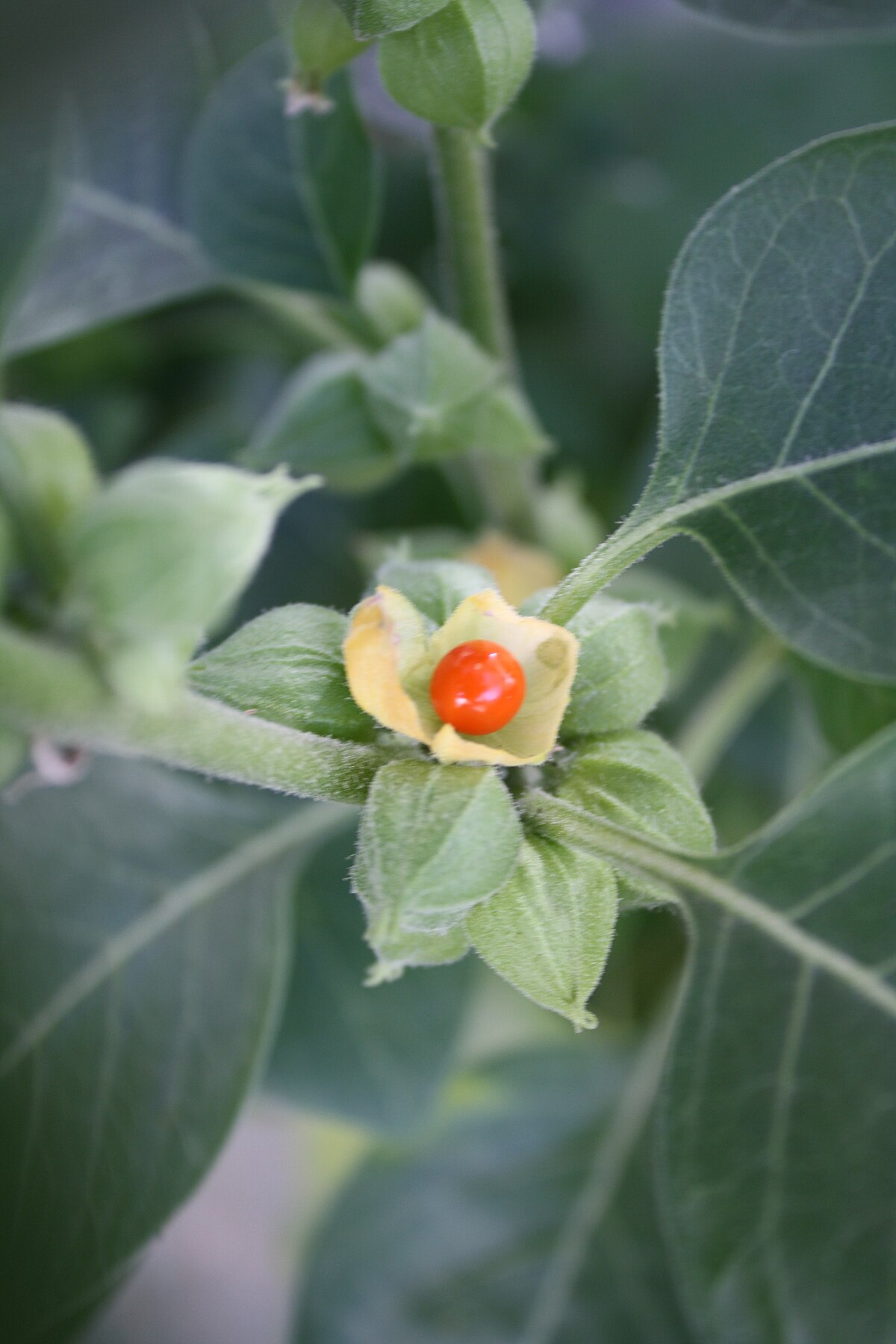
Ashwagandha (Withania somnifera) is an ancient medicinal herb, a small shrub with yellow flowers native to India and North Africa. It belongs to the Solanaceae family, commonly known as the nightshade family. Revered in Ayurvedic medicine for centuries, its roots and berries are primarily used for their therapeutic properties. It's classified as an adaptogen, meaning it helps the body manage stress.
Ashwagandha's botanical name, "somnifera," hints at its traditional use in promoting sleep, while its common name in Sanskrit translates to "smell of a horse," referring to its unique aroma and the belief it imparts the strength of a horse.
Other Names of Ashwagandha
- Indian Ginseng
- Winter Cherry
- Poonarnava
- Amukkuram
Heading
<h3> Absolute Contraindications of Ashwagandha </h3> <h4> Pregnancy (avoid during pregnancy) [Pregnant or planning to become pregnant]</h4> <ul> <li> 🤰</li> <li> Recommendation: Do not take ashwagandha while pregnant - stop supplements if you discover pregnancy and discuss with your clinician.</li> <li> Reasoning: Human pregnancy data are limited and historical/animal reports raised concerns about effects on reproductive tissues; major agencies advise avoidance until safety is proven in controlled human studies.</li> <li> Scientific_Study_Title: A Systematic and Ethnobotanical Review of Ashwagandha's (Withania Somnifera) Teratogenic and Abortifacient Potentials.</li> <li> Scientific_Study_Authors: Mark J Tallon, Igor Koturbash, Jason L Blum.</li> <li> Scientific_Study_Link: https://pubmed.ncbi.nlm.nih.gov/40887707/</li> <li> Scientific_Study_Excerpt: <p>This recent systematic review examined historical, animal and human data on reproductive and developmental safety. The authors found that while traditional reports mention abortifacient uses and some animal data exist, the overall human evidence is sparse and inconclusive; they emphasise the lack of high-quality human pregnancy data and recommend a cautious approach until more rigorous studies are available. (Paraphrased summary of findings.)</p> </li> </ul> <h4> Breastfeeding / Lactation [Nursing parent]</h4> <ul> <li> 🍼</li> <li> Recommendation: Avoid ashwagandha while breastfeeding unless a clinician specifically advises otherwise; prefer proven safe options for lactation support.</li> <li> Reasoning: There are no robust human lactation studies; active constituents may pass into breastmilk or affect infant physiology and long-term safety is untested.</li> <li> Scientific_Study_Title: Ashwagandha: Usefulness and Safety (NCCIH summary).</li> <li> Scientific_Study_Authors: National Center for Complementary and Integrative Health (NCCIH) (organizational author).</li> <li> Scientific_Study_Link: https://www.nccih.nih.gov/health/ashwagandha</li> <li> Scientific_Study_Excerpt: <p>NCCIH states that ashwagandha should be avoided during pregnancy and should not be used while breastfeeding due to insufficient safety data; short-term safety data exist for adults but lactation-specific studies are lacking, so standard guidance is to avoid use during breastfeeding. (Paraphrase of NCCIH guidance.)</p> </li> </ul> <h4> Known or suspected liver disease / prior herb-induced liver injury [Existing liver problems]</h4> <ul> <li> ⚠️🍃</li> <li> Recommendation: Do not take ashwagandha if you have active liver disease, unexplained abnormal liver tests, or a prior supplement-related liver injury; consult hepatology before any herbal supplement.</li> <li> Reasoning: Multiple case reports and case series document cholestatic or mixed pattern liver injury temporally linked to ashwagandha supplements; some required hospitalization though most recovered after stopping the herb.</li> <li> Scientific_Study_Title: Ashwagandha-induced liver injury: A case series from Iceland and the US Drug-Induced Liver Injury Network.</li> <li> Scientific_Study_Authors: Helgi K Björnsson, Einar S Björnsson, Bharathi Avula, Ikhlas A Khan, Jon G Jonasson, Marwan Ghabril, Paul H Hayashi, Victor Navarro.</li> <li> Scientific_Study_Link: https://pubmed.ncbi.nlm.nih.gov/31991029/</li> <li> Scientific_Study_Excerpt: <p>The case series describes five patients who developed cholestatic or mixed liver injury 2-12 weeks after starting ashwagandha products; symptoms included jaundice, pruritus and nausea. Investigations excluded other common causes, and most patients improved after stopping the supplement. The authors conclude a hepatotoxic potential for some ashwagandha formulations. (Paraphrase of abstract details.)</p> </li> </ul> <h4> On systemic immunosuppressant therapy or with active autoimmune disease requiring immunosuppression [People on drugs that deliberately lower immunity]</h4> <ul> <li> 🧬🛑</li> <li> Recommendation: Avoid using ashwagandha while on immunosuppressive drugs (e.g., post-transplant regimens, high-dose steroids, biologic immunosuppressants) unless supervised by the treating specialist.</li> <li> Reasoning: Clinical studies show ashwagandha can enhance multiple immune markers; this immunostimulatory effect could reduce effectiveness of immunosuppressants or worsen autoimmune activity in susceptible patients.</li> <li> Scientific_Study_Title: Immunomodulatory Effect of Withania somnifera (Ashwagandha) Extract - A Randomized, Double-Blind, Placebo Controlled Trial with an Open Label Extension on Healthy Participants.</li> <li> Scientific_Study_Authors: Ajit Tharakan, Himanshu Shukla, Irin Rosanna Benny, Matthan Tharakan, Lekha George, Santhosh Koshy.</li> <li> Scientific_Study_Link: https://pubmed.ncbi.nlm.nih.gov/34441940/</li> <li> Scientific_Study_Excerpt: <p>In a randomized placebo-controlled trial, subjects receiving ashwagandha (60 mg extract) showed significant increases in multiple immunoglobulin classes, cytokines (IFN-γ, IL-4) and counts/activation markers of T, B and NK cells versus placebo; the investigators concluded the extract modulated innate and adaptive immunity. This supports concern about using immune-stimulating botanicals while on immunosuppressive therapy. (Paraphrase.)</p> </li> </ul> <h4> Uncontrolled or known thyroid hyperfunction (active hyperthyroidism) [People with high thyroid activity]</h4> <ul> <li> 🩺⚖️</li> <li> Recommendation: Do not self-start ashwagandha if you have active hyperthyroidism; discuss with your endocrinologist because it may raise thyroid hormone levels or alter medication needs.</li> <li> Reasoning: Clinical trials demonstrate ashwagandha can increase circulating T3/T4 and reduce TSH in some people; in hyperthyroid patients this could worsen thyrotoxic symptoms or complicate drug titration.</li> <li> Scientific_Study_Title: Efficacy and Safety of Ashwagandha Root Extract in Subclinical Hypothyroid Patients: A Double-Blind, Randomized Placebo-Controlled Trial.</li> <li> Scientific_Study_Authors: Ashok Kumar Sharma, Indraneel Basu, Siddarth Singh.</li> <li> Scientific_Study_Link: https://pubmed.ncbi.nlm.nih.gov/28829155/</li> <li> Scientific_Study_Excerpt: <p>In an 8-week randomized trial of subclinical hypothyroid patients, ashwagandha (600 mg/day) produced significant increases in T3 and T4 and decreased TSH versus placebo. While the trial was in hypothyroid subjects, the clear thyroid-modulating effect indicates a potential to alter thyroid status and medication needs. (Paraphrase of trial results.)</p> </li> </ul> <h3> Relative Contraindications of Ashwagandha </h3> <h4> Diabetes or using blood-glucose lowering medications [People with diabetes on medication]</h4> <ul> <li> 🍬⬇️</li> <li> Recommendation: If you have diabetes and choose to use ashwagandha, monitor blood glucose closely and coordinate with your clinician - medication dose adjustments may be needed.</li> <li> Reasoning: Ashwagandha shows hypoglycaemic activity in animal and human studies (improved insulin sensitivity and lower fasting glucose); combined with diabetic drugs it can increase hypoglycaemia risk.</li> <li> Scientific_Study_Title: Withania somnifera (Indian ginseng) in diabetes mellitus: A systematic review and meta-analysis of scientific evidence from experimental research to clinical application.</li> <li> Scientific_Study_Authors: Tiwari et al. (systematic review authors listed in paper).</li> <li> Scientific_Study_Link: https://pubmed.ncbi.nlm.nih.gov/31975514/</li> <li> Scientific_Study_Excerpt: <p>Systematic review data indicate that W. somnifera improves blood glucose and HbA1c in animal models and limited human trials, and restores altered metabolic parameters. The authors note potential anti-diabetic effects and call for careful monitoring if used with antidiabetic therapy. (Paraphrase.)</p> </li> </ul> <h4> Concurrent use of sedatives / benzodiazepines / hypnotics [People taking sedating medicines]</h4> <ul> <li> 😴🛑</li> <li> Recommendation: Use caution - avoid combining without medical advice. If combined, expect additive drowsiness and possibly reduced alertness; do not drive or operate heavy machinery until you know the combined effect.</li> <li> Reasoning: Ashwagandha contains constituents that act via GABAergic pathways and in animal studies potentiated sedative effects; additive CNS depression with prescription sedatives is a reasonable clinical concern.</li> <li> Scientific_Study_Title: Direct evidence for GABAergic activity of Withania somnifera on mammalian ionotropic GABAA and GABAρ receptors.</li> <li> Scientific_Study_Authors: Sudheer et al. (as per PubMed listing; study details available on PubMed abstract page).</li> <li> Scientific_Study_Link: https://pubmed.ncbi.nlm.nih.gov/26068424/</li> <li> Scientific_Study_Excerpt: <p>In vitro and animal receptor studies demonstrated that aqueous ashwagandha root extracts activate ionotropic GABAA and GABAρ receptors and exert GABA-mimetic actions; this provides a plausible basis for additive sedation when combined with benzodiazepines or other sedative agents. (Paraphrase.)</p> </li> </ul> <h4> Concurrent use with drugs metabolized by CYP3A4 / CYP1A2 (possible enzyme modulation) [People on many common prescriptions]</h4> <ul> <li> 💊⚖️</li> <li> Recommendation: Consult a clinician or pharmacist before combining ashwagandha with drugs metabolized by CYP3A4 or CYP1A2 (e.g., many statins, calcium channel blockers, immunosuppressants, some benzodiazepines); monitoring or dose adjustment may be needed.</li> <li> Reasoning: In vitro and hepatocyte studies show ashwagandha extracts can induce or modulate PXR/AhR pathways and CYP enzymes; this can lower or raise levels of co-administered drugs depending on direction of effect.</li> <li> Scientific_Study_Title: Evaluation of the Herb-Drug Interaction Potential of Commonly Used Botanicals on the US Market with Regard to PXR- and AhR-Mediated Influences on CYP3A4 and CYP1A2.</li> <li> Scientific_Study_Authors: Mona H Haron, Olivia Dale, Katherine Martin, et al.</li> <li> Scientific_Study_Link: https://pubmed.ncbi.nlm.nih.gov/36017806/</li> <li> Scientific_Study_Excerpt: <p>Screening of many botanicals showed W. somnifera extracts activated hPXR and hAhR and produced >50% induction of CYP3A4/CYP1A2 in vitro; authors highlight the potential for clinically relevant herb-drug interactions and recommend in vivo follow-up. (Paraphrase.)</p> </li> </ul> <h4> Cardiovascular instability / on multiple antihypertensives (use caution) [People taking blood pressure meds or with low BP]</h4> <ul> <li> ❤️🩹</li> <li> Recommendation: If you take blood-pressure lowering drugs or have orthostatic symptoms, consult your clinician before starting ashwagandha and monitor BP frequently after starting.</li> <li> Reasoning: Some clinical studies and trials report modest reductions in resting blood pressure and heart rate with ashwagandha; additive hypotensive effects are possible with antihypertensive medications.</li> <li> Scientific_Study_Title: Effects of Withania somnifera Extract in Chronically Stressed Adults: A Randomized Controlled Trial (secondary outcomes include pulse and BP changes).</li> <li> Scientific_Study_Authors: (see trial authors in PubMed entry for full author list; study reports cardiovascular/physiologic secondary outcomes).</li> <li> Scientific_Study_Link: https://pubmed.ncbi.nlm.nih.gov/38732539/</li> <li> Scientific_Study_Excerpt: <p>The randomized study found reductions in pulse rate and some stress-related physiological measures in participants taking ashwagandha; while BP changes were not the primary endpoint, the observed autonomic shifts suggest potential additive effects with antihypertensive medications. (Paraphrase.)</p> </li> </ul>
Heading
<h4> Digestive upset (nausea, loose stools, stomach discomfort)</h4> <ul> <li> 🤢</li> <li> Side effect summary: Some people report mild gastrointestinal symptoms such as nausea, diarrhea or abdominal discomfort, usually when starting or at higher doses.</li> <li> Recommendation: Start at a low dose, take with food, and stop if symptoms persist; if severe or persistent, consult your clinician.</li> <li> Reasoning: Clinical trial safety reports commonly list transient GI complaints as the most frequent adverse events; many resolve with dose reduction or discontinuation.</li> <li> Severity Level: Mild</li> <li> Scientific_Study_Available: Yes</li> <li> Scientific_Study_Title: Safety of Ashwagandha Root Extract: A Randomized, Placebo-Controlled Study in Healthy Volunteers.</li> <li> Scientific_Study_Authors: (See PubMed entry for full author list; trial reports tolerability outcomes.)</li> <li> Scientific_Study_Link: https://pubmed.ncbi.nlm.nih.gov/33338583/</li> <li> Scientific_Study_Excerpt: <p>In this randomized safety study, transient gastrointestinal symptoms (nausea, loose stools) were among the mild adverse events reported in participants taking ashwagandha; overall tolerability was acceptable but GI side effects occurred in a minority. (Paraphrase of trial safety findings.)</p> </li> </ul> <h4> Drowsiness / sedation / reduced alertness</h4> <ul> <li> 😴</li> <li> Side effect summary: Some users experience increased sleepiness or feeling sedated, especially with higher doses or combined with other sedating medications.</li> <li> Recommendation: Avoid driving or operating heavy machinery until you know how ashwagandha affects you; do not mix with other sedatives without medical advice.</li> <li> Reasoning: Mechanistic studies show GABAergic modulation and human sleep/anxiety trials show improved sleep - both imply a potential for daytime drowsiness in susceptible individuals or with drug combinations.</li> <li> Severity Level: Mild to Moderate</li> <li> Scientific_Study_Available: Yes</li> <li> Scientific_Study_Title: Direct evidence for GABAergic activity of Withania somnifera on mammalian ionotropic GABAA and GABAρ receptors.</li> <li> Scientific_Study_Authors: (See PubMed entry for author details.)</li> <li> Scientific_Study_Link: https://pubmed.ncbi.nlm.nih.gov/26068424/</li> <li> Scientific_Study_Excerpt: <p>Laboratory receptor studies identified components in ashwagandha that activate GABA receptor subtypes; combined with clinical sleep data, this supports reports of increased sleepiness or sedation in some users. (Paraphrase.)</p> </li> </ul> <h4> Rare but serious: Liver injury (jaundice, cholestatic hepatitis)</h4> <ul> <li> 🧪🚨</li> <li> Side effect summary: Rare cases of clinically significant liver injury - often cholestatic or mixed patterns - have been linked to ashwagandha supplements; symptoms include jaundice, severe fatigue, dark urine and itching.</li> <li> Recommendation: Stop ashwagandha and seek medical care if you develop jaundice, persistent nausea, abdominal pain or dark urine; do not restart after liver injury unless cleared by a hepatologist.</li> <li> Reasoning: Multiple case reports and case series describe time-linked liver injury resolving after discontinuation; exact mechanism unclear but real-world reports exist and regulators have issued safety notices.</li> <li> Severity Level: Severe</li> <li> Scientific_Study_Available: Yes</li> <li> Scientific_Study_Title: Ashwagandha-induced liver injury: A case series from Iceland and the US Drug-Induced Liver Injury Network.</li> <li> Scientific_Study_Authors: Helgi K Björnsson, Einar S Björnsson, Bharathi Avula, Ikhlas A Khan, Jon G Jonasson, Marwan Ghabril, Paul H Hayashi, Victor Navarro.</li> <li> Scientific_Study_Link: https://pubmed.ncbi.nlm.nih.gov/31991029/</li> <li> Scientific_Study_Excerpt: <p>The series described five cases of cholestatic or mixed liver injury after ashwagandha use (latency 2-12 weeks), with prolonged pruritus and jaundice; most patients improved after stopping the product. These reports show a real, though uncommon, risk of herb-associated liver injury. (Paraphrase.)</p> </li> </ul> <h4> Hormonal / thyroid changes (biochemical shifts)</h4> <ul> <li> 🔬⚖️</li> <li> Side effect summary: Ashwagandha can change thyroid hormone laboratory values (increase T3/T4, decrease TSH in some trials), which may be clinically important for people on thyroid medications.</li> <li> Recommendation: If you have thyroid disease or take thyroid replacement, consult your endocrinologist and monitor labs after starting or stopping ashwagandha; avoid self-adjusting thyroid medicines.</li> <li> Reasoning: Randomized trials have shown measurable increases in thyroid hormones with ashwagandha supplementation; this can require medication dose reassessment in treated patients.</li> <li> Severity Level: Moderate</li> <li> Scientific_Study_Available: Yes</li> <li> Scientific_Study_Title: Efficacy and Safety of Ashwagandha Root Extract in Subclinical Hypothyroid Patients: A Double-Blind, Randomized Placebo-Controlled Trial.</li> <li> Scientific_Study_Authors: Ashok Kumar Sharma, Indraneel Basu, Siddarth Singh.</li> <li> Scientific_Study_Link: https://pubmed.ncbi.nlm.nih.gov/28829155/</li> <li> Scientific_Study_Excerpt: <p>The 8-week RCT found significant increases in T3 and T4 and a reduction in TSH in patients receiving 600 mg/day of ashwagandha vs placebo, indicating that the herb can alter thyroid function tests and may affect thyroid therapy needs. (Paraphrase.)</p> </li> </ul>
Heading
<h4>Benzodiazepines and other sedative/hypnotic drugs (e.g., diazepam, lorazepam, zolpidem)</h4> <ul> <li> Interaction_Details: Ashwagandha contains constituents that positively modulate GABA receptors and promote sleep; combining with other sedatives can cause additive drowsiness and impaired alertness. </li> <li> Severity: Moderate</li> <li> Recommendation: Avoid concurrent use or consult clinician; if combined, use lower sedative doses and avoid driving/operating machinery until effects are known.</li> <li> Scientific_Study_Available: Yes</li> <li> Scientific_Study_Link: https://pubmed.ncbi.nlm.nih.gov/26068424/</li> <li> Scientific_Study_Title: Direct evidence for GABAergic activity of Withania somnifera on mammalian ionotropic GABAA and GABAρ receptors.</li> <li> Scientfic_Study_Authors: (Authors listed on PubMed entry for this study.)</li> <li> Scientific_Study_Excerpt: <p>In vitro receptor studies showed aqueous ashwagandha root extracts activate GABAA and especially GABAρ receptors, indicating GABAergic action that can plausibly add to the sedative effects of benzodiazepines and similar agents. (Paraphrase.)</p> </li> </ul> <h4>Antidiabetic drugs (e.g., metformin, sulfonylureas, insulin)</h4> <ul> <li> Interaction_Details: Ashwagandha can lower blood glucose and improve insulin sensitivity; taken with glucose-lowering drugs it may increase hypoglycaemia risk.</li> <li> Severity: Moderate</li> <li> Recommendation: Monitor blood glucose closely and coordinate dosing with your diabetes clinician; do not stop prescribed medicines without advice.</li> <li> Scientific_Study_Available: Yes</li> <li> Scientific_Study_Link: https://pubmed.ncbi.nlm.nih.gov/31975514/</li> <li> Scientific_Study_Title: Withania somnifera (Indian ginseng) in diabetes mellitus: A systematic review and meta-analysis of scientific evidence from experimental research to clinical application.</li> <li> Scientfic_Study_Authors: (See PubMed entry for full author list of the review.)</li> <li> Scientific_Study_Excerpt: <p>The review summarizes animal and limited human trials showing W. somnifera reduces fasting glucose and HbA1c and improves insulin markers; authors suggest therapeutic potential but caution that clinical use with antidiabetic medications requires monitoring. (Paraphrase.)</p> </li> </ul> <h4>Thyroid hormone replacement (levothyroxine)</h4> <ul> <li> Interaction_Details: Because ashwagandha has been shown to increase T3/T4 and lower TSH in some trials, it may alter requirements for levothyroxine or confuse laboratory monitoring.</li> <li> Severity: Moderate</li> <li> Recommendation: Do not start or stop ashwagandha without discussing with the clinician managing thyroid replacement; repeat thyroid labs if supplement use changes.</li> <li> Scientific_Study_Available: Yes</li> <li> Scientific_Study_Link: https://pubmed.ncbi.nlm.nih.gov/28829155/</li> <li> Scientific_Study_Title: Efficacy and Safety of Ashwagandha Root Extract in Subclinical Hypothyroid Patients: A Double-Blind, Randomized Placebo-Controlled Trial.</li> <li> Scientfic_Study_Authors: Ashok Kumar Sharma, Indraneel Basu, Siddarth Singh.</li> <li> Scientific_Study_Excerpt: <p>The RCT in subclinical hypothyroid patients reported significant increases in thyroid hormones with ashwagandha; these changes indicate potential interactions with thyroid replacement therapy that require lab monitoring and possible dose adjustment. (Paraphrase.)</p> </li> </ul> <h4>Immunosuppressant drugs (e.g., cyclosporine, tacrolimus) and biologic immunomodulators</h4> <ul> <li> Interaction_Details: Ashwagandha’s immune-enhancing effects could oppose immunosuppressant drugs; additionally, herb extracts may modulate metabolic enzymes affecting immunosuppressant levels.</li> <li> Severity: Moderate</li> <li> Recommendation: Avoid combination unless specialist supervises; immunosuppressant drug levels and clinical status should be closely monitored if use occurs.</li> <li> Scientific_Study_Available: Yes</li> <li> Scientific_Study_Link: https://pubmed.ncbi.nlm.nih.gov/34441940/</li> <li> Scientific_Study_Title: Immunomodulatory Effect of Withania somnifera (Ashwagandha) Extract - A Randomized, Double-Blind, Placebo Controlled Trial with an Open Label Extension on Healthy Participants.</li> <li> Scientfic_Study_Authors: Ajit Tharakan, Himanshu Shukla, Irin Rosanna Benny, Matthan Tharakan, Lekha George, Santhosh Koshy.</li> <li> Scientific_Study_Excerpt: <p>The clinical trial documented significant increases in immunoglobulins, cytokines and lymphocyte subsets after ashwagandha supplementation in healthy volunteers, supporting concern that immune activation could reduce the effectiveness of immunosuppressive regimens. (Paraphrase.)</p> </li> </ul> <h4>Drugs highly dependent on CYP3A4 / CYP1A2 metabolism (many common drugs)</h4> <ul> <li> Interaction_Details: In vitro and hepatocyte studies indicate ashwagandha extracts can induce or modulate PXR/AhR and CYP enzymes, potentially lowering or altering plasma levels of co-administered drugs metabolized by these enzymes.</li> <li> Severity: Mild to Moderate</li> <li> Recommendation: Check with a pharmacist or prescribing clinician; if a narrow-therapeutic-index drug is involved, consider therapeutic drug monitoring or avoid coadministration until risk is clarified.</li> <li> Scientific_Study_Available: Yes</li> <li> Scientific_Study_Link: https://pubmed.ncbi.nlm.nih.gov/36017806/</li> <li> Scientific_Study_Title: Evaluation of the Herb-Drug Interaction Potential of Commonly Used Botanicals on the US Market with Regard to PXR- and AhR-Mediated Influences on CYP3A4 and CYP1A2.</li> <li> Scientfic_Study_Authors: Mona H Haron, Olivia Dale, Katherine Martin, et al.</li> <li> Scientific_Study_Excerpt: <p>Screening work showed W. somnifera extracts activate hPXR and hAhR transcriptional pathways and induced CYP3A4/CYP1A2 activity in vitro (>50% induction in this assay), indicating a plausible mechanism for herb-drug interactions that requires in vivo study and clinical caution. (Paraphrase.)</p> </li> </ul>